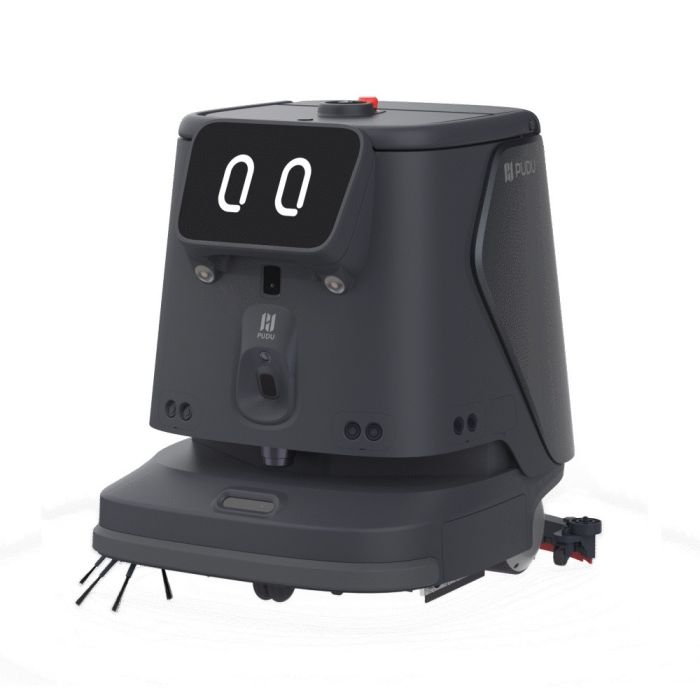
PUDU CC1 Pro AI-Powered Autonomous Reinigungsroboter (10240-000015)
Auf Lager
- MARKE:
- PUDU ROBOTICS
- MODELL:
- CC1 PRO
- TEILENUMMER #:
- 10240-000015
- ORIGIN:
- China
- Warranty:
- 12 MONTHS
- AVAILABILITY:
- USUALLY SHIPS IN 7-14 BUSINESS DAYS
- SKU:
- PUDU-CC1-Pro
PUDU CC1 Pro AI-Powered Autonomous Reinigungsroboter (10240-000015)
PUDU CC1 Pro AI-Powered Autonomous Reinigungsroboter (10240-000015): Überblick
PUDU CC1 Pro AI-Powered Autonomous Reinigungsroboter (10240-000015) wird für Lieferprozesse, Empfang, Gastronomie, Hotelbetrieb, Einzelhandel, Büroservice und öffentliche Einrichtungen eingesetzt. Internationale Robotikprojekte benötigen eine klare Verbindung aus Hardware, Software, Sensorik, Bedienkonzept, Sicherheitsbewertung, Lieferfähigkeit und langfristigem Betrieb. Diese Produktseite beschreibt 10240-000015 praxisnah: wofür das Produkt eingesetzt werden kann, welche technischen Punkte vor dem Kauf zu prüfen sind und wie eine sinnvolle Integration vorbereitet wird.
Für internationale Käufer ist wichtig, ob das System zur geplanten Aufgabe, zur lokalen Umgebung, zum Supportbedarf und zum gewünschten Betriebsniveau passt. Robots International unterstützt bei der technischen Einordnung, damit Service- und Lieferroboter, Zubehör, Sensorik, mobile Plattformen und spezialisierte Robotiklösungen als Teil eines realistischen Gesamtprojekts bewertet werden.
Typische Anwendungen
Service- und Lieferroboter werden in Forschung, Ausbildung, Demonstrationen, Inspektion, Service-Robotik, Automation, Gefahrenabwehr, Pilotprojekten und kommerziellen Evaluierungen eingesetzt. Je nach Produkt stehen Mobilität, Interaktion, Messgenauigkeit, Nutzlastintegration, Bedienkomfort, Sicherheit, Wartbarkeit oder wiederholbare Arbeitsabläufe im Vordergrund.
In Unternehmen, öffentlichen Einrichtungen, Laboren, Hochschulen, Integratorprojekten und Einsatzorganisationen eignet sich 10240-000015 für Machbarkeitsstudien, Schulung, technische Vorführungen, Prozessvalidierung oder als Baustein einer größeren Lösung. Entscheidend ist eine konkrete Anwendung: Welche Aufgabe soll gelöst werden, welche Umgebung ist vorgesehen, welche Nutzer bedienen das System und welche Ergebnisse müssen zuverlässig reproduzierbar sein?
Technische Bewertung
Bei der technischen Bewertung sollten Käufer nicht nur Modellname und Produktkategorie betrachten. Wichtige Kriterien sind Navigation, Hinderniserkennung, Laufzeit, Ladeprozess, Kartierung, Softwareanbindung, Datenschutz, Wartung und Betriebsprozesse. Zusätzlich zählen Dokumentation, Ersatzteilverfügbarkeit, Herstellerunterstützung, Schulungsbedarf und die Frage, ob das Produkt für Forschung, Demonstration, Servicebetrieb, industrielle Nutzung oder einsatznahe Tests gedacht ist.
PUDU 10240-000015 sollte anhand konkreter Anforderungen geprüft werden: Welche Umgebung wird verwendet? Welche Schnittstellen, Nutzlasten, Sensoren, Arbeitsmodule oder Bedienprozesse sind geplant? Welche Reichweite, Genauigkeit, Geschwindigkeit, Schutzanforderungen, Stromversorgung, Transportmöglichkeiten oder Sicherheitsabstände werden benötigt? Erst diese Fragen zeigen, ob das Produkt technisch passt.
Integration und Betrieb
Eine saubere Integration beginnt mit einem kontrollierten Testaufbau. Dazu gehören ein geeigneter Arbeitsplatz oder Einsatzbereich, stabile Energieversorgung, aktuelle Dokumentation, geschultes Personal, klare Zuständigkeiten und ein einfacher Testplan. Bei Robotern, Sensoren, mobilen Plattformen und Zubehör sollten Bewegungsbereich, Kommunikationsverbindung, Montage, Kollisionsrisiken, Wartungszugang und Not-Halt-Strategien früh berücksichtigt werden.
Für Forschungs- und Ausbildungsprojekte sind reproduzierbare Übungen, Versionsverwaltung, Messprotokolle und klare Abnahmekriterien hilfreich. Für Unternehmen und Einsatzorganisationen zählen außerdem Wartbarkeit, Ersatzteile, Transport, Schulung, Kompatibilität mit vorhandenen Prozessen und die Möglichkeit, Ergebnisse aus dem Testaufbau später zu skalieren.
Sicherheit, Verantwortung und Compliance
Professionelle Robotiksysteme benötigen sichere Betriebsprozesse. Bewegte Achsen, mobile Plattformen, Sensoren, Kameras, Funkverbindungen, Akkus, Werkzeuge oder schwere mechanische Komponenten können Risiken erzeugen, wenn sie falsch eingesetzt oder ohne Test betrieben werden. Nutzer sollten Betriebsgrenzen, Not-Aus, sichere Geschwindigkeit, Datenschutz bei Kameras oder Sensordaten und den Umgang mit Energieversorgung oder Einsatzumgebungen kennen.
Bei Projekten in Laboren, Industrieanlagen, öffentlichen Bereichen oder Einsatzorganisationen sollte dokumentiert sein, wer das System bedienen darf, welche Tests erlaubt sind, welche Schutzmaßnahmen gelten und wann menschliche Aufsicht erforderlich ist. Eine sachliche Einführung reduziert Ausfälle und schützt Anwender, Dritte sowie Ausrüstung.
Beschaffung und Projektberatung
Vor dem Kauf von PUDU CC1 Pro AI-Powered Autonomous Reinigungsroboter (10240-000015) sollten Kompatibilität, Zielland, Lieferumfang, Zubehör, Softwareanforderungen, Support, Schulung, Importlogistik, Transport und Zeitplan geklärt werden. Besonders bei Konfigurationen, Schnittstellen, Sensorik, mobilen Plattformen und spezialisierten Robotiksystemen ist wichtig, dass exakt die richtige Version für das Projekt bestellt wird.
Robots International kann bei Produktauswahl, Kompatibilitätsprüfung, Vergleich ähnlicher Varianten und Projektvorbereitung unterstützen. Das ist besonders sinnvoll, wenn Roboter, Sensoren oder Zubehör in Forschung, Service-Robotik, Laborbetrieb, öffentlichen Bereichen, Industrie- oder Sicherheitsprojekten eingesetzt werden sollen.
FAQ
Für wen eignet sich 10240-000015?
10240-000015 eignet sich für Organisationen, die professionelle Robotik testen, beschaffen, unterrichten, demonstrieren oder in anspruchsvollen Pilot- und Einsatzprojekten evaluieren möchten.
Ist 10240-000015 sofort für produktive Einsätze geeignet?
Das hängt von Einsatzumgebung, rechtlichen Anforderungen, Schulung, Sicherheitskonzept und Integration ab. Vor produktiven Einsätzen sollte immer ein kontrollierter Test- und Freigabeprozess stattfinden.
Welche Informationen werden für eine internationale Anfrage benötigt?
Hilfreich sind geplante Anwendung, Zielland, Umgebung, gewünschte Funktionen, Zubehör, Softwareanforderungen, Zeitplan, Schulungsbedarf, Lieferadresse und Budgetrahmen.
Kann Robots International bei Auswahl, Beschaffung und Integration helfen?
Ja. Robots International unterstützt bei technischer Einordnung, Kompatibilitätsprüfung, internationaler Beschaffungsvorbereitung und realistischem Projektaufbau.
Zusammenfassung
PUDU CC1 Pro AI-Powered Autonomous Reinigungsroboter (10240-000015) ist eine relevante Lösung im Bereich Service- und Lieferroboter für professionelle Robotik-, Forschungs-, Service-, Industrie- oder Einsatzprojekte. Der Nutzen entsteht durch passende technische Auswahl, klare Ziele, sichere Betriebsprozesse und realistische Integration. Mit guter Vorbereitung lässt sich 10240-000015 sinnvoll in Schulung, Demonstration, Automatisierung, Servicekonzepten oder spezialisierten Pilotprojekten einsetzen.
Specifications
General
What's included
Case Studies
PUDU CC1 Pro Cost of Ownership: Amortization Per Month, Week, Day and Hour
Buying an autonomous cleaner is not really a purchase decision, it is a rate decision. The question that decides it is never what the machine costs, it is what the machine costs per hour of work against the hour of labor it replaces. This page runs that arithmetic on the PUDU CC1 Pro across every warranty term available, and shows exactly what the AI upgrade over the standard CC1 costs once it is spread across a real duty cycle.
What the CC1 Pro Is
The CC1 Pro is the AI forward edition of Pudu's compact commercial cleaner. Like the standard model it handles four jobs in one chassis, sweeping, scrubbing, vacuuming and dust mopping, but the Pro adds a closed loop: it does not simply execute a route, it verifies the result and acts on what it finds.
The differentiator is a rear facing AI camera that watches the floor the robot has just cleaned. If a stain survives the pass, the Pro flags it, returns and re cleans the spot, then generates a heatmap of the session so cleaning outcomes become measurable rather than assumed. AI spot scrubbing detects wet stains such as coffee, sauces and puddles during inspection runs and plans a targeted route to them in real time. Floor type detection switches behavior automatically, running sweep and vacuum on hard floors and vacuum only on carpet to avoid tangling and protect fibers.
Navigation is PUDU VSLAM+, fusing visual positioning with LiDAR and an RGBD camera, with no QR codes or floor markers required. The unit measures 629 by 552 by 695 mm and weighs 75 kg, carries 15 liter clean and 15 liter dirty water tanks plus a 2.5 liter dustbin with a 6 liter dust bag, and cleans a 500 mm width with the side brush deployed. It needs 70 cm of path clearance. Suction is rated at 17,000 Pa.
A 50 Ah battery gives roughly five hours scrubbing, five hours sweeping and vacuuming, four hours carpet vacuuming and four hours silent mopping, recharging in about three hours. The docking station handles charging, water refill, drainage, detergent dosing and dust tank disposal without plumbing modification, and the robot returns to it automatically when battery drops below ten percent, fresh water falls below five percent, or the recovery tank fills. Connectivity covers 4G, Wi-Fi and Bluetooth, with optional e-gate and elevator control for multi floor buildings. Cleaning throughput runs 700 to 1,000 m² per hour on all covered cleaning, or 7,535 to 10,764 square feet, rising to 1,500 to 3,000 m² per hour, roughly 16,146 to 32,292 square feet, on AI spot cleaning routes.
Facilities that do not need the verification layer should compare against the standard CC1, which runs the same four functions without the closed loop.
Purchase Price and Warranty Structure
The CC1 Pro is priced at $21,995.00, which includes the first twelve months of warranty as standard. Extended warranty layers additional years on top of that included year rather than replacing it, so the maximum protected ownership window runs to sixty months.
| Total Covered Term | Robot | Extended Warranty | Total Investment |
|---|---|---|---|
| 12 months | $21,995.00 | Included | $21,995.00 |
| 24 months | $21,995.00 | $700.00 | $22,695.00 |
| 36 months | $21,995.00 | $1,200.00 | $23,195.00 |
| 48 months | $21,995.00 | $1,600.00 | $23,595.00 |
| 60 months | $21,995.00 | $2,000.00 | $23,995.00 |
Cost Per Month, Week and Day
Spreading the total investment evenly across the covered term gives the calendar cost of ownership. This is the number that belongs on a budget line and the one to set against an existing cleaning contract.
| Covered Term | Per Month | Per Week | Per Day |
|---|---|---|---|
| 12 months | $1,832.92 | $422.98 | $60.26 |
| 24 months | $945.63 | $218.22 | $31.09 |
| 36 months | $644.31 | $148.69 | $21.18 |
| 48 months | $491.56 | $113.44 | $16.16 |
| 60 months | $399.92 | $92.29 | $13.15 |
Held for the full five years with warranty coverage throughout, the CC1 Pro costs under $400 a month and under $95 a week. For most commercial buildings that is less than a single cleaning shift.
Cost Per Operating Hour
Hourly cost depends entirely on how hard the machine is worked, which is why any single hourly figure is misleading. A robot running four hours a night in a small office carries a very different rate than one cycling through a mall around the clock. The table below shows the real range.
| Duty Cycle | Hours/Yr | 12 mo | 24 mo | 36 mo | 48 mo | 60 mo |
|---|---|---|---|---|---|---|
| 4 hrs/day, 5 days/wk | 1,040 | $21.15 | $10.91 | $7.43 | $5.67 | $4.61 |
| 4 hrs/day, 7 days/wk | 1,460 | $15.07 | $7.77 | $5.30 | $4.04 | $3.29 |
| 8 hrs/day, 5 days/wk | 2,080 | $10.57 | $5.46 | $3.72 | $2.84 | $2.31 |
| 8 hrs/day, 7 days/wk | 2,920 | $7.53 | $3.89 | $2.65 | $2.02 | $1.64 |
| 24/7 continuous | 8,760 | $2.51 | $1.30 | $0.88 | $0.67 | $0.55 |
The realistic center of that range for most commercial buildings is the eight hour, seven day row, which puts a fully covered CC1 Pro at $1.64 per operating hour over sixty months. The 24/7 row assumes the docking station is installed so the robot cycles between work and self service without staff intervention.
What the Extended Warranty Costs Per Month of Coverage
Because the base price already carries a year, the extension should be judged on what each additional month of protection costs. The rate improves the further out the term runs.
| Extension | Price | Months Added | Cost Per Covered Month |
|---|---|---|---|
| Plus 12 months | $700.00 | 12 | $58.33 |
| Plus 24 months | $1,200.00 | 24 | $50.00 |
| Plus 36 months | $1,600.00 | 36 | $44.44 |
| Plus 48 months | $2,000.00 | 48 | $41.67 |
What the Pro Upgrade Actually Costs
The CC1 Pro sits $2,495.00 above the standard CC1. Stated that way it sounds like a decision. Amortized across a real duty cycle it mostly stops being one.
| Basis | Cost of the Pro Upgrade |
|---|---|
| Per month over 60 months | $41.58 |
| Per week over 60 months | $9.60 |
| Per day over 60 months | $1.37 |
| Per operating hour, 8 hrs/day 7 days/wk over 60 months | $0.17 |
Seventeen cents per operating hour buys stain detection, automatic spot re cleaning, coverage heatmaps and auditable proof of result. For any facility that has to demonstrate cleaning standards to a client, a regulator or a franchise inspector, that is usually the cheapest line item in the contract. For a small office cleaned by a familiar crew on a fixed route, it may be spend without a return. The distinction is whether anyone downstream needs evidence.
Reading the Hourly Figure Against Labor
Fully loaded janitorial labor in North America, counting wages, payroll taxes, insurance, supervision and turnover, typically lands between twenty and thirty dollars an hour depending on market and shift premium. Against that, a CC1 Pro at $1.64 to $2.84 per operating hour sits at under a tenth of the cost of the routine floor work it absorbs.
The honest framing is reallocation rather than replacement. The Pro takes over repetitive large area floor maintenance, the least skilled and most schedule bound part of the job, and frees staff for detail work, restrooms, touchpoints and response tasks a machine cannot handle. Facilities that model the purchase as a headcount cut usually get the arithmetic wrong. Facilities that model it as recovered hours usually get it right.