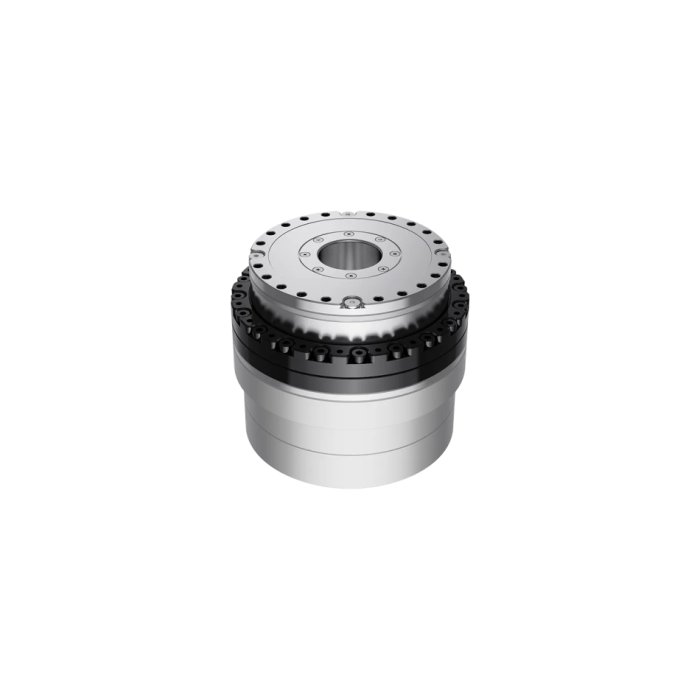
Ti5 Robotics 80-97 Lightweight Joint Module
Auf Lager
- MARKE:
- TI5 ROBOTICS
- MODELL:
- 80-97
- ORIGIN:
- China
- Warranty:
- 12 MONTHS
- AVAILABILITY:
- SUBJECT TO AVAILABILITY
- SKU:
- Ti5-Robotics-Joint-Module-80-97
Ti5 Robotics 80-97 Lightweight Joint Module
Ti5 Robotics 80-97 Lightweight Joint Module is a modular, integrated rotary actuator developed for humanoid robots, collaborative robot arms, and other intelligent machines that demand compact, high-torque joints. Offered as a single model family with four documented joint versions and five selectable gear ratios, the 80-97 combines a hollow-shaft mechanical layout with an integrated drive, encoder, and CAN or CAN/EtherCAT communication, allowing designers to specify the torque, speed, and interface combination that suits each axis of a machine.
Background
The shift toward integrated joint actuation
Modern robot designs increasingly replace separate motors, gearboxes, and drives with integrated joint modules. Packaging the motor, reduction stage, encoder, and electronics in one housing shortens development time, reduces wiring complexity, and keeps mass close to the joint axis, which matters for mobile and humanoid platforms where every gram affects balance and energy use. The manufacturer positions the 80-97 within this trend, emphasizing a modular, integrated, and lightweight design intended to simplify assembly and maintenance while optimizing space utilization and performance output.
Where the 80-97 fits in the Ti5 Robotics lineup
Ti5 Robotics supplies joint and actuator modules across several product lines, including lightweight joint modules, an intelligent bionic hand, collaborative robot arms, and humanoid robot actuators. The 80-97 belongs to the lightweight joint module series. It should not be confused with a complete robot: it is a joint actuator component meant to be designed into a larger machine. The vendor lists application areas spanning industrial production, scientific research and education, medical and rehabilitation robotics development, and commercial scenarios, reflecting the broad role joint modules play as building blocks rather than finished systems.
Technical Specifications
The following tables preserve the published configuration distinctions. Blank, malformed, or ambiguous source values are not confirmation of a capability; confirm the selected configuration during quotation.
CRA-RI80-97-PRO-2-XXX
| Gear Ratio | Peak Torque (N.m) | Max Allowable Torque At Average Load (N.m) | Rated Torque @ 2000RPM (N.m) | Peak Speed (RPM) | Rated Speed (With 1/2 Rated Torque) (RPM) | Gear Backlash (arcsec) |
| 51 | 121 | 68.5 | 48 | 65 | 54 | 20 |
| 81 | 169 | 107 | 78 | 43 | 35 | 20 |
| 101 | 194 | 133 | 84 | 36 | 27 | 10 |
| 121 | 207 | 133 | 84 | 30 | 23 | 10 |
| 161 | 217 | 133 | 84 | 22 | 17 | 10 |
| Rated Power(W) | Supply Voltage(V) | Max Continuous Current(A) | Rated Current(A) | Torque Constant (N.m/A) | Encoder Resolution (bit) | Communication Bus |
| 750 | 24-48 | 11.1 | 9.6 | 0.143 | 16 | CAN |
| Hollow Shaft(mm) | Length(mm) | Mass(kg) | Inertia(g * c㎡) |
| 27 | 85.5±0.5 | 1.5 | 1477.6 |
CRA-RI80-97-PRO-2-XXX-B
| Gear Ratio | Peak Torque (N.m) | Max Allowable Torque At Average Load (N.m) | Rated Torque @ 2000RPM (N.m) | Peak Speed (RPM) | Rated Speed (With 1/2 Rated Torque) (RPM) | Gear Backlash (arcsec) |
| 51 | 121 | 68.5 | 48 | 65 | 54 | 20 |
| 81 | 169 | 107 | 78 | 43 | 35 | 20 |
| 101 | 194 | 133 | 84 | 36 | 27 | 10 |
| 121 | 207 | 133 | 84 | 30 | 23 | 10 |
| 161 | 217 | 133 | 84 | 22 | 17 | 10 |
| Rated Power(W) | Supply Voltage(V) | Max Continuous Current(A) | Rated Current(A) | Torque Constant (N.m/A) | Encoder Resolution (bit) | Communication Bus |
| 750 | 24-48 | 11.1 | 9.6 | 0.143 | 16 | CAN |
| Hollow Shaft(mm) | Length(mm) | Mass(kg) | Inertia(g * c㎡) |
| 27 | 105.5±0.5 | 1.63 | 1761.1 |
CRA-RI80-97-PRO-2-XXX-2E-EC
| Gear Ratio | Peak Torque(N.m) | Max Allowable Torque At Average Load (N.m) | Rated Torque @ 2000RPM (N.m) | Peak Speed(RPM) | Rated Speed (With 1/2 Rated Torque) (RPM) | Gear Backlash (arcsec) |
| 51 | 121 | 68.5 | 48 | 65 | 54 | 20 |
| 81 | 169 | 107 | 78 | 43 | 35 | 20 |
| 101 | 194 | 133 | 84 | 36 | 27 | 10 |
| 121 | 207 | 133 | 84 | 30 | 23 | 10 |
| 161 | 217 | 133 | 84 | 22 | 17 | 10 |
| Rated Power(W) | Supply Voltage(V) | Max Continuous Current(A) | Rated Current(A) | Torque Constant (N.m/A) | Encoder Resolution (bit) | Communication Bus |
| 750 | 24-48 | 11.1 | 9.6 | 0.143 | 16/18 | CAN/EtherCAT |
| Hollow Shaft(mm) | Length(mm) | Mass(kg) | Inertia(g * c㎡) |
| 27 | 85.5±0.5 | 1.62 | 1532.07 |
How do the four versions and five gear ratios of the 80-97 differ?
All documented versions share the same 750 W rated power, 24-48 V supply range, current limits, torque constant, and 27 mm hollow shaft. The differences lie in length, mass, encoder configuration, and bus. The base version is the shortest and lightest at 85.5 mm and 1.5 kg. The -B version extends to 105.5 mm and 1.63 kg with higher rotor inertia. The -2E-EC version keeps the 85.5 mm length at 1.62 kg and adds a 16/18-bit encoder option with CAN/EtherCAT communication. Across gear ratios, peak torque ranges from 121 N.m at ratio 51 to 217 N.m at ratio 161, while peak speed falls from 65 RPM to 22 RPM over the same span; backlash tightens from 20 arcsec at the lower two ratios to 10 arcsec at ratios 101 and above. Choosing a ratio is therefore a direct trade between output torque, speed, and backlash.
Who is the Ti5 Robotics 80-97 Lightweight Joint Module for?
This module is intended for robotics engineers, system integrators, research laboratories, and product development teams building humanoid robots, collaborative arms, mobile manipulators, or custom automation axes. It suits organizations that prefer to design their own kinematics around proven actuator building blocks rather than developing motor-gearbox-drive stacks in-house. Buyers should be comfortable with CAN or EtherCAT motion control and with mechanical integration work, since the 80-97 is a component, not a plug-and-play finished device.
What is the Ti5 Robotics 80-97 Lightweight Joint Module used for?
Documented and typical integration contexts include:
- Hip, shoulder, and other high-torque joints in humanoid robot development programs.
- Axes of collaborative and lightweight robot arms where compact, integrated actuation is required.
- Scientific research and education platforms studying manipulation, locomotion, and control.
- Development of rehabilitation-robotics hardware in research settings.
- Industrial production equipment requiring compact rotary actuation with hollow-shaft cable routing.
- Commercial service-robot prototypes and custom machine axes built around CAN or EtherCAT control.
Pricing and Availability
Pricing for the 80-97 family depends on the version, gear ratio, and order quantity selected, and the manufacturer handles the product on an inquiry basis. Because the family spans four joint versions and five ratios, quotations are prepared per configuration. Lead times vary with configuration and volume, so projects with fixed schedules should confirm availability at the quotation stage. Requesting a quote through this listing is the fastest way to receive current pricing and delivery information for the exact variant required.
Frequently Asked Questions
What gear ratios are available for the 80-97?
Five ratios are documented: 51, 81, 101, 121, and 161. Peak torque rises with ratio from 121 N.m to 217 N.m, while peak speed decreases from 65 RPM to 22 RPM.
What is the difference between the standard version and the -B version?
The -B version is longer (105.5 mm versus 85.5 mm), slightly heavier (1.63 kg versus 1.5 kg), and has higher inertia (1761.1 versus 1477.6 g·cm²). Published torque, speed, and electrical figures are otherwise the same.
Does the 80-97 support EtherCAT?
The CRA-RI80-97-PRO-2-XXX-2E-EC version is documented with CAN/EtherCAT communication and a 16/18-bit encoder specification. The base and -B versions are listed with CAN only.
What supply voltage and power does the module use?
Documented versions are rated at 750 W with a 24-48 V supply, 11.1 A maximum continuous current, and 9.6 A rated current.
What is the hollow shaft used for?
The 27 mm hollow shaft allows cables and lines to pass through the joint axis, simplifying internal routing in arms and humanoid limbs.
Is the 80-97 a complete robot or a component?
It is a joint actuator component. It must be integrated into a robot or machine with an appropriate controller, structure, and power system.
Where can I buy Ti5 Robotics 80-97 Lightweight Joint Module and what does it cost?
It is available to order through this listing on a quotation basis. Submit a request specifying the version and gear ratio you need, and current pricing, configuration options, and delivery details will be provided.
Summary
The Ti5 Robotics 80-97 Lightweight Joint Module is a hollow-shaft, integrated joint actuator family offered in four versions and five gear ratios, with documented peak torque spanning 121-217 N.m depending on ratio and CAN or CAN/EtherCAT communication depending on version. Its shared electrical platform and version-specific lengths and masses let designers match each axis of a humanoid or collaborative system to the right torque-speed balance. For engineers evaluating configurations or requesting a quotation for a specific variant, this page is the starting point.