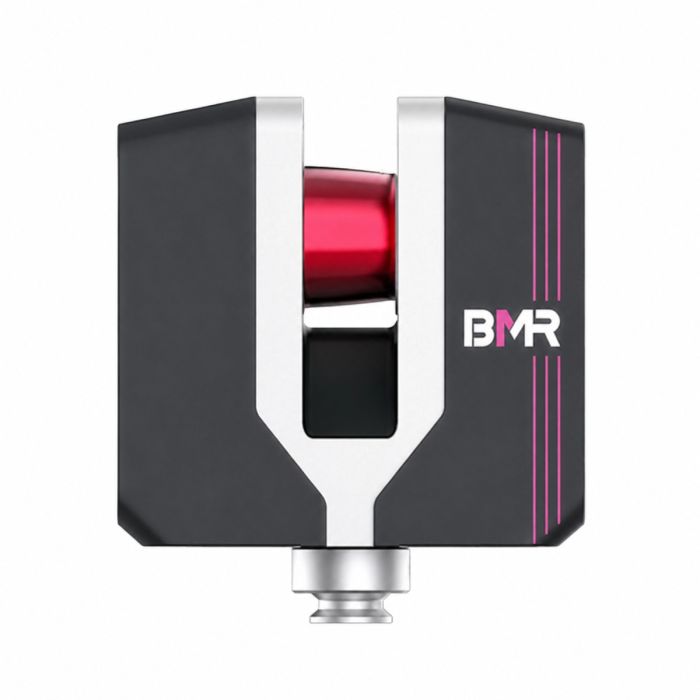
BMR Construction Measuring Robot
In stock
- 品牌:
- BMR
- 型號:
- MEASURING ROBOT
- ORIGIN:
- 中国
- Warranty:
- 12 MONTHS
- AVAILABILITY:
- SUBJECT TO AVAILABILITY
- SKU:
- BMR-Measuring-Robot
BMR Construction Measuring Robot
Every trade on a building site produces something; one discipline decides whether it counts. Measurement is construction's verdict — the flatness number that accepts a slab, the plumb reading that passes a wall, the as-built survey that releases a payment — and it has remained stubbornly manual: surveyors with levels, staffs and total stations, working room by room, recording by hand, at a pace that turns quality inspection into a bottleneck and a sampling exercise. The BMR Construction Measuring Robot turns the verdict into a scan. A compact, CE-certified instrument weighing under 4.5 kilograms, it stations itself in a room and, in a single two-minute stop, completes every measurement item at once — dimensions, flatness, levelness, squareness — sustaining up to 300 square metres of inspected building per hour at millimetre-level precision. Three models cover every scale of work: the CL10 for interiors at 0.6 to 30 metres, and the CL100 and CL400 stretching to 100 and 400 metres at ±1.0-millimetre accuracy for facades, halls and infrastructure. And measurement is only the entry point: the system captures panoramic site imagery and dense point clouds, builds reverse BIM models in real time, calculates material quantities for estimation, and — the line's defining trick — links its findings directly to BMR's concrete finishing and interior finishing robots, closing the loop from problem detected to problem documented to problem corrected, automatically.
Background
From sampling to census
Manual quality inspection measures what time allows — a few points per wall, a few rooms per floor — and infers the rest, which is why defects surface at handover, when they are most expensive. Robotic measurement inverts the economics: at two minutes per station, checking everything costs less than sampling once did, so inspection becomes a census rather than a poll. BMR's system runs that census at every stage a building passes through — structural, masonry, plastering and finishing, with the CL100 and CL400 extending to formal unit acceptance inspection — so deviations are caught at the stage where correcting them is cheapest, and every stage hands the next one a verified surface. The reference record reaches to infrastructure scale: the system has served measurement programmes on projects including Guangzhou Baiyun Station, one of the flagship railway-hub developments of China's national plan.
The robot that directs other robots
Shenzhen BrightMaster Robotics builds the measuring robot as the sensory organ of its intelligent-construction ecosystem — the concrete set, the interior finishing line, the floor and facade machines. Scan data flows into the multi-robot linkage: where the measuring robot finds a slab outside tolerance or a wall needing rework, the finding routes to the finishing robot whose job it is to fix it, with the correction verified on the next scan. That closed loop — detection, documentation, corrective execution — turns quality control from a report into a workflow, and it is why the measuring robot anchors BMR's digital-construction offer: its point clouds, reverse-modelled BIM and quantity calculations are the shared language every machine and manager on the site reads.
Technical Specifications
| Parameter | CL10 | CL100 | CL400 |
|---|---|---|---|
| Dimensions (L×W×H) | 238 × 218 × 120 mm | 230 × 183 × 103 mm | 230 × 183 × 103 mm |
| Weight | 3.9 kg | 4.4 kg | 4.4 kg |
| Measurement range | 0.6–30 m | 0.5–100 m | 0.5–400 m |
| Measurement accuracy | ±1.5 mm | ±1.0 mm | ±1.0 mm |
| Operating temperature | −5 °C to +45 °C | −10 °C to +55 °C | −10 °C to +55 °C |
| Laser | Class 1, eye-safe | Class 1, eye-safe | Class 1, eye-safe |
| Battery life | 4 h | 4 h | 4 h |
| Efficiency | 2 min/station, 300 m²/h | 2 min/station, 300 m²/h | 2 min/station, 300 m²/h |
| As-built stages | structural, masonry, plastering, finishing | + unit acceptance | + unit acceptance |
| Panoramic photos | — | optional | standard |
| Point cloud / BIM / quantity calculation | ● | ● | ● |
| Multi-robot linkage | ● | ● | ● |
| Certification | CE | CE | CE |
Configurations, software packages and accessories are confirmed at quotation.
What does a two-minute scan actually deliver?
Everything the site's paperwork runs on. One station produces the geometric truth of a room — every dimension, flatness and levelness value in a single dataset rather than a clipboard of spot readings; the panoramic imagery that documents condition at that date; the point cloud that becomes a real-time reverse BIM model, aligning as-built reality against design intent while the trades are still on the floor; and the material quantity calculations that turn geometry into estimation and progress data. For a contractor, that is inspection, documentation, verification and takeoff collapsed into one pass by one instrument light enough to carry in one hand. For a developer or consultant, it is evidence: acceptance inspections backed by millimetre data and imagery instead of judgment calls, dispute-proof and archived.
Who is the Construction Measuring Robot for?
For main contractors making full-coverage quality inspection routine rather than remedial; for engineering and surveying consultancies scaling their capacity from sampled points to whole-building datasets; for developers and owners commissioning independent as-built verification and unit acceptance at handover — the CL100 and CL400's formal acceptance capability is built for exactly that gate; for facade and infrastructure specialists needing the CL400's 400-metre reach on towers, station halls and long structures; and for contractors already running BMR's finishing robots, where the measuring robot completes the closed loop and the fleet begins to manage its own quality. Model choice follows range and role: CL10 for interior fit-out inspection, CL100 for full-building programmes, CL400 for facades and infrastructure scale.
What is the Construction Measuring Robot used for?
- Indoor as-built measurement: complete dimensional and flatness inspection of rooms in two-minute stations.
- Building facade measurement: long-range verification of elevations and envelopes with the CL400's 400-metre reach.
- Basement and slab flatness inspection: millimetre-level floor quality data for concrete acceptance.
- Stage-by-stage quality control: structural, masonry, plastering and finishing inspection, through to unit acceptance.
- Scan-to-BIM digital delivery: point clouds, real-time reverse BIM models and panoramic documentation.
- Quantity calculation and robot coordination: material takeoff from scan data and closed-loop tasking of BMR finishing robots.
Pricing and Availability
The Construction Measuring Robot is available for purchase and international delivery through this page in its CL10, CL100 and CL400 models, from single instruments for consultancies and contractors to multi-unit programmes integrated with BMR's construction robot fleet. Price and cost depend on model, software and digital-delivery configuration, training scope and quantity, so buyers should request a current quotation for their inspection profile; delivery, customs clearance and after-sales support are arranged worldwide. Purchase enquiries, datasheets and availability details for the Construction Measuring Robot are available on this page.
Frequently Asked Questions
What is the BMR Construction Measuring Robot?
A CE-certified, high-precision intelligent measurement system for construction quality inspection — a compact scanning robot under 4.5 kilograms that performs as-built measurement, facade measurement, floor flatness and concrete surface inspection, with scan-to-BIM, panoramic documentation and material quantity calculation built in.
How fast and how accurate is it?
Each station takes two minutes and completes all measurement items for the space in one scan, sustaining up to 300 square metres per hour — at ±1.5-millimetre accuracy on the CL10 and ±1.0 millimetre on the CL100 and CL400.
What is the difference between the CL10, CL100 and CL400?
Range and role: the CL10 covers 0.6 to 30 metres for interior inspection; the CL100 reaches 100 metres and adds unit acceptance inspection and optional panoramic capture; the CL400 reaches 400 metres with panoramic capture as standard — for facades, large halls and infrastructure.
What digital outputs does it produce?
Point cloud models, real-time reverse-engineered BIM models, panoramic site photographs (CL100/CL400), and construction material quantity calculations — a complete digital-delivery package that plugs into BIM and construction-management platforms.
How does it work with other construction robots?
Through BMR's multi-robot linkage: measurement findings route directly to the company's concrete finishing and interior finishing robots, forming a closed loop of problem detection, issue documentation and corrective execution, with the fix verified on the following scan.
Which construction stages can it inspect?
All of them — structural, masonry, plastering and finishing stages across all three models, with the CL100 and CL400 additionally supporting formal unit acceptance inspection at handover.
Where can I buy the Construction Measuring Robot and what does it cost?
The Construction Measuring Robot is available through this page, with delivery, customs clearance and after-sales support arranged for buyers worldwide. Because cost varies with model, configuration and quantity, buyers should request an individual quotation. All purchasing details are available on this page.
Summary
The Construction Measuring Robot gives the building site what it never had: total, continuous, objective self-knowledge. Two minutes per room, three hundred square metres per hour, a millimetre either way — and out of each scan, the point cloud, the BIM model, the photographs and the quantities that used to take crews and weeks. Three models scale the same instrument from apartment interiors to 400-metre facades and railway stations, and the multi-robot linkage turns its findings into work orders for the machines that fix what it finds. In BMR's line the big robots pour, level, finish and coat; this small one, under five kilograms, is the standard they all answer to. For contractors, consultants and developers building on data rather than dispute, this page is the starting point.