Unitree Humanoid Accessories
Unitree's humanoid accessory ecosystem turns one robot purchase into an upgradeable platform: Dex1-1 grippers through 20-DoF Dex5-1 tactile five-finger hands, Jetson Orin-to-Thor compute backplates up to 550+ TOPS, full-body VR teleoperation kits, gantries, LiDAR and stereo perception modules, quick-swap batteries, and replacement joint motors — everything that extends a G1, R1, H1, or H2 after the box opens. This guide covers the accessory categories, compatibility, and what buyers should know before purchasing.
Unitree Humanoid Accessories
Introduction / Overview
The secret of Unitree's humanoid dominance isn't just the robots — it's that every Unitree humanoid is a platform that keeps growing after purchase. The accessory ecosystem around the G1, R1, H1/H1-2, H2, and G1-D is the deepest in the industry, spanning six categories: dexterous hands (from two-finger grippers to 20-DoF tactile five-finger hands), compute expansions (Jetson Orin through AGX Thor backplates reaching 550+ TOPS), teleoperation systems (full-body VR kits and the D1-T teleoperation arm), development safety gear (gantries for G1 and H1), perception modules (Unitree's own 4D LiDAR L1/L2, the SV1-25 embodied stereo camera, plus Livox and RealSense options), and power and parts (quick-swap batteries, chargers, and the very joint motors — including IP68 waterproof units — that Unitree builds its robots from).
The hand ladder is the ecosystem's crown. The Dex1-1 two-finger gripper (V1 standard, V2 with integrated RGB camera) handles fast logistics tasks. The Dex3-1 three-finger force-control hand — the G1's signature pairing — packs 7 degrees of freedom (six direct-drive plus one gear-drive micro brushless force-control joints) and 33 tactile sensors per hand, streaming joint position, velocity, torque, temperature, and per-sensor pressure. The Dex5-1/Dex5-1P five-finger pair (left/right) reaches 20 DoF (16 active + 4 passive) across 12 micro force-controlled composite-transmission joints with smooth backdrivability — eliminating the "stiff hand" effect for RL and adaptive control — with optional tactile arrays (up to 94 sensors per hand at 1,000 Hz feedback) proven in page-flipping and Rubik's-Cube demonstrations, fitting G1, H1/H1-2, and H2. Beside them sit the Inspire five-finger hands of the G1's U5 builds (the RH56 family sold on this site) and the newer Dex2/5 strength-focused line. Add third-party extensions like interactive AI heads, and mission packages from G1-Comp football to G1-Boxing, and one truth emerges: a Unitree humanoid is never finished — which is exactly the point. This guide maps the ecosystem; datasheets available on request.
Design and Features
The Hand Ladder — Gripper to Tactile Five Fingers
- Dex1-1 (V1/V2) — the professional two-finger gripper: speed, simplicity, and (V2) an integrated RGB camera for vision-in-hand tasks — the economical effector for logistics and data collection.
- Dex3-1 — the force-control workhorse: 7 DoF of micro brushless force-controlled joints and 33 tactile sensors per hand, with full-state feedback (position, velocity, torque, stiffness, damping, pressure, IMU) — the standard G1 manipulation upgrade, with and without tactile tiers.
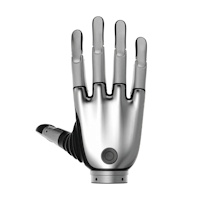
- Dex5-1 / Dex5-1P — the five-finger flagship pair: 20 DoF with backdrivable composite-transmission joints for fluid, human-like articulation; optional tactile feedback to 94 sensors per hand at 1,000 Hz — fine-motor capability demonstrated on pages, cubes, and precision objects, across G1/H1/H2 platforms.
- Dex2/5 and Inspire options — the strength-focused new line, plus the Inspire RH56 five-finger family (this catalog's Robot Hands section) fitted on U5-class G1 builds.
Compute Expansions
- Jetson backplates — AGX Orin modules through the AGX Thor backplate (2,070-TOPS-class silicon on the G1; H1 expansion options in the 275–550 TOPS range): converting any EDU platform into a frontier embodied-AI machine without replacing the robot.
- Why it matters — VLA models and world models are compute-hungry; the backplate path lets labs scale intelligence with grant cycles rather than robot replacements.
Teleoperation Systems
- Full-body VR kits — headset-based (PICO 4 Ultra-class) whole-body teleoperation for the G1: intuitive control and, critically, demonstration-data collection for imitation learning.
- D1-T teleoperation arm — the dedicated servo teleoperation arm empowering embodied-intelligence research: leader-follower manipulation data at scale.
Development and Safety Gear
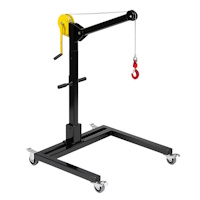
- G1 and H1 gantries — the overhead support frames that make early-stage locomotion development safe for robot and researcher alike (EDU G1 tiers include one; base units don't — plan accordingly).
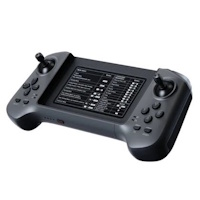
- Remote controllers and visualization computers — the operator layer for testing and demos.
Perception Modules
- Unitree 4D LiDAR L1/L2 — the company's own perception line, with the all-new L2 leading.
- SV1-25 embodied stereo binocular camera — purpose-built stereo vision for embodied-AI applications.
- Third-party standards — Livox MID-360, Hesai XT16, and Intel RealSense D435i/D405 options matching each platform's documented sensor architecture.
Power, Parts, and Components
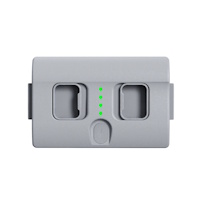
- Batteries and chargers — quick-swap packs per platform (R1 fast-charge, G1 9,000 mAh, H1 15 Ah class) with official chargers: the spares that keep fleets running through full sessions.
- Joint motors and servos — the A1 and GO-M8010-6 bionic joint motors, brushless digital servos, and B1-16 IP68 industrial waterproof joints: Unitree's actual drivetrain, sold for repair, spares, and custom builds.
- Replacement parts ecosystem — from calibration-grade components to structural spares, keeping total cost of ownership honest.
Technology and Specifications
The Ecosystem at a Glance
| Category | Key Items | Fits |
|---|---|---|
| Hands | Dex1-1, Dex3-1 (33 sensors), Dex5-1/1P (20 DoF, 94 sensors), Inspire RH56 | G1, H1/H1-2, H2, G1-D |
| Compute | Jetson Orin/Thor backplates (to 550+ TOPS class) | G1, H1 EDU platforms |
| Teleoperation | Full-body VR kit, D1-T arm | G1, data programs |
| Safety/dev | G1/H1 gantries, controllers | Development environments |
| Perception | 4D LiDAR L1/L2, SV1-25, Livox, RealSense | Platform-dependent |
| Power & parts | Batteries, chargers, joint motors, IP68 joints | All platforms |
Compatibility varies by robot revision and tier — confirm current datasheets and fit before ordering; datasheets are available on request.
Why the Ecosystem Is the Moat
A humanoid's useful life is set by its upgrade path: the platform whose hands, compute, and sensors keep improving outlives the sealed appliance every time. Unitree's accessory depth — unmatched in the industry — is why G1 fleets bought in 2024 are running 2026-class hands and Thor-class inference today, and why resale values hold.
Position in the Catalog
This page anchors the accessory layer of your Unitree tree — and bridges directly to the Robot Hands category, where the Inspire RH56, BrainCo Revo (R1-compatible), and premium alternatives give Unitree owners the industry's widest hand choice from one distributor.
Applications and Use Cases
Manipulation Upgrades
Converting locomotion platforms into manipulation researchers — Dex3-1 for force-control studies, Dex5-1 for anthropomorphic fine-motor work.
Embodied-AI Data Programs
VR teleoperation plus tactile hands feeding imitation-learning pipelines — the same workflow the G1-D productizes, assembled à la carte.
Compute Scaling
Backplate upgrades carrying installed fleets into the VLA era without hardware replacement.
Fleet Operations
Battery pools, chargers, and spare joints sustaining multi-robot uptime in labs, schools, and rental operations.
Custom Builds and Repairs
Unitree joint motors and IP68 actuators powering third-party machines and field repairs alike.
Advantages / Benefits
- The deepest upgrade path in humanoids — hands, brains, eyes, and muscles all improvable post-purchase.
- A hand for every mission and budget — gripper to 94-sensor tactile five-finger on one compatibility standard.
- Compute that scales with ambition — Orin to Thor without buying a new robot.
- Data collection unlocked — teleoperation kits turning any G1 into a demonstration engine.
- Ownership economics protected — official batteries, spares, and motors keeping fleets alive and TCO predictable.
- One-distributor convenience — Unitree accessories plus the wider hand catalog (Inspire, BrainCo) from a single supplier.
For buyers researching where to buy Unitree humanoid accessories, or comparing Dex3-1, Dex5-1, teleoperation kit, and backplate prices and costs, the evaluation should weigh platform compatibility, sensor tiers, compute headroom, and fleet-support needs — the dimensions where Unitree's ecosystem depth leads.
FAQ
What accessories are available for Unitree humanoid robots?
Six categories: dexterous hands (Dex1-1 grippers, Dex3-1 three-finger, Dex5-1/1P five-finger, Inspire options), compute backplates (Jetson Orin through AGX Thor), teleoperation systems (full-body VR kits, D1-T arm), gantries and dev gear, perception modules (4D LiDAR L1/L2, SV1-25, Livox, RealSense), and power/parts (batteries, chargers, joint motors).
What is the Unitree Dex3-1?
The Dex3-1 is Unitree's three-finger force-control dexterous hand: 7 degrees of freedom from micro brushless force-controlled joints (6 direct-drive, 1 gear-drive) with 33 tactile sensors per hand and full-state feedback — the standard manipulation upgrade for the G1, available with and without tactile tiers.
What is the Unitree Dex5-1?
The Dex5-1 (left) and Dex5-1P (right) are Unitree's five-finger tactile hands: 20 DoF (16 active + 4 passive) on 12 backdrivable micro force-controlled composite-transmission joints, with optional tactile arrays up to 94 sensors per hand at 1,000 Hz — fitting the G1, H1/H1-2, and H2 for fine-motor manipulation like page flipping and Rubik's-Cube solving.
Can I upgrade my G1's computing power?
Yes — Jetson backplate expansions carry EDU platforms from Orin NX class up to AGX Thor-class silicon (multi-hundred to 2,000+ TOPS range), letting installed robots run frontier VLA and world models without replacement; H1 expansion modules span the 275–550 TOPS class.
What is the G1 teleoperation kit?
A full-body VR control system (PICO 4 Ultra-class headset with motion tracking) enabling intuitive whole-body teleoperation of the G1 — both for remote task work and, crucially, for collecting the demonstration data imitation-learning pipelines require.
Do I need a gantry?
For early-stage locomotion development, strongly recommended — the overhead frame protects robot and researcher during tuning and falls; G1 EDU tiers include one, while base units and H1 programs typically add it separately.
Can I buy Unitree's joint motors separately?
Yes — the A1 and GO-M8010-6 bionic joint motors, brushless digital servos, and B1-16 IP68 waterproof joints are sold as components for repairs, spares, and custom robot builds: the same drivetrain inside Unitree's own machines.
How much do Unitree humanoid accessories cost?
The range spans accessory-tier grippers and spares through professional hands and compute modules to flagship tactile five-finger pairs. Contact a distributor for current pricing, compatibility confirmation, datasheets, and delivery timelines for your region.
Summary
Unitree's accessory ecosystem is the quiet engine of its dominance: the gripper that becomes a 33-sensor force-control hand that becomes a 94-sensor tactile five-finger pair; the Orin that becomes a Thor; the robot that learns by wearing a VR operator's whole body; the gantry that makes falling safe, the LiDAR that sharpens sight, and the very joint motors — waterproof to IP68 — sold openly for repair and invention. A Unitree humanoid is bought once and upgraded forever, which is precisely why the fleets keep growing. For anyone looking to buy Unitree Dex3-1 or Dex5-1 hands, teleoperation kits, compute backplates, gantries, batteries, or joint motors, compare their costs across configurations, or plan the upgrade path for a G1, R1, H1, or H2 fleet, this guide provides the essential foundation.