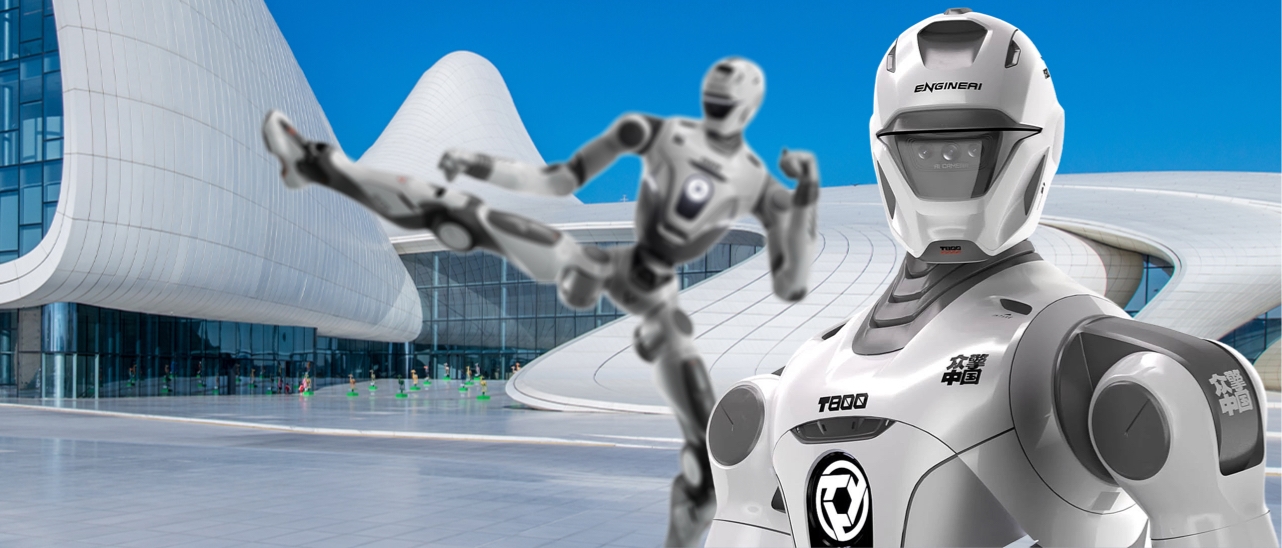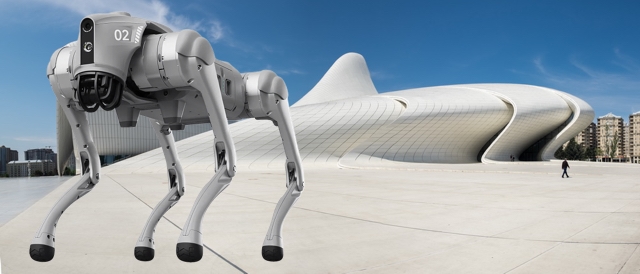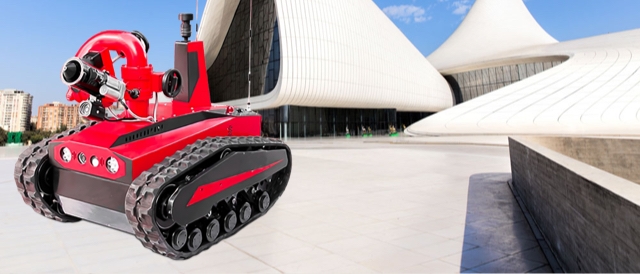
The Deep Robotics LYNX Series is a family of wheel-legged all-terrain robots developed by Deep Robotics for outdoor mobility, inspection, patrol, logistics, and emergency-response tasks. In current official materials, the series is centered on the LYNX M20, while the earlier LYNX Sport still appears on some regional product pages and is labeled discontinued on Deep Robotics’ U.S. products page.
Deep Robotics LYNX Series
Deep Robotics LYNX Series: Comprehensive Guide 2026
The Deep Robotics LYNX Series is a family of industrial-grade, wheel-legged quadruped robots developed by DEEP Robotics, a Hangzhou-based Chinese robotics company and recognized pioneer in embodied AI. First introduced to the market in 2024 with a global commercial rollout through 2025, the LYNX series represents DEEP Robotics' most significant product innovation to date — the creation of a hybrid locomotion platform that combines the rolling efficiency of wheeled vehicles with the terrain-adaptive agility of legged robots.
The LYNX M20 series represents the world's first wheeled-legged robot built specifically for challenging terrains and hazardous environments during industrial operation. Featuring a lightweight design and continuous operation capabilities under extreme conditions, LYNX M20 sets a new benchmark for intelligent robotic platforms working in complex scenarios.
The series currently comprises three distinct products:
- LYNX (original / Sport) — the inaugural consumer-accessible wheel-legged quadruped, priced from approximately $17,999
- LYNX M20 — the industrial-grade evolution, designed for mission-critical field deployment
- LYNX M20 Pro — the flagship configuration, adding full SLAM autonomy, autonomous charging, and expanded developer interfaces, winner of the CES 2026 Innovation Award
Together, these platforms address a long-standing challenge in mobile robotics: the fundamental trade-off between the speed and energy efficiency of wheeled systems and the terrain adaptability of legged platforms. By solving this through convergent kinematics and AI-driven gait management, the LYNX series has established itself as one of the most versatile and capable all-terrain robot platforms commercially available in 2025–2026.
2. Background: DEEP Robotics
DEEP Robotics (深之蓝/Hangzhou Yushu Technology) was founded in Hangzhou, China, and has grown into one of the world's leading developers of legged and wheel-legged robotics systems. The company's product portfolio extends beyond the LYNX series to encompass the X20, X30, Lite3, and DR01/DR02 quadruped platforms, along with the J60, J80, and J100 series of industrial joint actuators used by third-party robotics developers globally.
DEEP Robotics has consistently positioned itself at the intersection of academia and industry, prioritizing real-world deployment of embodied AI over laboratory demonstration. In December 2025, Deep Robotics secured a $70 million Series C funding round, underscoring strong investor confidence in the company's commercial traction and technology roadmap.
The LYNX M20 Pro's recognition as a CES 2026 Innovation Award winner placed DEEP Robotics on the global stage alongside the world's most advanced robotics and technology companies, validating the platform's novelty and practical significance.
3. The LYNX Product Family: Original, M20, and M20 Pro
The LYNX series encompasses three increasingly capable configurations, each building on the core wheel-leg hybrid architecture while expanding performance, protection, and autonomy:
| Feature | LYNX (Original/Sport) | LYNX M20 | LYNX M20 Pro |
|---|---|---|---|
| Target Market | Consumer / Research | Industrial field deployment | Advanced autonomy / R&D |
| IP Rating | IP54 | IP66 | IP66 |
| Weight | — | 33 kg | 33 kg |
| Payload (effective) | — | 15 kg | 15 kg |
| Max Payload | — | 50 kg | 50 kg |
| LiDAR | Single | Twin 96-line | Twin 96-line (Robosense Airy) |
| Speed (lab / operating) | 5 m/s / 2 m/s | 5 m/s / 2 m/s | 5 m/s / 2 m/s |
| SLAM Navigation | No | Partial | Full autonomous |
| Autonomous Charging | No | Optional | Yes |
| Connectivity | Wi-Fi | Wi-Fi / RF | Wi-Fi / RF / Gigabit Ethernet / USB 3.0 |
| Obstacle Clearance | 80 cm | 80 cm | 80 cm |
| CES 2026 Award | No | No | Yes |
| Starting Price | ~$17,999 | Contact Sales | ~$61,200+ |
Deep Robotics positions the LYNX line differently from its standard quadruped families. Instead of pure legged locomotion, the LYNX robots use a wheel-legged hybrid design that combines wheeled speed with legged agility. The company says this approach is intended to balance compactness, terrain adaptability, and operational efficiency in environments where both rapid movement and obstacle handling matter.
4. Design Philosophy: The Wheel-Leg Hybrid Concept
At the heart of the LYNX series is a fundamental reconception of how a mobile robot should traverse the physical world. Traditional quadruped robots achieve excellent terrain adaptability but consume substantial energy on flat surfaces because their gait requires constant leg acceleration against gravity. Wheeled robots achieve high energy efficiency on smooth ground but fail at the so-called "last meter" — the curb, the rubble pile, the stairwell.
The Deep Robotics Lynx M20 solves the "efficiency vs. agility" trade-off that has historically plagued mobile robotics. By unlocking its wheels to skate like a car or locking them to walk like a quadruped, the Lynx M20 achieves high-speed efficiency on concrete while maintaining the ability to climb stairs, traverse rubble, and navigate narrow 50 cm trenches.
The Cost of Transport Advantage
The Lynx M20 minimizes energy consumption by rolling 90% of the time and only expending high energy — stepping — when the terrain demands it. This dramatically reduces the robot's Cost of Transport (CoT), the fundamental metric measuring the energy required to move a unit mass over a unit distance, enabling the LYNX M20's industry-leading battery endurance of 3 hours unloaded and coverage of 15 km per charge.
Hyper-Flexible Joint Architecture
The LYNX M20's limbs feature what DEEP Robotics describes as hyper-flexible joints — joints with an unusually wide range of motion that enables seamless posture reconfiguration between operational modes. This flexibility is the mechanical foundation of the robot's ability to navigate radically different environment types without stopping to manually reconfigure hardware or switch between operational presets.
5. Technical Specifications
Physical Parameters
| Parameter | LYNX M20 / M20 Pro |
|---|---|
| Standing Dimensions (L×W×H) | 820 × 430 × 570 mm |
| Total Weight (with battery) | 33 kg |
| Narrow Space Clearance | 50 cm |
| Effective Payload | 15 kg |
| Maximum (Static) Payload | 50 kg |
Mobility Performance
| Parameter | Value |
|---|---|
| Lab-Tested Maximum Speed | 5 m/s (~18 km/h) |
| User-Mode / Operating Speed | 2–3 m/s (~7.2–10.8 km/h) |
| Maximum Continuous Stair Height | 25 cm |
| Maximum Single-Step Obstacle | 80 cm |
| Maximum Slope | 45° |
Environmental Ratings
| Parameter | Value |
|---|---|
| Ingress Protection (IP) | IP66 (M20/M20 Pro); IP54 (Original Lynx) |
| Operating Temperature | −20°C to +55°C |
| Low-Light Operation | Yes (bi-directional lighting + 96-line LiDAR) |
Power and Endurance
| Parameter | Value |
|---|---|
| Battery Capacity | 724 Wh (swappable lithium-ion) |
| No-Load Endurance | 3 hours / 15 km |
| Loaded Endurance (15 kg payload) | 2.5 hours / 12 km |
| Charging Time (single battery) | ~1.5 hours |
| Battery Type | Hot-swappable |
6. Locomotion System and Adaptive Gait Control
The LYNX M20's locomotion system represents one of the most sophisticated hybrid mobility architectures deployed in a commercially available robot as of 2025.
Driving-Stepping Controller
The "Driving-Stepping Controller" decouples forward velocity from leg motion. The robot can roll forward with three wheels while the fourth lifts to clear an obstacle. This simultaneous motion dramatically increases traversal efficiency over mixed terrain.
On uniform flat surfaces, the controller defaults to pure rolling mode, with all four legs in a low, stable posture and wheels driving the robot forward at up to the operational speed limit. As the onboard terrain recognition system detects approaching obstacles or terrain changes, the controller smoothly transitions specific legs into stepping mode while the remaining legs continue rolling — maintaining forward momentum throughout the transition.
Posture Modes
The LYNX M20 supports multiple configurable posture modes, each optimized for different environment types:
Front-Elbow / Rear-Knee Mode: The front legs articulate forward and the rear legs articulate backward, reducing both the robot's vertical profile and its effective footprint. This allows the robot to perform omnidirectional obstacle avoidance and squeeze through passages as narrow as 50 cm — critical for substations and disaster zones where debris narrows the path.
Full-Elbow Mode: When switched to the full-elbow mode, the robot excels at climbing stairs and overcoming significant height differences. This allows the LYNX M20 to navigate corridors as narrow as 50 centimeters, making it ideal for operations in tunnels, pipelines, and other cramped environments where humans and larger robots often struggle to reach.
Model Predictive Control (MPC) for High-Speed Stability
Used primarily during high-speed rolling, Model Predictive Control (MPC) looks milliseconds into the future. It predicts the robot's state and adjusts wheel torque and leg height to maintain centroidal dynamics. This prevents the robot from tipping over when cornering at 3 m/s or braking suddenly on a slope.
Wheel-Locking for Slope Stability
When ascending or descending steep inclines, the LYNX M20 can selectively lock individual wheels, converting them from passive rolling elements into fixed pivot points that stabilize the robot during climbing maneuvers. This wheel-locking capability enables confident operation on slopes of up to 45° across a variety of surface materials, including gravel, mud, and loose rock.
7. Sensors and Perception System
The LYNX M20 and M20 Pro are equipped with a comprehensive multi-modal sensor suite designed to provide real-time, 360-degree environmental awareness in both low-visibility and structurally complex field environments.
Twin 96-Line LiDAR (Robosense Airy)
Powered by dual octa-core processors, dual 96-line LiDAR units, and wide-angle cameras, the LYNX M20 offers advanced autonomy with omnidirectional obstacle avoidance, 360° point-cloud mapping, OTA software updates, and RF image transmission.
The twin LiDAR configuration provides a 360° × 90° field of view — one of the widest coverage volumes available on a robot of this size class. This panoramic point-cloud coverage enables the robot to detect and classify obstacles in any direction simultaneously, including obstacles approaching from the rear or sides, which is critical during autonomous patrol and inspection operations where the robot cannot always be monitored by a remote operator.
The 96-line resolution (compared to the 16–32 line systems common in earlier-generation inspection robots) provides sufficient point cloud density for reliable object classification, surface mapping, and dynamic obstacle tracking at the robot's operational speed.
Wide-Angle Cameras and Bi-Directional Lighting
In addition to LiDAR, the LYNX M20 is equipped with wide-angle cameras providing live video streaming for remote operator situational awareness. Thanks to a 96-beam LiDAR system, the robot autonomously navigates and performs tasks even in complete darkness, ensuring suitability for nighttime operations. Bi-directional front and rear lighting further extends operational capability in underground, tunnel, and nighttime deployment scenarios.
IMU and Force-Feedback Sensing
Six-axis Inertial Measurement Units (IMUs) provide real-time orientation data that feeds into the locomotion controller, enabling the robot to maintain dynamic balance during transitions between rolling and stepping modes, during obstacle crossing, and on uneven terrain where the robot's center of gravity shifts dynamically.
8. Computing Architecture
Dual Octa-Core Processors
On the computing side, the LYNX M20 Pro integrates two industrial 64-bit octa-core processors with 16 GB RAM and 128 GB storage each, to support navigation, perception, and advanced algorithm processing.
The dual-processor architecture divides computational workloads between locomotion control (real-time, low-latency demands) and perception and navigation (computationally intensive but more latency-tolerant). This separation ensures that time-critical gait control commands are never delayed by the heavier processing demands of LiDAR point-cloud interpretation or SLAM map generation.
NVIDIA Jetson Orin NX Integration (M20 Pro)
An NVIDIA Jetson Orin NX (100 TOPS) module drives 50 Hz simultaneous localization and mapping (SLAM), keeping the robot locked onto its path in metallic substation canyons where competing robots with lower-throughput compute sometimes drift.
The Jetson Orin NX's 100 TOPS of AI inference throughput enables real-time execution of deep neural networks for object detection, terrain classification, semantic scene understanding, and predictive path planning — capabilities that are essential for fully autonomous inspection missions in GPS-denied or structurally complex environments.
OTA Firmware Updates
All LYNX series models support Over-The-Air (OTA) firmware updates, enabling DEEP Robotics to push locomotion improvements, new feature activations, and security patches to deployed units without requiring physical service visits. This is particularly valuable for units deployed in remote or difficult-to-access field locations.
9. Battery and Endurance
Hot-Swappable Battery System
The robot features hot-swappable battery technology. Operators can replace a depleted battery with a fresh one without powering down the robot's onboard computers or sensors. This allows for near-continuous 24/7 operation in critical security or inspection shifts.
The hot-swap capability eliminates the forced operational downtime typically associated with fixed-battery robot platforms, where the entire mission must be paused during recharging. For deployment scenarios such as 24-hour perimeter security, continuous utility infrastructure inspection, or multi-day disaster response operations, this capability is functionally essential.
Autonomous Charging Dock (M20 Pro)
The LYNX M20 Pro adds an optional autonomous charging dock that enables the robot to navigate independently to its charging station when battery levels drop below a defined threshold, dock autonomously, recharge, and resume its assigned mission — all without human intervention. Delivering up to 4 hours of runtime per charge and supporting optional autonomous docking and charging, the LYNX M20 Pro ensures continuous field operation with minimal human intervention.
10. LYNX M20 Pro: Advanced Autonomy Features
The LYNX M20 Pro extends the base M20 platform with a suite of additional capabilities designed for fully autonomous, extended-duration missions:
Full SLAM Positioning and Mapping
The M20 Pro integrates SLAM (Simultaneous Localization and Mapping) positioning, enabling the robot to build and maintain accurate 3D maps of its environment in real time while simultaneously determining its precise location within those maps. This capability is essential for autonomous navigation in GPS-denied environments such as underground tunnels, building interiors, and enclosed industrial facilities.
Expanded Developer Interfaces
For integration into custom projects, the LYNX M20 Pro provides interfaces such as Gigabit Ethernet, USB 3.0, and 24V / 72V power outputs capable of supplying up to 300 W for external devices. Its mounting system makes it possible to add sensors, a robotic arm, an application-specific payload, or an additional computing module depending on the use case.
These interfaces support integration of third-party sensor systems — including thermal cameras, gas detectors, GNSS receivers, robotic arms, and custom inspection payloads — making the M20 Pro a highly extensible platform for specialized mission configurations.
11. Applications and Use Cases
The LYNX series' combination of wheel-leg hybrid mobility, industrial environmental protection (IP66), AI-driven terrain adaptation, and modular payload support makes it deployable across a wide spectrum of high-value industrial and public safety applications.
Power Infrastructure Inspection
Grid operators mount mid-infrared sensors to sniff out SF₆ leaks. Early detection prevents venting a greenhouse gas 22,000 times more potent than CO₂; a single breaker repair caught in time can avoid 22 tonnes of CO₂e equivalent. Field trials across 11 energy sites show that swapping a 4×4 pickup and two technicians for one Lynx and a remote operator yields an average 43% reduction in direct CO₂e and 30% lower OPEX over a 12-month cycle.
The LYNX M20's IP66 protection and 55°C upper operating temperature limit make it suitable for deployment in hydro-dam galleries, electrical substations, and power transmission corridors where human access is restricted due to heat, electrical hazard, or confined space regulations.
Renewable Energy Infrastructure
Utility-scale solar farms pair the robot with 640 × 512 px radiometric cameras to flag hotspots. A single Lynx covers approximately 2 hectares per minute, eliminating roughly 2 person-hours of truck-based patrols for every MW of panels. Onshore wind operators deploy the robot to inspect tower footings and nacelle interiors in winds topping 17 m/s, a threshold that grounds drones.
Emergency Response and Disaster Recovery
Designed to mitigate safety risks in hazardous environments and efficiency losses caused by complex terrains, the LYNX M20 can intelligently perceive its surroundings and autonomously adjust its posture to match the terrain. With omnidirectional obstacle avoidance capabilities, it easily navigates rugged mountain trails, muddy wetlands, and debris-strewn ruins.
In disaster-response scenarios — collapsed structures, flood zones, post-earthquake rubble fields — the LYNX M20's ability to navigate debris-strewn terrain that defeats both wheeled rescue vehicles and foot-based robots makes it a valuable tool for forward reconnaissance, victim location, and sensor deployment ahead of human responders.
Firefighting Support
The LYNX M20 can carry thermal imaging cameras and gas detection sensors into active fire zones, providing real-time situational awareness to incident commanders without exposing firefighters to direct heat and toxic atmosphere exposure. Its IP66 chassis resists water jets from all directions, allowing operation alongside active firefighting hose streams.
Logistics and Last-Mile Delivery
LYNX M20 supports logistics and delivery operations. In warehouse and campus logistics applications, the LYNX M20 leverages its wheeled speed on flat internal corridors and its legged capability for external ramps, curbs, and loading dock steps — navigating the full physical infrastructure of a logistics facility with a single platform rather than requiring separate indoor/outdoor vehicle fleets.
Scientific Exploration
The LYNX M20's ability to operate in extreme environmental conditions — from −20°C arctic fieldwork to +55°C desert environments — makes it suitable as a scientific instrument carrier and data collection platform for geological surveys, environmental monitoring, and ecological research in environments that are unsafe, impractical, or legally inaccessible for human field teams.
Research and Academic Development
For research laboratories, universities, academic researchers, and robotics engineers, the LYNX M20 Pro provides an interesting platform for working on quadruped locomotion, sensor fusion, omnidirectional obstacle avoidance, embedded perception, SLAM, real-time AI, and embedded software development for outdoor or semi-structured environments.
12. Advantages and Benefits
World's First Mid-Sized Industrial Wheel-Legged Robot
DEEP Robotics describes the LYNX M20 as the world's first mid-sized wheeled-legged robot designed for industrial use in challenging terrain and hazardous environments. This first-mover status in a new product category gives the platform a significant head start in building real-world deployment data and customer relationships in the industrial robotics sector.
Single-Operator Portability
Weighing just 33 kg, the LYNX M20 is transportable by a single operator. This is a critical logistical advantage over larger industrial inspection platforms (such as the Boston Dynamics Spot at 32 kg, but with a significantly larger form factor) and makes field deployment by small two-person teams practical without specialized lifting equipment.
90% Rolling Efficiency
By rolling the vast majority of the time and only stepping when terrain demands it, the LYNX M20 achieves energy efficiency far superior to traditional quadruped robots on flat and semi-flat terrain. This translates directly to the robot's 3-hour, 15 km unloaded endurance — a figure that substantially exceeds that of comparable pure-legged platforms.
IP66 All-Weather Durability
The IP66 rating — complete dust-tightness and protection against powerful water jets from any direction — makes the LYNX M20 one of the most environmentally resilient mid-sized inspection robots in its class. Combined with the −20°C to +55°C thermal operating range, this protection level enables year-round outdoor deployment in virtually any global climate.
Modular Expansion and Mission Flexibility
The LYNX M20 Pro's mounting system and multi-voltage expansion ports (24V and 72V, up to 300W) enable integration of virtually any sensor or payload the mission requires — from thermal cameras and gas analyzers to robotic arms and communications repeaters — making it a genuinely universal field robotics platform rather than a single-purpose inspection tool.
CES 2026 Innovation Award Recognition
The LYNX M20 Pro's receipt of the CES 2026 Innovation Award provides independent global validation of the platform's technical novelty and commercial significance, distinguishing it from competitors in purchasing evaluations by institutional and government customers.
13. Comparison with Competing Robots
The LYNX M20 competes primarily against other industrial inspection quadruped platforms. The following table provides a comparative reference as of early 2026:
| Feature | Deep Robotics LYNX M20 | Boston Dynamics Spot | Unitree B2 | ANYbotics ANYmal C |
|---|---|---|---|---|
| Locomotion Type | Wheel-Leg Hybrid | Legged only | Legged only | Legged only |
| Weight | 33 kg | 32 kg | ~60 kg | 50 kg |
| Payload | 15 kg effective / 50 kg max | 14 kg | 20 kg | 10 kg |
| IP Rating | IP66 | IP54 | IP56 | IP67 |
| Operating Temperature | −20°C to +55°C | −20°C to +45°C | −20°C to +55°C | −25°C to +50°C |
| Max Speed | 5 m/s (lab) / 3 m/s (user) | 1.6 m/s | 5 m/s | 1.0 m/s |
| Battery Life (unloaded) | 3 hours / 15 km | ~90 minutes | ~5 hours | ~2 hours |
| LiDAR | Twin 96-line | Single 5-plane | Dual (varies) | Single rotating |
| Narrow Space | 50 cm | ~60 cm | ~65 cm | ~65 cm |
| Autonomous Charging | Yes (M20 Pro) | Yes (Spot Dock) | Optional | Yes (ANYdock) |
| Award Recognition | CES 2026 Innovation Award | Numerous | — | Red Dot 2022 |
| Approx. Base Price | ~$17,999–$61,200+ | ~$75,000+ | Contact Sales | ~$100,000+ |
Boston Dynamics' Spot remains the most recognizable quadruped, but spec-for-spec the LYNX M20 pulls ahead in key areas. Total-cost-of-ownership estimates show that list prices hover near parity at approximately US$90,000 with base sensors, yet Lynx's cheaper expansion module, lower annual service contract, and smaller battery fleet give it a cost advantage over a 12-month operational cycle.
The LYNX M20's most decisive differentiator is its wheel-leg hybrid locomotion system — a feature no other commercially shipping industrial inspection quadruped currently offers — which delivers dramatically superior energy efficiency, higher operational speed, and longer range per charge than any competing pure-legged platform.
14. Pricing and Availability
The LYNX series is available at the following reference price points:
| Model | Price |
|---|---|
| LYNX (Original / Sport) | ~$17,999 (pre-sale / regional pricing) |
| LYNX M20 | Contact Sales (estimated $50,000–$70,000+) |
| LYNX M20 Pro | From ~$61,200 (verified reseller pricing) |
The Lynx is released with a 2024 launch date and global rollout through 2025, priced at approximately USD $17,999 for the standard Lynx, with M20 Industrial Series pricing at $50,000 and above.
All LYNX M20 and M20 Pro units are available with a 1-year standard limited warranty and access to DEEP Robotics' global technical support network, including 24/7 remote support and optional on-site training packages.
How to Purchase
The LYNX series is available through:
- DEEP Robotics official US website and online shop: www.deeprobotics.us / shop.deeprobotics.us
- DEEP Robotics global headquarters: www.deeprobotics.cn/en
- Authorized global resellers including Generation Robots (Europe), AVL Gear, and regional distribution partners across Asia-Pacific, North America, and the Middle East
- Direct enterprise and government procurement — DEEP Robotics' corporate sales team handles institutional, multi-unit, and custom-payload configurations
Global pre-orders for the LYNX M20 series opened following the product's official announcement, with delivery timelines communicated on a per-region basis by the company's sales team.
15. Frequently Asked Questions
What is the Deep Robotics LYNX Series?
The Deep Robotics LYNX Series is a family of wheel-legged quadruped robots developed by DEEP Robotics, a Chinese robotics company headquartered in Hangzhou. The series combines wheeled locomotion for speed and efficiency with legged movement for obstacle crossing and terrain adaptability. The current series includes the original LYNX (Sport), the LYNX M20 — described as the world's first mid-sized wheeled-legged robot designed for industrial use in extreme environments — and the LYNX M20 Pro, winner of the CES 2026 Innovation Award, which adds full SLAM autonomous navigation and an autonomous charging dock.
How does the Deep Robotics LYNX M20 work?
The LYNX M20 uses a hybrid locomotion system controlled by what DEEP Robotics calls a Driving-Stepping Controller. On flat and smooth terrain, the robot rolls on all four wheels, achieving high speed and energy efficiency. When approaching obstacles, uneven terrain, stairs, or narrow passages, the controller dynamically transitions individual legs from rolling to stepping mode — sometimes rolling with three legs while stepping with one — maintaining forward momentum throughout. A dual 96-line LiDAR system provides real-time 360° × 90° point-cloud data that feeds the robot's terrain recognition and obstacle avoidance system, enabling autonomous adaptation to changing terrain without operator intervention.
Why is the Deep Robotics LYNX Series important for industrial robotics?
The LYNX series is important because it resolves a fundamental long-standing trade-off in mobile robotics between the energy efficiency and speed of wheeled platforms and the terrain adaptability of legged ones. For industrial inspection, emergency response, and logistics applications, this means deploying a single platform that can operate at vehicular speed across flat factory floors and then transition seamlessly to stepping over rubble, climbing stairs, and navigating 50 cm-wide tunnels — without swapping vehicles or requiring operator reconfiguration. Its IP66 protection, −20°C to +55°C operating range, and hot-swappable battery system further extend its deployability to extreme environments and continuous-operation scenarios.
Where can I buy the Deep Robotics LYNX M20?
The LYNX M20 and M20 Pro are available for purchase through DEEP Robotics' official US e-commerce platform at shop.deeprobotics.us, through the company's global headquarters website at deeprobotics.cn/en, and through authorized resellers including Generation Robots in Europe and AVL Gear in North America. The standard LYNX is priced from approximately $17,999, while the LYNX M20 Pro starts at approximately $61,200 through verified resellers. For industrial, government, or multi-unit orders, prospective buyers are advised to contact DEEP Robotics' enterprise sales team directly for volume pricing and custom configuration support.
What are the key benefits of the Deep Robotics LYNX M20 over traditional quadruped robots?
The LYNX M20 offers five measurable advantages over traditional pure-legged quadruped inspection robots. First, its wheel-leg hybrid locomotion achieves dramatically superior energy efficiency on flat terrain, resulting in 3 hours / 15 km of unloaded endurance — roughly double that of Boston Dynamics Spot. Second, its IP66 rating surpasses the IP54 of Spot and matches or exceeds most competing industrial platforms. Third, its 5 m/s lab-tested maximum speed and 3 m/s user-mode speed are roughly three times the maximum operational speed of Spot (1.6 m/s), enabling faster mission completion. Fourth, its 80 cm single-step obstacle clearance enables it to navigate obstacles that would stop most pure-legged inspection robots. Fifth, the LYNX M20 Pro's autonomous charging dock and full SLAM navigation enable truly unattended, continuous field operations — a capability that significantly reduces ongoing labor costs compared to platforms requiring manual battery changes or constant operator oversight.
What is the difference between the LYNX M20 and the LYNX M20 Pro?
Both platforms share the same physical chassis (33 kg, 820×430×570 mm, IP66, 15 kg payload), locomotion system, LiDAR configuration, and battery endurance. The M20 Pro adds several critical enhancements: full SLAM-based autonomous positioning and 3D mapping; fully autonomous navigation without constant operator input; an autonomous charging dock enabling self-recharging between missions; expanded developer interfaces including Gigabit Ethernet, USB 3.0, and 24V/72V power outputs up to 300W for external payloads; and an NVIDIA Jetson Orin NX AI accelerator module for 50 Hz real-time SLAM and deep learning-based perception. The M20 Pro also carries the CES 2026 Innovation Award. Its starting price of approximately $61,200 reflects these substantial autonomy and integration upgrades.
Is the Deep Robotics LYNX M20 waterproof?
Yes. The LYNX M20 and M20 Pro carry an IP66 ingress protection rating, the highest dust protection level (completely dust-tight) combined with protection against powerful water jets from any direction. This makes the robot suitable for deployment in heavy rain, across muddy wetlands, through flooded infrastructure, and in wet industrial environments. It is not rated for submersion. The original LYNX (Sport) carries a lower IP54 rating, offering partial dust resistance and protection against water splashing from any direction.
16. Summary
The Deep Robotics LYNX Series represents one of the most consequential innovations in field robotics in recent years. By pioneering the wheel-leg hybrid quadruped format — and proving its value in demanding real-world deployments ranging from power grid inspection to disaster response — DEEP Robotics has created a product family that obsoletes the traditional binary choice between wheeled efficiency and legged adaptability. The LYNX M20, as the world's first mid-sized industrial wheel-legged robot, and the LYNX M20 Pro, as a CES 2026 Innovation Award winner with full SLAM autonomy and autonomous charging, collectively define a new performance benchmark for all-terrain industrial inspection robots. With a verified starting price accessible to a broad range of institutional buyers, an expanding global distribution network, and a $70 million Series C backing the company's continued R&D, the LYNX series is positioned to shape the industrial field robotics landscape for years to come.
Quick SEO Reference Card
| Tag | Content |
|---|---|
| Meta Title | Deep Robotics LYNX Series Robot | Full Guide 2025 |
| Meta Description | Explore the LYNX M20 and M20 Pro: wheel-leg hybrid robots with IP66, twin 96-line LiDAR, 80 cm obstacle clearance, and CES 2026 Innovation Award. Full specs and pricing inside. |
| Primary Keyword | Deep Robotics LYNX Series |
| Secondary Keywords | LYNX M20 robot, LYNX M20 Pro specifications, wheel-legged industrial robot 2025, Deep Robotics IP66 quadruped, CES 2026 Innovation Award robot |
| Long-Tail Keywords | Deep Robotics LYNX M20 vs Boston Dynamics Spot, best wheel-leg hybrid robot for industrial inspection, LYNX M20 Pro price and availability, industrial quadruped robot autonomous charging |
| Canonical URL Suggestion | /deep-robotics-lynx-series-wheel-leg-robot |
| Schema Markup Types | Product + FAQPage + Article + Organization |
| Recommended Internal Links | Deep Robotics X20 article, industrial quadruped robot comparison 2025, wheel-leg hybrid robotics overview |