Government Robots
Government Robots: Types, Use Cases, Costs & Benefits (Complete Guide)
Government robots serve public sector missions across defense, public safety, infrastructure, border control, disaster response, and civil services. They operate in environments where human deployment is too dangerous, too expensive, or too slow - clearing IEDs, inspecting bridges, patrolling borders, and delivering services to citizens. Unlike commercial or industrial robots, government robots are often funded through procurement budgets, evaluated on mission capability rather than commercial ROI, and subject to regulatory and public accountability frameworks that private sector deployments are not.
The category spans an enormous range: a bomb disposal robot used by a municipal police department, a military UAV, a robot that processes passports at a customs hall, and an autonomous vehicle patrolling a government campus are all government robots. What they share is a public sector procurement context and a public interest mission.
Types of Government Robots
Bomb Disposal and EOD Robots
Remote-controlled robots that manipulate, examine, and neutralize explosive ordnance. iRobot PackBot, Northrop Grumman Andros, and QinetiQ TALON are well-known platforms used by military and civilian law enforcement globally.
Military Ground Robots (UGVs)
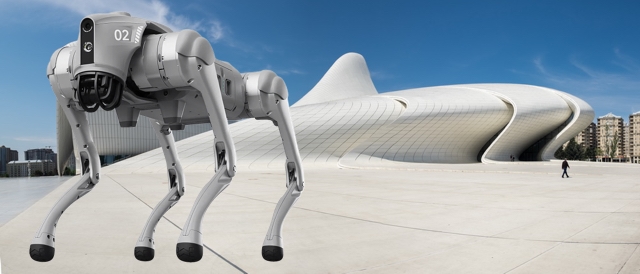
Unmanned ground vehicles for reconnaissance, supply transport, perimeter security, and combat support. Ghost Robotics Vision 60, Textron FLIR Systems platforms, and various defense contractor UGVs are in active development and deployment.
Military and Government UAVs
Unmanned aerial vehicles for surveillance, reconnaissance, and strike missions. The military drone market is enormous - from DJI-derived tactical drones to Predator/Reaper-class platforms - and represents the largest government robot procurement category by expenditure.
Border Security Robots
Autonomous and semi-autonomous systems that monitor borders: ground vehicles with sensor payloads, surveillance drones, and robotic sensor towers. The US DHS and CBP have deployed various robotic sensing systems along borders.
Infrastructure Inspection Robots
Drones, quadrupeds, and crawlers used by government agencies to inspect roads, bridges, tunnels, dams, power lines, and public buildings. These replace or augment manual inspection by government engineering teams.
Emergency Response Robots
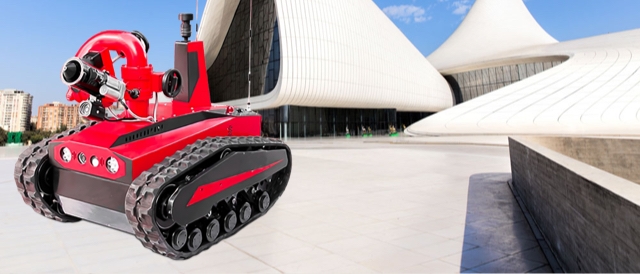
Robots that operate in disaster environments - collapsed buildings, chemical spills, nuclear incidents, flooding - to search for survivors, assess conditions, and execute tasks too dangerous for human first responders.
Customs and Security Robots
Automated scanning systems, mobile patrol robots, and document verification robots deployed at airports, ports, and border crossings to accelerate processing and improve security detection.
Public Service Robots
Robots deployed in government-to-citizen service contexts: information kiosks, document processing robots, service queue management systems, and library robots.
Use Cases of Government Robots
Improvised Explosive Device (IED) Disposal
EOD robots are the most established government robot application. Police and military EOD teams worldwide use remote-controlled robots to examine and neutralize suspected explosive devices without exposing personnel to blast risk. This application has a clear, proven track record dating back to the 1970s.
Military Reconnaissance and ISR
UAVs conduct intelligence, surveillance, and reconnaissance (ISR) missions that would previously require manned aircraft or human operatives. Extended dwell time, small signature, and no crew risk make drones the default reconnaissance platform for military and intelligence operations.
Border and Perimeter Monitoring
Autonomous sensor platforms monitor extended border areas and facility perimeters continuously - flagging intrusions, tracking movement, and cueing human response to detected events.
Bridge and Infrastructure Inspection
Government transportation agencies use drones and crawlers to inspect bridges and road infrastructure on accelerated schedules, identifying structural issues before they become safety failures.
Disaster Response Operations
After earthquakes, building collapses, or chemical incidents, robots conduct initial assessment and search operations. DARPA's Robotics Challenge was explicitly designed to develop robots capable of disaster response in human-scale environments.
Nuclear Facility Inspection and Remediation
Nuclear power plants and waste storage facilities use robots to inspect and maintain equipment in radiation zones where human access is limited by dose constraints.
Customs and Port Scanning
Automated X-ray, gamma-ray, and neutron scanning systems inspect cargo containers, vehicles, and luggage at ports and border crossings for contraband, explosives, and hazardous materials.
Industries That Use Government Robots
Military and Defense
The largest government robot market by expenditure. EOD, UGVs, UAVs, and logistics robots.
Law Enforcement and Public Safety
Municipal, state, and federal law enforcement agencies use EOD robots, surveillance UAVs, and patrol robots.
Transportation and Infrastructure
Highway agencies, bridge authorities, and infrastructure departments use inspection robots.
Emergency Management
FEMA and equivalent agencies in other countries evaluate and deploy emergency response robots.
Border Protection and Customs
CBP, EU border agencies, and national customs services use robotic scanning and monitoring systems.
Nuclear and Hazardous Materials
Nuclear regulatory bodies and facility operators use robots in radiation environments.
Benefits of Government Robots
Personnel Safety
The primary driver for most government robot adoption. EOD robots save lives. Surveillance drones replace manned reconnaissance in contested airspace. Disaster response robots enter collapsed structures before human rescue teams. The government robot value proposition is frequently measured in lives protected rather than dollars saved.
Extended Surveillance Reach
A drone or ground sensor platform monitors an area continuously that would require dozens of human personnel to watch in person. For border security, critical infrastructure protection, and military reconnaissance, the surveillance multiplication factor of robots is decisive.
Consistency and Documentation
Robotic inspection of bridges, buildings, and infrastructure generates documented, timestamped records. This supports liability management, regulatory compliance, and long-term infrastructure lifecycle management in ways that informal human inspection records do not.
Cost Reduction in Long-Duration Operations
For extended surveillance, patrol, and inspection missions, robotic systems are less expensive than equivalent human personnel deployment. Military UAV operations cost a fraction of equivalent manned flight hours.
Capability in Denied Environments
Radiation zones, toxic atmospheres, extreme heat, and physically confined spaces are environments where human access is limited or impossible. Government robots extend operational reach into denied environments.
Challenges & Limitations of Government Robots
Procurement Complexity
Government procurement processes are lengthy, highly regulated, and subject to political influence. Technology acquisition cycles of 3-7 years are not unusual for military platforms. This creates a persistent gap between available commercial technology and deployed government capability.
Interoperability
Government robot fleets often involve multiple platforms from different vendors with incompatible data formats, communication protocols, and control systems. Interoperability is a persistent challenge in both military and civilian government robot deployments.
Cybersecurity
Government robots are attractive targets for adversaries. Command and control systems, sensor data streams, and software supply chains must be hardened against interference, spoofing, and exploitation. Cybersecurity requirements add cost and complexity.
Legal and Ethical Frameworks
Autonomous government robots - particularly armed military platforms and surveillance systems - raise legal and ethical questions that are actively contested. Rules of engagement for autonomous weapons systems, privacy implications of pervasive surveillance drones, and due process considerations for law enforcement robots are subjects of ongoing policy and legal debate.
Maintenance in Field Conditions
Military and field-deployed government robots must be maintained in austere conditions with limited supply chain support. Reliability and field-maintainability requirements are more demanding than commercial deployments.
Public Acceptance
Government surveillance robots, border monitoring systems, and law enforcement platforms generate public debate about civil liberties, privacy, and the appropriate scope of robotic government surveillance. Public acceptance is a real constraint on deployment decisions.
Cost & ROI of Government Robots
For up-to-date prices, browse and buy government robots for sale here.
EOD/patrol robots (municipal): $150,000-$400,000 for full EOD robot systems. Operational for 10-15+ years.
Military UGVs: $500,000-$5,000,000+ per unit depending on capability tier.
Military/government UAVs: From $5,000 for tactical small drones to $40M+ for Predator/Reaper-class systems.
Infrastructure inspection drones: $10,000-$50,000 for systems used by government agencies.
Border sensor systems: Infrastructure-scale costs in the hundreds of millions for large deployments.
Government robot ROI is typically evaluated on mission effectiveness metrics and life-cycle cost compared to human personnel alternatives, rather than commercial financial return calculations.
Key Technologies Behind Government Robots
Rugged Hardware Platforms: Government robots must meet military-grade durability standards (MIL-SPEC) for temperature, shock, vibration, water ingress, and electromagnetic interference.
Encrypted Communications: All control and data links use AES-256 or stronger encryption, with frequency hopping and anti-jam capability for military applications.
Autonomous Decision Systems: AI-based threat detection, object identification, and route planning. The level of autonomy - from human-operated to human-supervised to fully autonomous - is a defining parameter for government robot classification and legal treatment.
Multi-Domain Sensor Fusion: EO/IR cameras, radar, acoustic sensors, and chemical/biological detection systems are integrated into government robot payloads. Data fusion provides operators with a unified operational picture.
Geofencing and Safe Zones: Electronic boundaries that limit robot operation to authorized areas - important for both safety and legal compliance in civilian and mixed-use environments.
How to Implement Government Robots
-
Mission requirements definition. Define the specific operational need: what task, in what environment, under what constraints.
-
Standards compliance review. Identify applicable federal, state, or agency procurement standards, cybersecurity requirements, and legal frameworks.
-
Procurement process. Engage the applicable procurement vehicle — GSA schedule, IDIQ contract, sole-source justification, or competitive RFP.
-
Pilot and evaluation. Conduct operational trials under realistic mission conditions before full procurement commitment.
-
Training program. Develop operator training and qualification programs.
-
Maintenance and sustainment. Define the sustainment model: organic maintenance, contractor support, or depot-level maintenance.
-
Review and update. Establish a technology refresh cycle to prevent capability obsolescence in a fast-moving technology environment.
Government Robot Safety & Regulations
Government robots are subject to a distinct regulatory framework:
-
DoD Directive 3000.09: US Department of Defense policy on autonomous and semi-autonomous weapons systems.
-
FAA regulations: Government drones operating in the National Airspace System must comply with FAA regulations, though government agencies can obtain airspace authorizations not available to civilian operators.
-
State and local laws: Law enforcement robot use is subject to applicable state and local laws. Several US states have passed legislation governing police use of robots.
-
International humanitarian law: Military robot use in armed conflict must comply with international humanitarian law, including distinction, proportionality, and precaution principles.
-
Privacy laws: Government surveillance robots must comply with applicable constitutional and statutory privacy protections.
Top Government Robot Brands / Companies
|
Company |
Key Platform |
Primary Use |
|
iRobot (now part of Amazon) |
PackBot |
EOD, reconnaissance |
|
Northrop Grumman |
Andros, Remotec |
EOD |
|
Ghost Robotics |
Vision 60 |
Military patrol |
|
General Atomics |
Predator, Reaper |
Military ISR |
|
AeroVironment |
Switchblade, Puma |
Tactical drones |
|
Textron / FLIR |
SUGV, Kobra |
Military UGV |
|
QinetiQ |
TALON, Dragon Runner |
EOD, military |
|
Boston Dynamics |
Spot, Atlas |
Government, military (R&D) |
|
Elbit Systems |
Various |
Military, border |
|
Teledyne FLIR |
Various |
Military, law enforcement |
Overview of the Government Robotics Market
The global government and defense robotics market - including UGVs, military UAVs, EOD robots, and government service robots - is valued at tens of billions of dollars annually when military aviation platforms are included. The military UGV segment alone was approximately $3-4 billion in 2024 and growing.
Ukraine conflict dynamics have accelerated military robot development globally. The use of commercial drones, autonomous underwater vehicles, and ground robots in active conflict has demonstrated the operational utility of robotic platforms and catalyzed defense procurement in NATO and allied nations.
The civilian government robot market (infrastructure inspection, public safety, border management) is smaller but growing, driven by aging infrastructure requirements, border security investment, and the availability of commercial platforms that can be adapted for government use at lower cost than purpose-built government systems.
Frequently Asked Questions
What are government robots?
Government robots are robotic systems procured and operated by government agencies for public sector missions including defense, public safety, infrastructure inspection, disaster response, border security, and citizen services.
What is a bomb disposal robot?
A bomb disposal robot (EOD robot) is a remote-controlled platform used by military and police EOD teams to inspect, manipulate, and neutralize suspected explosive devices, keeping human operators at a safe distance.
Are military drones considered robots?
Yes. Military UAVs (drones) are robotic systems - they operate autonomously or under remote control, carry sensor and weapon payloads, and execute missions without a pilot in the aircraft. They are the largest category of government robot by expenditure.
What are unmanned ground vehicles (UGVs)?
UGVs are ground-based robotic vehicles used for reconnaissance, logistics, combat support, and other military and government ground operations without human occupants.
How are government robots procured?
Through government-specific procurement vehicles: GSA schedules, IDIQ contracts, competitive RFPs, and in some cases sole-source contracts. Procurement timelines are significantly longer than commercial purchasing.
What legal framework governs autonomous weapons?
DoD Directive 3000.09 in the US requires meaningful human control over decisions to use lethal force. International humanitarian law requires compliance with distinction, proportionality, and precaution principles. The specific legal framework for autonomous weapons in armed conflict remains an active area of international policy debate.
Do police departments use robots?
Yes. Many municipal and state police departments have EOD robots, surveillance UAVs, and in some cases, patrol or negotiation robots. Use is subject to applicable state laws and department policy.
What government agencies use robots most?
The Department of Defense (military branches) is by far the largest government robot operator. CBP (Customs and Border Protection), DHS, state and local law enforcement, nuclear regulatory agencies, and transportation departments are significant civilian government robot users.
Can civilians see government surveillance robots?
Government surveillance robot deployments may or may not be publicly disclosed depending on the agency, jurisdiction, and operational security considerations. Domestic surveillance robots used by law enforcement agencies are increasingly subject to public disclosure and policy requirements under transparency initiatives.
What is the future of government robots?
Increased autonomy (AI-driven decision-making with human supervision), swarm operations (coordinated multi-robot missions), better human-machine teaming, and lower-cost commercial-off-the-shelf platforms adapted for government use are the near-term development directions.