MagicLab
MagicLab is the Chinese embodied-AI company that became a household name overnight when six of its MagicBot Z1 humanoids danced beside pop stars at the 2026 Spring Festival Gala before 1.2 billion viewers — selling out on JD.com within minutes. Behind the fame: the industrial MagicBot Gen1 working factory lines since 2024, the agile Z1 with up to 50 DoF, the MagicDog quadruped, and mass-produced components. This guide covers the MagicLab lineup, technology, applications, and what buyers should know before purchasing.
MagicLab
Introduction / Overview
MagicLab experienced the rarest event in robotics: an overnight transformation into a household name. On the eve of Chinese New Year 2026, six MagicBot Z1 humanoids danced beside pop stars at the Spring Festival Gala — the most-watched broadcast on Earth, with some 1.2 billion viewers — and the company's JD.com listing sold out within minutes of going live, with the platform reporting robot searches up 300% inside two hours. But the Gala was a coming-out, not a beginning: MagicLab's MagicBot Gen1 industrial humanoid has been working real electronics-factory lines since December 2024 — inspection, material handling, barcode scanning — and the company had already collected the first Red Dot Design Award ever given in humanoid robotics (April 2025), four consecutive CCTV flagship-program features, front-page People's Daily coverage, and endorsement from the Ministry of Industry and Information Technology.
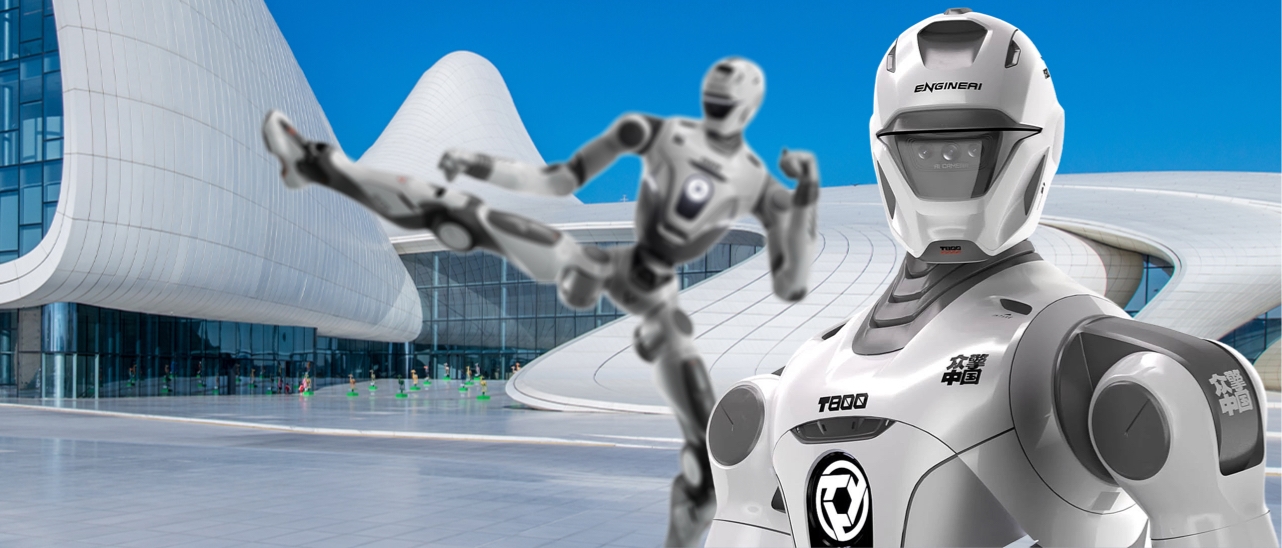
The product family spans the embodied spectrum, all at full-scale mass production and customer delivery. The MagicBot Z1 — the Gala star — is a compact marvel: roughly 1.37–1.40 m and ~40 kg, folding to 73 cm for transport, with 24 self-developed high-torque smart joints expandable to ~50 DoF in development configurations, peak torque above 130 N·m enabling push recovery, deliberate-fall standups, and deep back-bends, jogging beyond 2.5 m/s, a quick-release 10,000 mAh battery, and a sensor head fusing 3D LiDAR, depth and fisheye cameras, and tactile sensing — with MagicHand dexterous end effectors. The full-size Gen1 carries the industrial mission; the MagicDog quadruped (3 m/s, ~3-hour endurance) serves education and research; and MagicLab sells its robot components outright. Underneath runs the Magic Atom motion-control platform — imitation and reinforcement learning with MagicNet multi-robot coordination and WiFi 6 OTA updates — plus reported talks with ByteDance to integrate the Doubao LLM into third-generation MagicBots. Through its "Co-create 1000" initiative — 1,000 partners, 1,000 real-scene applications across automotive, semiconductor, 3C electronics, and even nuclear — MagicLab is converting fame into deployment at industrial breadth.
Design and Features
MagicBot Z1 — The Agile Star
- Compact and transportable — a human-child footprint (~1.37–1.40 m, ~40 kg) slipping through tight indoor spaces, folding to 73 cm for genuine case-portability: the rare humanoid you can check as luggage.
- Torque-rich resilience — 24 proprietary high-torque smart joints peaking above 130 N·m: heavy-push recovery, vaulting back upright after deliberate falls, deep back-bends, and jogging past 2.5 m/s — outperforming most same-size bipeds.
- Expandable to ~50 DoF — the Development Version's expanded joint count with secondary-development support opens the platform to enterprise and research customization.
- Full perception head — 3D LiDAR, depth and fisheye cameras, and tactile sensing feeding autonomous navigation and interaction.
- Release-and-ship maturity — the first production run went straight to market, and the Gala performance — six units in broadcast-synchronized choreography — was mass-production confidence on live television.
MagicBot Gen1 — The Factory Veteran
The full-size industrial line, distinguished by tenure rather than teaser: deployed on electronics-manufacturing lines since December 2024, performing inspection, material handling, and barcode scanning — among the earliest sustained humanoid factory deployments anywhere. MagicLab keeps Gen1's full specification sheet close; buyers should engage for current datasheets.
MagicDog — The Quadruped
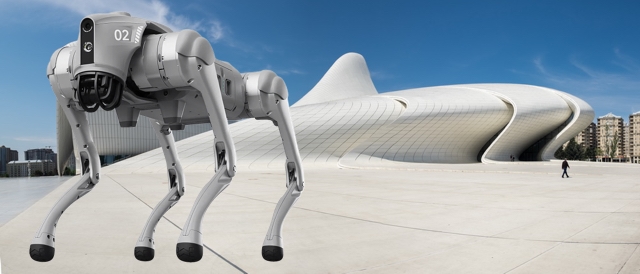
An AI-powered robot dog reaching 3 m/s with advanced sensing, ~3-hour endurance, and autonomous navigation — the education-and-research entry extending MagicLab's actuator and autonomy stack onto four legs.
The Software Stack
- Magic Atom — the proprietary motion-control platform behind the family's high-fidelity movement, trained through imitation and reinforcement learning.
- MagicNet — multi-robot coordination: the technology visible in the Gala's six-robot synchronization, applicable to fleet deployment.
- OTA via WiFi 6 — continuous capability delivery to fielded units.
- The Doubao horizon — confirmed talks with ByteDance to integrate the Doubao large language model into third-generation MagicBots: natural-language task instruction and video-based quality control on deck.
Co-create 1000
MagicLab's deployment engine: a partnership initiative targeting 1,000 partners building 1,000 real-scene applications — automotive, semiconductor, 3C electronics, nuclear — structurally converting one company's platform into an industry's worth of use cases.
Technology and Specifications
Choosing Within the Range
| Model | Form | Key Figures | Primary Role |
|---|---|---|---|
| MagicBot Z1 | Compact biped | ~1.4 m, ~40 kg, 24→~50 DoF, >130 N·m, 2.5+ m/s | Research, commercial service, performance |
| MagicBot Gen1 | Full-size humanoid | Factory-deployed since Dec 2024 | Industrial automation |
| MagicDog | Quadruped | 3 m/s, ~3 h endurance | Education, research |
| Components | Joints and parts | Mass-produced | OEM supply |
Gen1's full specifications are not publicly disclosed; confirm current datasheets for all models before specifying — datasheets are available on request.
Why the Gala Matters Commercially
Synchronizing six bipeds through live choreography before 1.2 billion people is an engineering audit disguised as entertainment: it demonstrates locomotion reliability, multi-robot coordination, and production consistency simultaneously, with zero retry allowance. The instant sell-out that followed is the market's verdict — and the reason MagicLab now carries consumer-brand recognition no spec sheet buys.
Position in the Market
Against Unitree's volume dominance in your catalog's compact-biped tier, the Z1 stakes torque density, fold-flat portability, and the strongest mainstream-fame halo in Chinese robotics; the Gen1's 2024-vintage factory tenure gives MagicLab industrial credibility that pure performance brands lack.
Applications and Use Cases
Industrial Automation
The Gen1's proven lane: electronics-line inspection, material handling, and scanning — expanding through Co-create 1000 into automotive, semiconductor, and specialized sectors including nuclear.
Events, Media, and Performance
The Z1's broadcast-proven choreography, expressive motion, and portability serving the entertainment, brand-activation, and exhibition demand its fame generates.
Research and Development
The ~50-DoF Development Version's secondary-development support, Magic Atom's IL/RL foundation, and MagicNet coordination serving embodied-AI programs.
Education
Z1 and MagicDog bringing mass-produced, resilient platforms into teaching fleets.
Commercial Service
Compact navigation, tactile-aware interaction, and the coming Doubao language layer pointing the Z1 at guidance and service roles.
Advantages / Benefits
- Fame with substance — the Gala's 1.2-billion-viewer showcase backed by 2024-vintage factory deployment: spectacle and shift-work from one vendor.
- Torque-dense agility — 130+ N·m joints delivering push recovery, fall standups, and class-leading speed in a foldable 40 kg package.
- Mass production, delivered — humanoids, quadrupeds, and components all shipping at scale.
- Design-award pedigree — the first Red Dot ever awarded in humanoid robotics.
- A deployment engine — Co-create 1000 structurally multiplying applications across industries.
- National-platform endorsement — MIIT recognition and repeated CCTV features signaling institutional confidence.
For buyers researching where to buy MagicLab robots, or comparing MagicBot Z1, Gen1, and MagicDog prices and costs against Unitree and other compact humanoids, the evaluation should weigh agility metrics, deployment evidence, production maturity, coordination capability, and ecosystem trajectory — the dimensions where MagicLab's fame-plus-factory combination leads.
FAQ
What is MagicLab?
MagicLab is a Chinese embodied-AI robotics company producing the MagicBot Z1 compact humanoid, the industrial MagicBot Gen1, the MagicDog quadruped, and robot components — all at mass production — famous for its six-robot dance at the 2026 Spring Festival Gala before 1.2 billion viewers and holder of humanoid robotics' first Red Dot Design Award.
What is the MagicBot Z1?
The Z1 is MagicLab's compact humanoid: roughly 1.4 m and 40 kg, folding to 73 cm for transport, with 24 high-torque smart joints (expandable to ~50 DoF), peak torque above 130 N·m, jogging beyond 2.5 m/s, a quick-release battery, and a sensor head combining 3D LiDAR, depth and fisheye cameras, and tactile sensing.
What is the MagicBot Gen1?
The Gen1 is MagicLab's full-size industrial humanoid, deployed on electronics-factory lines since December 2024 performing inspection, material handling, and barcode scanning — among the longest-running humanoid factory deployments in the industry; full specifications are available on request.
Did MagicLab robots really perform at the Spring Festival Gala?
Yes — six MagicBot Z1 units danced alongside pop stars at the 2026 Gala before an audience of roughly 1.2 billion, after which MagicLab's JD.com listing sold out within minutes and platform robot searches rose 300% within two hours.
What is the MagicDog?
The MagicDog is MagicLab's AI-powered quadruped: 3 m/s top speed, advanced sensing, roughly 3-hour endurance, and autonomous navigation, serving education and research programs.
What software runs MagicLab robots?
The proprietary Magic Atom motion-control platform — supporting imitation learning, reinforcement learning, and high-fidelity movement — with MagicNet multi-robot coordination, WiFi 6 OTA updates, and reported ByteDance talks to integrate the Doubao LLM into third-generation MagicBots.
What is Co-create 1000?
MagicLab's partnership initiative to develop 1,000 real-scene applications with 1,000 partners across automotive, semiconductor, 3C electronics, and nuclear sectors — the company's structural engine for converting platform capability into industry deployment.
How much do MagicLab robots cost?
The Z1 sits in the accessible compact-humanoid tier with the Gen1 in the industrial class and MagicDog in the education segment; public pricing is not disclosed. Contact a distributor for current pricing, configuration guidance, datasheets, and delivery timelines for your region.
Summary
MagicLab pulled off robotics' hardest double act: a billion-viewer dance number that sold out its stock in minutes, and eighteen months of quiet factory shifts that make the fame legitimate. The Z1 packs 130-newton-meter joints, fall-and-rise resilience, and 2.5-meter-per-second speed into a 40-kilogram frame that folds into a suitcase; the Gen1 has scanned barcodes on electronics lines since 2024; the MagicDog runs the education flank; and Magic Atom, MagicNet, and a pending Doubao brain tie the family into one coordinated, mass-produced platform — with a thousand partner applications queued through Co-create 1000. For anyone looking to buy a MagicBot Z1, Gen1, or MagicDog, compare their costs against Unitree and other compact humanoids, or plan a research, industrial, or events deployment, this guide provides the essential foundation.