Firefighting Robots
Firefighting Robots: Types, Use Cases, Costs & Benefits (Complete Guide)
Firefighting robots attack fires that are too large, too hot, too toxic, or too structurally unstable for human firefighters to safely approach. They apply water, foam, and dry chemical suppression agents at the fire's base while keeping personnel at safe standoff distances. They enter burning buildings ahead of human crews to provide reconnaissance. They fight wildland fires from aerial platforms where conventional aircraft cannot safely operate.
The core value proposition hasn't changed since the first firefighting robots appeared in Japanese industry in the 1980s: there are fires where sending a human firefighter means sending that person into near-certain death or severe injury, and a machine that can fight that fire instead saves lives. Large petrochemical fires, fuel storage tank blazes, tunnel fires, and ship holds on fire represent scenarios where robot firefighting capability provides operational options that didn't previously exist.
Types of Firefighting Robots
Ground Firefighting Robots
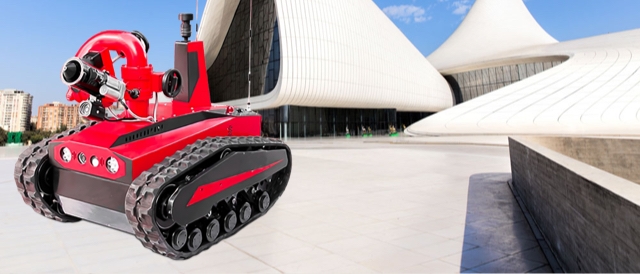
Tracked or wheeled ground vehicles that carry water cannons, foam application systems, or dry chemical suppression equipment to fire scenes. These robots approach fire sources directly, applying suppression at high flow rates and close range. Thermite Robotics RS1, Howe & Howe Thermite, and Cobalt Robotics (industrial variants) serve this category. Designed for industrial and military applications first, now entering municipal fire service.
Reconnaissance and Search Robots
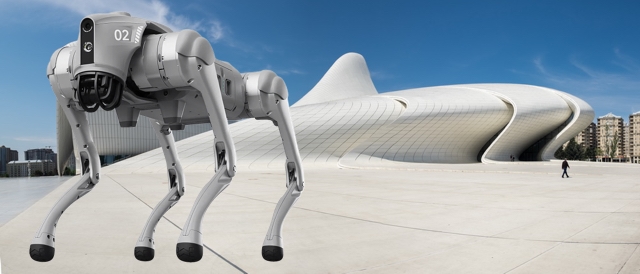
Ground robots that enter burning structures ahead of human crews to assess fire conditions, locate victims, map structural hazards, and identify fire origin. Boston Dynamics Spot with thermal cameras and gas sensors is deployed by fire services for pre-entry reconnaissance. These robots carry thermal imaging, gas detection, and structural monitoring sensors.
Aerial Firefighting Drones
UAVs that apply fire retardant chemicals to wildfire fronts, conduct aerial reconnaissance over fire scenes, monitor fire behavior from above, and deliver water drops to specific fire locations. Fixed-wing and multi-rotor platforms from manufacturers including Coulson Aviation and various Chinese manufacturers are operating in wildland firefighting support roles.
Firefighting Robots for Industrial Facilities
Purpose-built heavy robots for petrochemical, refinery, and industrial fire suppression. These platforms carry large-diameter hose connections, high-flow monitor nozzles, and foam mixing systems. They operate in environments with hydrocarbon fire conditions - high heat, toxic atmosphere, explosion risk - that preclude human firefighting at close range.
Tunnel Firefighting Robots
Specialized platforms designed for vehicle tunnel fire response - one of the most dangerous firefighting environments due to heat buildup, smoke behavior, and limited access. Several European tunnel operators use dedicated tunnel firefighting robots as fixed installation systems.
Ship and Maritime Firefighting Robots
Robots designed to fight fires in ship compartments and maritime environments. Naval fire suppression research includes robots for fighting fires in ship holds, machinery spaces, and engine rooms - environments where fire behavior is extreme and human entry carries severe risk.
High-Rise and Facade Robots
Research and early commercial platforms that fight high-rise exterior fires from elevated platforms or drones. The 2017 Grenfell Tower fire highlighted the limitations of human firefighting capability against fast-spreading high-rise cladding fires; robotic response is a technology development direction that followed.
Use Cases of Firefighting Robots
Petrochemical and Fuel Storage Tank Fires
Large hydrocarbon fires at refineries, chemical plants, and fuel storage facilities can burn for days at temperatures and with explosion potential that makes human approach impossible. Firefighting robots approach fire sources directly, applying foam at the base of burning liquid pool fires and fuel tank fires while human crews manage the broader incident from safe distance.
The 2003 Buncefield oil depot fire in the UK demonstrated the limits of conventional firefighting against large-scale fuel fires. Robot platforms designed for this scenario provide operational capability that manual crews cannot safely match.
Building Entry Reconnaissance
Before committing firefighters to interior structural firefighting in an unknown or severely compromised building, robots conduct advance reconnaissance to assess fire location, structural conditions, atmosphere (gas readings), and victim indicators. This information allows incident commanders to make better decisions about where to direct crews and what conditions they'll face.
Boston Dynamics Spot, equipped with thermal cameras and gas sensors, is deployed for this application by fire departments in the US, UK, and Europe. The robot's legged mobility allows it to navigate stairs, debris, and irregular surfaces that wheeled robots cannot access.
Wildland Fire Suppression Support
Aerial firefighting drones support ground crews in wildland fire operations by delivering retardant drops to specific locations, monitoring fire spread in real time, and providing night operations capability that aerial crews cannot safely provide. Drones don't require pilot rest cycles, can operate in smoke conditions that ground crewed aircraft cannot safely fly in, and can continue monitoring through overnight periods.
Fixed-wing autonomous drone platforms carrying retardant payloads represent the emerging frontier of aerial wildland firefighting capability.
Tunnel Fire Response
Tunnel fires - vehicle accidents with fire in road or rail tunnels - create extremely high heat, toxic smoke, and rapid fire spread in confined environments that are effectively lethal for human entry. Dedicated tunnel firefighting robots are installed as part of tunnel safety systems in major tunnel infrastructure projects, particularly in Europe and Japan.
Military and Naval Firefighting
Military applications include shipboard fire suppression (a critical survivability concern for naval vessels), forward operating base protection, and ammunition storage facility fire response. The US Navy's research into humanoid shipboard firefighting robots - SAFFiR (Shipboard Autonomous Firefighting Robot) - specifically targets the ship hold fire scenario where robot capability could prevent catastrophic ship loss.
Industrial Emergency Response
Chemical plants, manufacturing facilities, and industrial sites maintain firefighting robot capability as part of emergency response planning for scenarios their emergency brigades cannot safely address. On-site emergency teams with robot capability handle initial response while municipal fire services are in transit.
Industries That Use Firefighting Robots
Municipal Fire Services
Progressive urban fire departments are acquiring ground robots and drone platforms as standard equipment. US departments including Dallas, Houston, and various California departments have deployed firefighting ground robots and reconnaissance drones.
Industrial Fire Brigades
Petrochemical plants, refineries, power plants, and large industrial facilities with on-site emergency brigades use firefighting robots for scenarios beyond human brigade capability.
Military and Naval
Armed forces use firefighting robots for base protection, shipboard applications, and ammunition facility protection.
Airports and Aviation
Airport fire services (ARFF - Aircraft Rescue and Firefighting) use robot platforms to fight aircraft fires and approach burning aircraft when human approach is not survivable.
Tunnel Operators
Road and rail tunnel operators in Europe, Japan, and other markets with high tunnel density incorporate firefighting robots in tunnel safety systems.
Forestry and Land Management Agencies
National forest services and land management agencies are evaluating and beginning to deploy aerial drone assets for wildland fire support.
Benefits of Firefighting Robots
Firefighter Life Protection
The clearest and most important benefit: robots fight fires that would kill human firefighters who attempt them. Every firefighter death prevented by robot deployment represents both a human life preserved and the institutional, family, and operational costs of that loss avoided. The firefighting profession has an annual line-of-duty death rate that robot deployment directly addresses.
Extended Operational Envelope
Robots extend the operational envelope of fire service beyond what human physiology and protective equipment allow. Temperatures, radiation levels, toxic concentrations, and structural conditions that would kill a firefighter within minutes can be operated in by robots for extended periods. This extended envelope opens tactical options that simply don't exist without robots.
Continuous Operation
Firefighting robots don't require rest cycles, hydration breaks, or air cylinder changes. In multi-day industrial fire scenarios, robots can maintain continuous suppression application while human crews rotate. The operational tempo advantage of continuous robot availability is significant in prolonged incidents.
High-Flow Suppression Application
Ground firefighting robots apply suppression agents at higher flow rates and from closer range than human crews can sustain from hand lines. Large robot monitors can apply water at rates of 2,000+ gallons per minute - flow rates that provide direct suppression capability against fires far beyond hand line capacity.
Reconnaissance Before Commitment
The ability to send a robot into an unknown structure before committing human crews is a risk management capability that changes the calculus of every interior structural firefighting decision. Information about actual conditions replaces inference, and safer tactical decisions result.
Reduced Exposure to Carcinogens
Firefighting is documented as a cancer-risk occupation due to repeated exposure to combustion byproducts. Reducing the time human firefighters spend in smoke and IDLH atmospheres through robot deployment reduces cumulative carcinogen exposure and associated cancer risk.
Challenges & Limitations of Firefighting Robots
High Heat Environment Limitations
Even robots have thermal limits. At temperatures above 1,000°C, standard electronics fail, hydraulic fluid ignites, and rubber components degrade. Firefighting robots require extensive thermal protection and have operating temperature limits that define the conditions they can safely enter.
Mobility in Fire Damage Environments
A building on fire is collapsing. Debris fields, floor failures, blocked corridors, and unstable structures create navigation challenges that even highly capable robots struggle with. Robot ground clearance, weight, and mobility capability must be matched to the expected structural conditions.
Hose Management
Ground firefighting robots that use connected hoses must manage the hose drag and friction as they advance. Hose management in active fire environments is a significant operational challenge - hoses can snag, burn through, or create mobility impediments that limit robot effectiveness.
Communication in Fire Environments
Fires produce electrical interference, structural materials that block radio signals, and rapidly changing environments that affect communication reliability. Maintaining control communication in active fire conditions requires robust communication design.
Cost Relative to Fire Department Budgets
A capable ground firefighting robot costs $250,000-$500,000+. Most fire departments in the US are municipal agencies with severely constrained capital budgets. Acquisition, maintenance, and training costs limit robot adoption to well-funded departments and industrial brigades. Regional mutual aid agreements and state/federal procurement programs address this constraint partially.
Training and Integration
Integrating robot operations into incident command requires training and doctrine development that most fire services have not yet completed. Robot operators need regular practice to maintain proficiency, and incident commanders need to develop protocols for when and how to deploy robots within the Incident Command System.
Cost & ROI of Firefighting Robots
For up-to-date prices, browse and buy firefighting robots for sale here.
Reconnaissance ground robots (Spot with thermal/gas sensors): $75,000-$120,000 depending on payload configuration.
Heavy firefighting ground robots (Thermite RS1): $250,000-$400,000; Howe & Howe Thermite is in a similar range.
Industrial firefighting robots (large monitors, heavy tracks): $300,000-$800,000+ for full capability platforms.
Firefighting support drones (DJI Matrice with payload, autonomous systems): $15,000-$50,000 for drone systems; $100,000-$500,000+ for autonomous fixed-wing firefighting drones.
ROI is primarily measured in firefighter safety outcomes. A single firefighter line-of-duty death prevented - with fully loaded lifetime costs including death benefits, legal settlements, and indirect costs - represents $1-3 million in avoided expenditure. The safety ROI of a $300,000 firefighting robot that prevents even one such death is immediately positive.
Industrial deployments calculate ROI against fire losses, production downtime, and insurance costs - frameworks more familiar from industrial safety investment analysis.
Key Technologies Behind Firefighting Robots
Thermal protection systems include ceramic fiber insulation, active cooling with water mist, and reflective coatings that allow robots to operate at elevated ambient temperatures.
High-flow monitor systems on firefighting robots deliver suppression agents at rates that require high-pressure pump systems integrated into the robot or via connection to external supply lines. Remote-controlled monitor aiming allows operators to direct suppression precisely from a remote location.
Thermal imaging cameras see through smoke and darkness to detect fire sources, hot spots, and victims. FLIR-based thermal cameras on firefighting and reconnaissance robots provide critical situational awareness in zero-visibility fire conditions.
Gas detection sensor suites monitor oxygen levels, carbon monoxide, hydrogen cyanide, and other IDLH (immediately dangerous to life and health) gases - providing data that informs decisions about where human crews can safely operate.
Teleoperation systems for firefighting robots must be intuitive, reliable in emergency conditions, and operable by personnel wearing firefighting gloves. Interface design for fire service use is a specialized engineering challenge.
Autonomous navigation for reconnaissance robots enables semi-autonomous building search without requiring constant operator attention - freeing the operator to focus on sensor data rather than fine motor control.
How to Implement Firefighting Robots
-
Hazard profile analysis. Identify the specific fire scenarios your department or facility faces where robot capability would provide operational value. Not every department needs the same type of robot.
-
Platform selection. Match platform to hazard: ground firefighting robot for industrial fire scenarios, reconnaissance robot for urban structural fire operations, drones for aerial operations. Multi-capability platforms exist but add cost.
-
Funding strategy. Fire department capital budgets rarely include robot funding. Explore federal grants (FEMA BRIC, AFG grants), state programs, regional mutual aid capital pool funding, and industrial facility-funded acquisition.
-
Training program development. Develop operator training that integrates with department shift schedules. Establish minimum competency standards and regular proficiency exercises. Identify robot operators from volunteers rather than mandating assignment.
-
Doctrine development. Define operational protocols: who can authorize robot deployment, how robots integrate with ICS structure, operator communication procedures, and accountability for robot assets.
-
Infrastructure. Plan for robot storage, charging infrastructure, maintenance capability, and deployment procedures from the department's response vehicles.
-
Maintenance program. Establish preventive maintenance schedules, manufacturer service agreements, and operator-level maintenance training. Fire service equipment must be ready when needed.
-
Mutual aid. Register robot assets with regional mutual aid systems so that the investment provides regional capability beyond a single department.
Firefighting Robot Safety & Regulations
NFPA 1 (Fire Code) and NFPA 1710/1720 (staffing standards) govern fire department operations; robot integration must fit within established operational frameworks.
NFPA 1801 (Thermal Imaging Cameras for the Fire Service) provides performance standards for thermal cameras; similar specifications should be applied to robot-mounted thermal systems.
FAA Part 107 and public safety provisions govern drone operations by fire services. Wildland fire drone operations may require additional coordination with USFS and state forestry agency airspace management.
Industrial firefighting robots used at facilities under OSHA PSM (Process Safety Management) or EPA RMP (Risk Management Program) regulations must be incorporated into process hazard analyses and emergency action plans.
Robot operations in IDLH environments must comply with OSHA respiratory protection standards (29 CFR 1910.134) as they apply to human crew operations that occur in conjunction with robot deployment.
Top Firefighting Robot Brands / Companies
|
Company |
Key Platform |
Firefighting Application |
|
Thermite Robotics |
RS1 |
Ground firefighting, industrial |
|
Howe & Howe Technologies |
Thermite |
Ground firefighting, military |
|
Boston Dynamics |
Spot + payload |
Reconnaissance, pre-entry |
|
DOK-ING |
MVF-5 |
Urban/industrial firefighting |
|
Brokk |
Brokk Fire |
Firefighting, demolition |
|
CSIRO (Australia) |
Research platforms |
Wildland fire research |
|
Lockheed Martin |
SMSS derivatives |
Military firefighting |
|
Aerones |
Firefighting drone |
Aerial high-rise/wildland |
|
DJI |
Agras T40 |
Wildland aerial support |
|
Naval Air Systems Command |
SAFFiR project |
Naval firefighting research |
Overview of the Firefighting Robotics Market
The firefighting robot market was valued at approximately $500 million-$1 billion in 2024, including ground platforms, firefighting drones, and specialized industrial systems. Growth is approximately 15-20% CAGR driven by increasing severity of wildland fire seasons, aging fire service infrastructure replacement, and heightened awareness of firefighter safety following documented line-of-duty death rates.
The military and industrial segments are the most active procurement markets currently. Municipal fire services are in earlier adoption stages, constrained by budget limitations and the need for doctrine and training development that precedes large-scale deployment.
Wildland fire drones are the fastest-growing segment. The catastrophic wildfire seasons in California, Australia, Canada, and the Mediterranean from 2018-2024 have created strong political and operational demand for aerial firefighting capability improvements. Autonomous drone platforms that can operate overnight, target specific spread points, and fly in smoke conditions that ground aircraft cannot are attracting significant development investment.
The firefighting robot market trajectory parallels the military EOD robot trajectory from the Iraq War era: an operational demand driven by unacceptable human casualty rates, accelerated technology development investment in response, and progressive adoption as capability demonstrates value in field deployment.
Frequently Asked Questions
What are firefighting robots?
Firefighting robots are autonomous or remotely operated machines that fight fires, conduct pre-entry reconnaissance in burning buildings, and support firefighting operations in environments too dangerous for human firefighter approach.
What is the Thermite RS1?
Thermite RS1 is a ground firefighting robot developed by Thermite Robotics (formerly Howe & Howe Technologies). It is a tracked platform carrying a high-flow water monitor that can apply up to 2,500 gallons per minute of water or foam to a fire. It is used by US military installation fire departments and select municipal agencies.
Can robots fight wildfires?
Yes, in a support role. Aerial drones are used for aerial reconnaissance, infrared fire mapping, and retardant drops in specific wildland fire scenarios. Ground robots have been used for controlled burn operations and direct fire line defense. Autonomous fixed-wing drone platforms with retardant payloads represent the most promising near-term capability for expanded robot participation in wildland firefighting.
What is the SAFFiR robot?
SAFFiR (Shipboard Autonomous Firefighting Robot) is a humanoid robot developed by Virginia Tech for the US Navy specifically to fight fires in ship compartments. The humanoid form was chosen specifically because ships are designed for human access - passageways, hatches, and firefighting equipment are built to human scale. SAFFiR research advanced capabilities for robot operation in dynamic environments with active fire.
How do firefighting robots handle hoses?
Most ground firefighting robots carry their own water supply via hose connection to a pump truck or hydrant connection, with the hose dragged behind the robot as it advances. Hose management is a significant operational challenge. Some platforms are designed to operate with onboard water tanks for limited operations without hose drag.
Are firefighting robots safe for the public?
Firefighting robots deployed in active fire scenes are typically operating in areas from which the public has been evacuated. The safety risks to the public from robot operation in emergency scenes are low. For post-fire scene operations (reconnaissance in structurally compromised buildings), robots operate without public access to the scene.
Do robots replace firefighters?
No. Firefighting robots extend firefighter capability into scenarios where human entry is prohibitively dangerous. For the broad majority of fire incidents - residential structure fires, vehicle fires, most commercial fires - human firefighters operating with standard protective equipment remain the primary responders. Robots are additive capability for high-risk scenarios, not replacement capability for standard operations.
What sensors do firefighting robots carry?
Typical firefighting robot sensor payloads include thermal imaging cameras (for heat mapping and victim detection through smoke), gas detection sensors (CO, HCN, O2 levels), structural monitoring sensors, two-way audio communication, and visible-light cameras for operator situational awareness.
How are firefighting robots controlled?
Most deployed firefighting robots are teleoperated - controlled by a trained operator from a safe standoff distance using a dedicated controller or laptop interface. The operator receives video and sensor feeds from the robot and controls movement and suppression system operation. Some platforms offer semi-autonomous modes for navigation, but firefighting decisions remain human-controlled.
What training do firefighters need to operate robots?
Robot operator training for fire service applications typically requires 8-16 hours of initial training covering basic operation, safety procedures, and common operational scenarios, followed by regular competency maintenance exercises. Operators should practice with the robot quarterly at minimum to maintain proficiency. Some departments identify dedicated robot operators who receive more intensive training.