Standard Quadrupeds
Leg-only quadruped robots explained: design, technology, uses, benefits, and comparison with wheeled quadrupeds.
Introduction / Overview
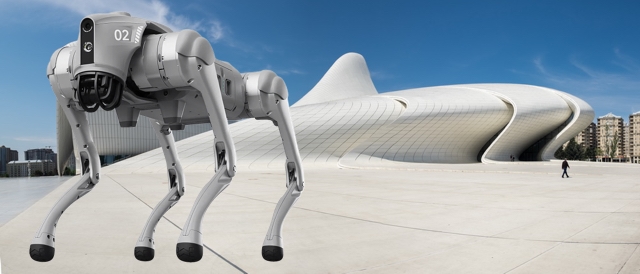
Standard quadrupeds are four-legged mobile robots that move primarily by walking, trotting, climbing, and balancing on articulated legs. They are often described as quadruped robots, legged robots, or robot dogs because their general body plan resembles that of four-legged animals. In robotics commerce and research, the term "standard quadruped" is useful for distinguishing a leg-only robot from a wheeled quadruped, which combines legs with powered wheels.
The essential feature of a standard quadruped is that locomotion is produced by leg movement rather than continuous wheel rotation. Each leg normally contains powered joints that allow the robot to lift, place, and adjust its feet as terrain changes. This gives standard quadrupeds an advantage in environments with stairs, curbs, grates, cables, rubble, vegetation, uneven flooring, or narrow passageways. These are conditions where conventional wheeled platforms may require ramps, prepared surfaces, or human assistance.
Quadruped robotics has developed from laboratory research in dynamic locomotion into a practical field used in inspection, mapping, public safety, education, and industrial automation. Standard quadrupeds are not intended to replace every wheeled robot. Instead, they occupy a distinct category of mobile robotics for places where legged movement provides more reliable access.
Design and Features
General Body Structure
A standard quadruped typically consists of a central body, four articulated legs, batteries, onboard computers, sensors, and communication hardware. The central body contains most of the electronics and power systems, while the legs support the robot, generate motion, and maintain balance. Many designs use a compact rectangular torso to keep mass concentrated and to simplify payload mounting.
Each leg usually has two or three degrees of freedom, such as hip rotation, hip flexion, and knee flexion. This arrangement allows the foot to move forward and backward, up and down, and in some designs side to side. Some robots use compliant feet, rubber pads, force sensing, or shock-absorbing structures to improve traction and reduce impact loads.
Locomotion and Gaits
Standard quadrupeds use gait patterns adapted from animals and from control theory. Common gaits include walking, trotting, pacing, crawling, and careful step-by-step climbing. A slow walking gait emphasizes stability by keeping multiple feet on the ground. A trot can increase speed on open surfaces. A crawling or deliberate stepping gait may be used on stairs, loose surfaces, or cluttered terrain.
Because the robot lifts and places its feet, it can choose footholds rather than relying on continuous rolling contact. This is a major distinction from wheeled machines. A leg-only quadruped can step over a cable, place a foot on a stair tread, avoid a small obstacle, or adjust its stance on uneven ground. This capability depends on accurate sensing and responsive control.
Sensors and Payloads
Most standard quadrupeds include inertial measurement units, joint encoders, cameras, depth sensors, and sometimes lidar. These components support balance, navigation, obstacle detection, mapping, and remote operation. Payloads may include thermal cameras, gas sensors, microphones, robotic arms, pan-tilt camera units, or wireless communication equipment.
Payload capacity varies by robot size and actuator strength. Smaller platforms may carry educational modules or lightweight cameras, while larger systems can support inspection packages, mapping sensors, or manipulation tools. Payload integration is often one of the main criteria when selecting a quadruped for a particular mission.
Technology and Specifications
Actuation and Power
Standard quadrupeds rely mainly on electric actuation, although hydraulic and hybrid systems also exist. Electric motors are common because they are compact, controllable, and compatible with battery operation. High-performance robots may use brushless motors, harmonic drives, planetary gearboxes, or quasi-direct-drive actuators to balance torque, speed, durability, and backdrivability.
Battery runtime depends on size, terrain, payload, speed, and mission profile. Small educational robots may operate for less than an hour during active movement, while larger commercial systems may operate for several hours under favorable conditions. Walking on flat ground is usually less demanding than climbing stairs or crossing rough terrain. Since legged movement requires lifting and swinging limbs, efficient gait planning is important for endurance.
Control Systems
A standard quadruped combines low-level motor control with higher-level autonomy. Low-level controllers regulate joint position, velocity, torque, and contact forces. Mid-level systems coordinate gaits, posture, and balance. High-level software handles mapping, navigation, mission planning, obstacle avoidance, and operator commands.
Modern quadrupeds often use state estimation, model predictive control, whole-body control, and machine learning methods. The robot must continuously estimate the position of its body and feet, detect ground contact, respond to slips, and recover from minor disturbances. Reliable control is essential because a fall can damage hardware or interrupt a mission.
Navigation and Autonomy
Autonomous functions may include simultaneous localization and mapping, waypoint following, inspection route execution, obstacle avoidance, and return-to-dock behavior. Some robots are primarily teleoperated, while others use supervised autonomy. In supervised autonomy, the robot makes local navigation decisions while a human operator monitors progress and intervenes when needed.
Connectivity may include Wi-Fi, private radio, cellular networks, Ethernet docking stations, or mesh networking. For industrial inspection and security use, communication reliability and data recording can be as important as walking performance.
Applications and Use Cases
Industrial Inspection
Industrial inspection is one of the most common uses for standard quadrupeds. They can move through factories, refineries, power plants, mines, warehouses, utilities, and construction sites while collecting visual, thermal, acoustic, or environmental data. Their ability to climb stairs and move over floor obstacles makes them useful in facilities designed for human workers rather than mobile robots.
Public Safety and Hazardous Environments
Quadruped robots can be deployed in places that may be unsafe for people, including unstable buildings, disaster zones, chemical incidents, or security perimeters. They may carry cameras, lights, microphones, or environmental sensors to assess conditions before humans enter. Their value comes from remote presence, mobility, and reduced exposure to risk.
Research and Education
Universities, laboratories, and technical programs use standard quadrupeds to study locomotion, control theory, perception, reinforcement learning, embedded computing, and human-robot interaction. Educational models allow students to experiment with kinematics, sensors, programming, and autonomous navigation.
Mapping and Data Collection
When fitted with lidar, cameras, or photogrammetry systems, quadrupeds can map indoor and outdoor spaces. They are useful where drones may be impractical and wheeled vehicles may be blocked by stairs or debris. Applications include construction progress monitoring, tunnel surveying, underground mapping, and digital twin creation.
Security and Remote Monitoring
Some quadrupeds are used as mobile surveillance platforms. They can patrol routes, inspect access points, observe equipment, and transmit live video. Unlike fixed cameras, mobile robots can investigate events from different positions. Unlike aerial drones, they can operate from ground level and remain stationary for extended inspections.
Advantages / Benefits
The main advantage of a standard quadruped is terrain adaptability. Four articulated legs allow movement through environments with stairs, steps, uneven surfaces, and scattered obstacles. This makes standard quadrupeds especially useful in human-built spaces where a wheeled robot may need ramps, elevators, or clear paths.
Another benefit is stability through multiple contact points. A quadruped can distribute weight across four legs and adjust foot placement to maintain balance. If one foot slips or lands on an unsuitable surface, the robot can shift posture, slow down, or choose another foothold. Many designs can recover from pushes, slips, or minor impacts.
Standard quadrupeds also provide operational flexibility. They can be equipped with different payloads for inspection, sensing, mapping, research, communication, or monitoring. Because they are not fixed to rails, tracks, or permanent infrastructure, they can be reassigned as site needs change.
In hazardous or remote locations, quadrupeds can reduce human exposure to danger. A robot can enter a suspected hazard area, collect sensor readings, and provide video before a person approaches. Even when human inspection remains necessary, preliminary robotic assessment can improve situational awareness.
Comparisons
Standard Quadrupeds vs. Wheeled Quadrupeds
The central comparison is between standard leg-only quadrupeds and wheeled quadrupeds. A wheeled quadruped uses legs for posture and obstacle negotiation while relying on wheels for efficient rolling movement. This hybrid design can be faster and more energy-efficient on smooth floors, roads, and long corridors. It may also transition between rolling and stepping when terrain changes.
A standard quadruped is optimized for legged movement. It does not roll continuously and must move its feet for propulsion. This can make it slower and less energy-efficient on flat surfaces, but more capable where wheels lose effectiveness. Stairs, rubble, steep transitions, loose material, and irregular natural terrain often favor leg-only locomotion.
The practical choice depends on the environment. A warehouse with long, smooth aisles may benefit from a wheeled quadruped or conventional wheeled robot. A multi-level industrial plant with stairs, grates, cables, and uneven surfaces may favor a standard quadruped. The key question is not only speed, but whether the robot can complete the route without human assistance.
Standard Quadrupeds vs. Tracked Robots
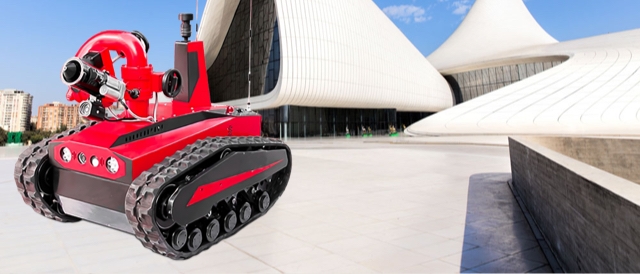
Tracked robots are robust and can perform well on mud, gravel, debris, and loose ground. They are often simpler to control than legged robots and may carry heavy payloads. However, tracks may struggle with high steps, delicate indoor surfaces, narrow stairs, or precise foot placement. Standard quadrupeds can step more selectively and may be better suited to mixed indoor obstacles.
Standard Quadrupeds vs. Aerial Drones
Aerial drones provide rapid overhead views and can access vertical spaces, but they have limited flight time, payload capacity, and indoor safety margins. Standard quadrupeds move more slowly but can carry larger sensors, operate close to equipment, and remain stable for detailed inspection. In many programs, ground robots and drones are complementary rather than interchangeable.
Pricing and Availability
Prices for standard quadrupeds vary widely by size, payload capacity, autonomy, ruggedization, and software ecosystem. Small educational or hobby-grade robots may cost hundreds to several thousand dollars. Research platforms with programmable control interfaces and stronger actuators may range from several thousand to tens of thousands of dollars. Industrial-grade quadrupeds with autonomy software, docking stations, sensor payloads, service agreements, and safety features may cost substantially more.
Availability depends on regional distribution, support requirements, export rules, and intended use. Some systems are sold directly to universities, companies, and public agencies, while others are supplied through integrators or robotics distributors. Buyers commonly evaluate payload compatibility, battery runtime, environmental rating, software tools, mapping functions, warranty terms, and service support.
The purchase price is only one part of total cost. Training, maintenance, spare batteries, payload integration, software licenses, network setup, and operational planning can all affect long-term value.
FAQ Section
What is a standard quadruped robot?
A standard quadruped robot is a four-legged robot that moves using articulated legs rather than wheels. It is designed to walk, trot, climb, and balance across varied terrain.
How is a standard quadruped different from a wheeled quadruped?
A standard quadruped is leg-only and relies on foot placement for movement. A wheeled quadruped has wheels integrated into the legs or feet, allowing it to roll efficiently on smooth surfaces while still using legs for obstacles.
Are standard quadrupeds better than wheeled robots?
They are better for some environments, especially stairs, rubble, uneven terrain, and facilities with obstacles. Wheeled robots are often faster, simpler, and more energy-efficient on smooth, predictable surfaces.
What are standard quadruped robots used for?
They are used for industrial inspection, research, mapping, public safety, remote monitoring, education, and hazardous environment assessment.
How long can a quadruped robot operate on one battery charge?
Runtime depends on the model, payload, terrain, speed, and battery size. Some small units operate for less than an hour, while larger commercial systems may operate for several hours.
Can standard quadrupeds climb stairs?
Many standard quadrupeds are designed to climb stairs, but performance depends on leg length, traction, payload weight, stair dimensions, and sensing conditions.
Do standard quadrupeds require an operator?
Some are remotely operated, some are semi-autonomous, and others can follow programmed routes. In demanding environments, human supervision is commonly used even when autonomous navigation is available.
References / External Links
- IEEE Robotics and Automation Society: publications and resources on legged robotics
- National Institute of Standards and Technology: information on robot evaluation and public safety robotics
- Encyclopaedia Britannica: general references on robotics and automation
- Academic literature on dynamic legged locomotion, robot perception, and autonomous mobile robots
Summary
Standard quadrupeds are leg-only four-legged robots built for mobility in complex environments. Their articulated legs allow them to walk over obstacles, climb stairs, maintain balance, and operate in spaces designed around human movement. They are used in inspection, research, public safety, mapping, and remote monitoring, especially where wheels alone are not sufficient.
Compared with wheeled quadrupeds, standard quadrupeds are generally less efficient on smooth surfaces but more adaptable on irregular terrain. Compared with tracked robots and drones, they offer a distinctive combination of ground-level access, selective foot placement, payload flexibility, and stable sensing. The best choice depends on terrain, mission length, payload needs, autonomy requirements, and total cost of ownership.