Deep Robotics
Deep Robotics is one of the world's leading legged-robot companies — maker of the X30 industrial quadruped proven in power stations and tunnels, the agile Lite3 research platform, the LYNX wheel-legged series for extreme terrain, and the DR02, the world's first IP66 all-weather industrial humanoid. This guide covers Deep Robotics' history, complete lineup, technology, and what buyers should know before purchasing.
Deep Robotics
Introduction / Overview
Deep Robotics (DEEP Robotics) is the legged-robot company that industry actually deploys. Founded in 2017 in Hangzhou and spun from Zhejiang University's legged-robotics research, the company built its reputation not on demonstration videos but on working machines: quadrupeds patrolling live power substations, inspecting tunnels, surveying mines, and — in one of the field's defining real-world moments — wheel-legged robots supporting genuine emergency-rescue operations. Trusted by organizations worldwide and freshly capitalized with a Series C exceeding 500 million RMB to accelerate embodied-AI development and industry deployment, Deep Robotics stands with Unitree among the global leaders in legged robotics — differentiated by its uncompromising industrial focus.
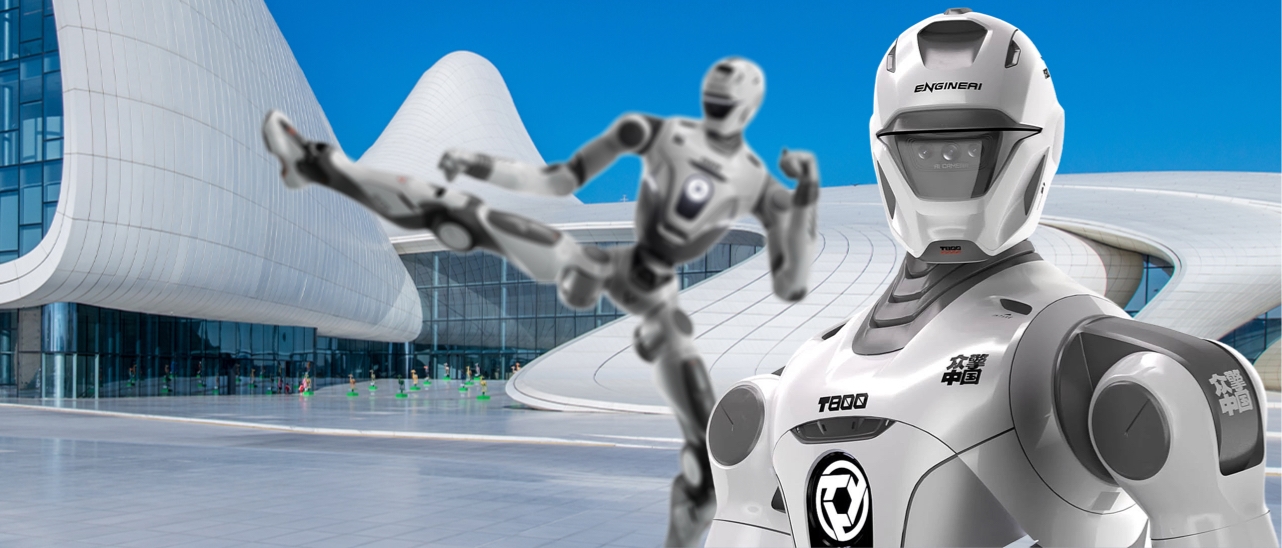
The lineup spans four families. The quadruped line pairs the flagship X30 — the hardened industrial inspection platform proven across power, utilities, and tunnels — with the X20 and the compact, agile Lite3 research and education quadruped. The LYNX wheel-legged series — the original DEEPRobotics Lynx, the industry-grade LYNX M20, and the LYNX S10 — fuses wheeled speed with legged agility as the world's first wheel-legged platforms built for hazardous industrial terrain. The humanoid line culminates in the DR02: the world's first industrial humanoid with a full-body IP66 rating, capable of all-weather outdoor operation in rain, humidity, and dust — with modular quick-detach limbs engineered for real maintenance economics. And underlying it all, Deep Robotics sells its own J60, J80, and J100 joint actuators, the in-house drive technology powering every platform.
For buyers whose robots must earn their keep outdoors, underground, and in weather, Deep Robotics is the evidence-first choice.
Design and Features
X30 — The Industrial Quadruped Flagship
The X30 is the working robot dog of heavy industry:
- Hardened for hostile environments — engineered for the rain, dust, temperature extremes, and rough terrain of substations, tunnels, plants, and construction sites where inspection actually happens.
- Mission-grade autonomy — autonomous route patrol, stair and slope negotiation, and payload mounts for inspection instruments: thermal cameras, gas sensors, LiDAR, and pan-tilt vision systems.
- Proven vertical fit — the platform behind Deep Robotics' reference deployments in power and utilities, rescue, tunnel, metal and mining, and construction — the six industries the company organizes its entire business around.
Lite3 — The Agile Research Platform
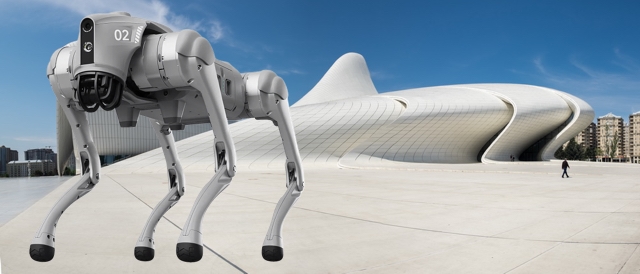
The compact Lite3 brings Deep Robotics engineering to research and education: highly dynamic locomotion, an open development ecosystem with published reinforcement-learning sim-to-real code, URDF/MJCF/USD simulation models, and hardware-extension documentation — one of the best-supported quadrupeds in academia, at accessible cost.
LYNX Series — Wheel-Legged Pioneers
The LYNX family answers terrain that defeats both wheels and legs alone:
- LYNX M20 — the world's first industry-grade wheel-legged robot for hazardous environments: wheeled speed on flat ground, legged agility over rubble, 50 cm narrow-space clearance, and extreme-environment endurance across mountain trails, wetlands, and debris — pioneering embodied intelligence in power inspection, emergency response, logistics, and scientific exploration.
- DEEPRoboticsLynx — the compact all-terrain original, agile across diverse surfaces.
- LYNX S10 — extending the wheel-legged line's reach across form factors.
The M20's rescue pedigree is real: Deep Robotics wheel-legged robots have supported actual emergency-rescue operations — deployment evidence almost no legged-robot competitor can match.
DR02 — The All-Weather Humanoid
The DR02 redefines where humanoids can work:
- World-first IP66 full-body rating — complete waterproofing and dustproofing making the DR02 the first full-size industrial humanoid capable of all-weather outdoor operation in rain, humidity, and dust — solving the core constraint that confines rival humanoids indoors.
- Modular quick-detach design — forearms, full arms, and full legs support rapid removal and replacement, slashing maintenance costs and downtime for continuous-operation deployments.
- Industrial positioning — offered in Standard and Pro configurations (per Deep Robotics' published simulation models), targeting the outdoor industrial tasks its weatherproofing uniquely unlocks — with the earlier DR01 establishing the humanoid line's foundation.
J-Series Joints — The In-House Drive Advantage
Deep Robotics sells its J60, J80, and J100 joint actuators as standalone products with CAN SDKs — the same self-developed drives powering its robots, and a signal of the vertical integration behind the range's durability.
Open Development Across the Range
Published SDKs, learning-based locomotion controllers, RL deployment code, simulation assets, and secondary-development documentation span the lineup — with software extensions available including multilingual interaction add-ons.
Technology and Specifications
Choosing Across the Range
| Model | Form | Primary Role |
|---|---|---|
| X30 | Industrial quadruped | Substation, tunnel, mining, construction inspection |
| X20 | Industrial quadruped | Established inspection and security platform |
| Lite3 | Compact quadruped | Research, education, RL development |
| LYNX M20 / S10 / Lynx | Wheel-legged | Hazardous terrain, rescue, power inspection |
| DR02 (Standard / Pro) | IP66 humanoid | All-weather outdoor industrial tasks |
| DR01 | Humanoid | Humanoid-line foundation platform |
| J60 / J80 / J100 | Joint actuators | Robot builders and researchers |
The Deployment-First Thesis
Deep Robotics organizes itself around six industries — power and utilities, rescue, tunnel, metal and mining, construction, and research — rather than around robot categories. The practical consequence: platforms are engineered backward from environmental reality (IP ratings, temperature ranges, terrain, maintenance economics) rather than forward from demo requirements. The DR02's IP66 world-first and the M20's rescue record are that philosophy's proof.
Position in the Market
Against Unitree's volume-and-price leadership, Deep Robotics competes on industrial hardening, vertical-specific proof, and wheel-legged innovation no rival offers — making it the specification choice where the environment, not the budget, is the binding constraint.
Applications and Use Cases
Power and Utilities
The signature vertical: autonomous X30 patrols of substations and power infrastructure — thermal inspection, meter reading, and anomaly detection on scheduled routes, in weather, without exposing crews.
Emergency Response and Rescue
LYNX wheel-legged robots traverse rubble, debris, and unstable ground in real rescue operations — reconnaissance and support where sending humans first is the risk.
Tunnels, Mining, and Construction
Confined, dusty, GPS-denied environments where the X30's hardening and the M20's hybrid mobility perform inspection, surveying, and monitoring that halt for neither terrain nor weather.
Outdoor Industrial Humanoid Work
The DR02's IP66 rating opens the humanoid category's excluded majority: outdoor plants, yards, and infrastructure where rain and dust disqualify every indoor-only competitor.
Research and Education
The Lite3's open RL ecosystem, simulation assets, and accessible cost — plus standalone J-series joints — make Deep Robotics a first-rank academic platform with an industrial upgrade path.
Advantages / Benefits
- Deployment evidence, not demos — live substations, real rescues, working tunnels: field records competitors cite in videos, Deep Robotics cites in operations.
- The all-weather monopoly — the DR02's world-first IP66 humanoid rating unlocks outdoor work the entire rival category is locked out of.
- Wheel-legged leadership — the LYNX M20 created and leads the industrial wheel-legged class.
- Maintenance-economic design — quick-detach modular limbs convert downtime from days to minutes.
- Vertical integration — self-developed J-series joints, sold openly, underwrite the range's durability claims.
- Serious capital, serious openness — a 500M+ RMB Series C behind published SDKs, RL code, and simulation assets.
For buyers researching where to buy Deep Robotics platforms, or comparing X30, Lite3, LYNX, and DR02 prices and costs against Unitree and other legged robots, the evaluation should weigh environmental ratings, deployment evidence in your vertical, maintenance design, and development openness — the dimensions where Deep Robotics' industrial focus leads.
FAQ
What is Deep Robotics?
Deep Robotics is a Hangzhou-based legged-robotics leader founded in 2017 from Zhejiang University research, producing the X30 and Lite3 quadrupeds, the LYNX wheel-legged series, the DR01 and DR02 humanoids, and J-series joint actuators — with reference deployments across power, rescue, tunnels, mining, and construction.
What is the Deep Robotics X30?
The X30 is the flagship industrial quadruped: a hardened inspection platform for substations, tunnels, mines, and construction sites, supporting autonomous patrol routes and instrument payloads in the environmental conditions that define real industrial inspection.
What is the Deep Robotics DR02?
The DR02 is the world's first industrial humanoid with a full-body IP66 waterproof and dustproof rating — enabling all-weather outdoor operation in rain, humidity, and dust — with modular quick-detach forearms, arms, and legs for rapid, low-cost maintenance.
What is the LYNX M20?
The LYNX M20 is the world's first industry-grade wheel-legged robot: fusing wheeled speed with legged agility for rugged mountain trails, wetlands, and debris, with 50 cm narrow-space clearance — deployed in power inspection, emergency rescue, logistics, and exploration.
What is the Deep Robotics Lite3?
The Lite3 is the compact research quadruped: agile, affordable, and backed by one of the field's most open ecosystems — published reinforcement-learning sim-to-real code, simulation models, SDKs, and hardware-extension documentation for universities and labs.
Which Deep Robotics platform should I buy?
Choose the X30 for industrial inspection, the Lite3 for research and education, a LYNX for extreme-terrain and rescue missions, the DR02 for outdoor humanoid work, and J-series joints for robot building. A distributor can match the platform and payload configuration to your vertical.
Why is Deep Robotics important?
Deep Robotics proved legged robots industrially: real substation patrols, genuine rescue deployments, the first industrial wheel-legged class, and the first all-weather IP66 humanoid — engineering from environmental reality rather than demonstration stages.
How much do Deep Robotics platforms cost?
Pricing spans the accessible Lite3 through the industrial X30 and LYNX M20 to the DR02 humanoid, with J-series joints for component buyers. Contact a distributor for current pricing, configuration and payload options, datasheets, and delivery timelines for your region.
Summary
Deep Robotics builds the legged robots that clock in: X30 quadrupeds walking substation rounds in weather, LYNX wheel-legged machines crossing rubble in real rescues, the Lite3 anchoring university labs on open RL code, and the DR02 humanoid — IP66-sealed head to toe — taking the category outdoors for the first time, with quick-swap limbs that keep it working. Backed by 500 million RMB of fresh capital, self-made J-series joints, and deployment records across six heavy industries, Deep Robotics is the specification-first answer wherever environment is the constraint. For anyone looking to buy a Deep Robotics X30, Lite3, LYNX, or DR02, compare their costs against Unitree and other legged platforms, or plan an inspection, rescue, research, or outdoor-humanoid deployment, this guide provides the essential foundation.