Inspection Robots
Inspection Robots: Types, Use Cases, Costs & Benefits (Complete Guide)
Inspection robots gather data in environments or at frequencies that human inspectors cannot match. They go where people can't safely go, repeat the same route day after day without variation, and carry sensor payloads that detect problems invisible to the human eye. The business case is straightforward: unplanned downtime from undetected equipment failure costs far more than the robots that could have caught it.
The inspection robot category covers a wide range of platforms - quadruped robots walking refinery routes, crawler robots inside pipelines, drones surveying rooftops and wind turbines, rail-guided systems monitoring production lines, and fixed camera arrays doing inline quality checks. What they share is the function: systematic data collection to detect anomalies, confirm normal operation, and document asset condition.
Types of Inspection Robots
Quadruped (Legged) Inspection Robots
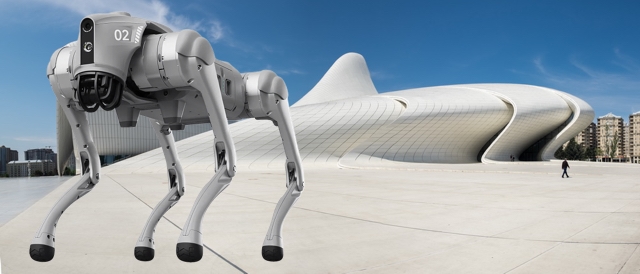
Four-legged platforms like Boston Dynamics Spot, ANYmal, and Unitree B2 navigate complex terrain - stairs, gravel, wet floors, elevated walkways - to conduct inspection rounds at oil and gas facilities, chemical plants, power stations, and manufacturing sites. They carry modular sensor payloads and can operate autonomously on pre-programmed routes.
Crawler Robots
Ground-based, low-profile wheeled or tracked robots that move through confined spaces, narrow tunnels, under-equipment gaps, and similar constrained environments. Used for inspection under vehicles in military and security applications, and for close-inspection of industrial equipment at floor level.
Pipeline Inspection Robots
In-pipe inspection robots (also called PIGs - Pipeline Inspection Gauges) travel inside pipelines carrying cameras, ultrasonic sensors, and magnetic flux leakage sensors to detect corrosion, cracks, weld defects, and obstructions. They are a standard tool in the oil and gas, water, and wastewater industries.
Climbing and Wall-Climbing Robots
Robots that adhere to vertical surfaces using magnetic attraction (for steel structures), suction cups, or electrostatic adhesion. Used for inspecting ship hulls, storage tanks, wind turbine towers, bridge structures, and building facades.
Aerial Inspection Drones (UAVs)
Unmanned aerial vehicles conduct inspection of structures and assets that are difficult or dangerous to access physically: wind turbine blades, transmission towers, roof structures, oil tank tops, chimneys, and bridges. Drones typically carry RGB cameras, thermal imagers, and LiDAR.
Rail-Guided and Fixed Inspection Robots
Track-mounted cameras and sensor systems move along defined paths in production environments to conduct repeating inspections of conveyor systems, production equipment, and product lines. Fixed inline vision systems inspect every product on a production line.
Underwater Inspection Robots (ROVs/AUVs)
Remotely operated vehicles (ROVs) and autonomous underwater vehicles (AUVs) inspect submerged infrastructure: oil and gas pipelines, subsea equipment, ship hulls, bridge foundations, and dam faces.
Use Cases of Inspection Robots
Oil and Gas Facility Inspection
Regular inspection rounds at refineries, petrochemical plants, and gas processing facilities check for equipment anomalies (temperature, vibration, visual), gas leaks, and operational status of valves and gauges. Quadruped robots on autonomous routes are the dominant platform for this application.
Pipeline Integrity Inspection
In-pipe robots detect corrosion, cracking, and weld defects that could lead to leaks or ruptures. This is a safety-critical, regulatory-mandated application for pipeline operators.
Power Generation Asset Inspection
Thermal cameras on mobile robots detect hotspots in electrical switchgear, transformers, and generators that indicate developing faults. Routine thermal inspection can prevent catastrophic equipment failures.
Wind Turbine Blade Inspection
Drones equipped with high-resolution cameras and thermal imagers inspect turbine blades for surface cracks, delamination, and lightning damage. Blade inspection without drones requires rope access technicians or aerial work platforms - an expensive and slow alternative.
Bridge and Civil Infrastructure Inspection
Drones and climbing robots inspect bridge decks, girders, and piers for concrete defects, rebar corrosion, and structural damage. Automated inspection reduces traffic disruption and inspector exposure at height.
Manufacturing Inline Quality Inspection
Fixed vision systems and robot-mounted cameras perform 100% dimensional and surface quality inspection on production lines - detecting defects, measuring critical dimensions, and verifying assembly completeness at production speeds.
Ship Hull Inspection
Magnetic-wheeled climbing robots and underwater ROVs inspect ship hulls for biofouling, corrosion, and coating damage while vessels remain afloat - avoiding dry-dock time.
Sewer and Utility Inspection
Wheeled crawler robots navigate sewer pipes, culverts, and utility tunnels, capturing video and sensor data used to assess infrastructure condition and prioritize maintenance.
Industries That Use Inspection Robots
Oil, Gas, and Petrochemicals
The largest industrial inspection robot market. Safety regulations, hazardous environments, and the cost of unplanned shutdowns drive strong adoption.
Power Generation and Utilities
Nuclear, thermal, and renewable power generation assets require regular inspection. Radiation exposure limits and equipment accessibility constraints create demand for robotic inspection.
Offshore Energy
Subsea pipelines, risers, and platforms use ROVs and AUVs for inspection work that is impossible for divers in deep or hazardous conditions.
Renewable Energy
Wind farm operators use drones extensively for turbine blade inspection. Solar farm inspection for panel damage and hot spots is another drone application.
Infrastructure and Civil Engineering
Bridge authorities, highway agencies, and dam operators use inspection drones and crawlers to assess infrastructure condition.
Manufacturing
Inline quality inspection robots operate in automotive, electronics, pharmaceutical, and food manufacturing.
Defense and Security
Military and security applications include vehicle underbody inspection, perimeter surveillance, and facility inspection in hazardous areas.
Benefits of Inspection Robots
Access to Hazardous Environments
Robots operate in environments that are dangerous for human inspectors: confined spaces, high-temperature equipment, toxic atmospheres, radiation zones, and elevated structures. Removing humans from these risks is a primary driver of inspection robot adoption.
Higher Inspection Frequency
Robotic inspection can be scheduled daily, or even multiple times per day, on critical assets. Human inspection at the same frequency would be prohibitively expensive and physically exhausting.
Consistent Data Quality
Robots follow the same route, stop at the same waypoints, and capture sensor readings at the same parameters on every run. Human inspection is subject to attention, experience, and circumstance variation.
Early Anomaly Detection
Systematic, frequent sensor data collection enables trend analysis. Temperature creep, vibration amplitude increase, or corrosion progression can be detected early - before they become failures.
Reduced Inspection Downtime
When robots can inspect without halting production or requiring lockout/tagout procedures, facilities avoid the production downtime associated with traditional inspection programs.
Regulatory Compliance Documentation
Many industries have mandatory inspection requirements. Robotic inspection generates timestamped, geo-referenced data records that satisfy regulatory documentation requirements more completely than manual inspection logs.
Challenges & Limitations of Inspection Robots
Battery and Endurance Limits
Mobile inspection robots have finite battery life. Large facilities require either multiple robots, charging infrastructure along routes, or battery swap systems to achieve full coverage.
Communication in Complex Environments
Underground pipelines, offshore structures, and thick-walled industrial facilities present communication challenges. Signal reliability for data transmission and remote control is not universal.
Sensor Payload Constraints
The sensors a robot can carry are limited by weight, power, and mounting geometry. Some inspection tasks require sensor combinations that exceed current payload limits.
Data Processing Volume
High-frequency robotic inspection generates enormous data volumes. Processing this data to extract actionable information requires either onboard AI or significant compute infrastructure - and the software to analyze inspection data is often as expensive as the robot itself.
Initial Setup and Integration Cost
Programming inspection routes, integrating with CMMS and asset management systems, and commissioning sensor payloads involves significant upfront engineering cost.
Regulatory Acceptance
In some industries, regulatory frameworks have not yet explicitly recognized robotic inspection as equivalent to human inspection for compliance purposes. This limits adoption in some highly regulated sectors.
Cost & ROI of Inspection Robots
For up-to-date prices, browse and buy inspection robots for sale here.
Quadruped inspection robots: $30,000-$75,000 for the platform; sensor payloads add $10,000-$50,000 depending on sensor types. Software subscription and maintenance contracts add $8,000-$20,000/year.
Industrial inspection drones: $5,000-$50,000 for the airframe and sensor package; pilot certification and training adds cost.
Pipeline inspection robots: $50,000-$500,000+ depending on pipe diameter, inspection length, and sensor specification.
ROI calculation: Key drivers are avoided unplanned downtime (the dominant factor in oil and gas, power generation, and heavy industry), reduced inspection labor cost, and extended inspection intervals. A single avoided unplanned shutdown event in a refinery or power plant can fund multiple years of robot inspection program cost.
Key Technologies Behind Inspection Robots
Sensor Payloads: Thermal cameras (FLIR, Seek Thermal), gas detectors, acoustic sensors (for detecting mechanical faults by ultrasound), visual cameras, LiDAR, and ultrasonic thickness gauges are common inspection payloads.
SLAM Navigation: Self-contained mapping and localization allows inspection robots to navigate autonomously in complex indoor and outdoor environments without GPS.
Anomaly Detection AI: Machine learning models trained on historical sensor data can automatically flag anomalies - temperature readings outside normal range, visual defects, vibration signatures associated with bearing failure.
Remote Operation and Monitoring: Operators monitor live sensor feeds and robot status via secure network connections. Supervisory control interfaces allow route modification and emergency intervention.
CMMS Integration: Inspection data feeds directly into computerized maintenance management systems, automatically creating work orders when anomalies are detected.
How to Implement Inspection Robots
-
Inspection program mapping. Define the assets, inspection points, sensor parameters, and frequency requirements of the target inspection program.
-
Environment assessment. Survey the terrain, communication coverage, access constraints, and hazardous area classifications.
-
Platform selection. Match robot type and specification to environment and payload requirements.
-
Sensor payload specification. Define the sensor suite for the target anomalies. Ensure compatibility with the chosen robot platform.
-
Communication infrastructure. Verify WiFi or private LTE coverage and address gaps before deployment.
-
CMMS integration. Define the data flow from robot inspection results to your maintenance management system.
-
Route programming. Commission inspection routes with vendor support. Verify sensor calibration and data quality.
-
Trial deployment. Run the robot alongside existing inspection methods initially to validate data quality and anomaly detection capability.
-
Program expansion. Expand routes and reduce parallel human inspection as confidence in robot data quality grows.
Inspection Robot Safety & Regulations
Inspection robots operating in industrial environments must address:
-
Hazardous area classification: Oil and gas and chemical plant environments may require ATEX/IECEx-certified robots (intrinsically safe for explosive atmospheres). Not all commercial inspection robots carry these certifications.
-
ISO 10218 / ISO/TS 15066: Applicable for mobile robots operating near workers.
-
Aviation regulations: Inspection drones operating outdoors are subject to national aviation authority regulations (FAA Part 107 in the US, EASA regulations in Europe).
-
Pipeline inspection standards: API 1163 and related standards govern in-line inspection programs in the oil and gas industry.
Top Inspection Robot Brands / Companies
|
Company |
Key Platform |
Inspection Specialty |
|
Boston Dynamics |
Spot |
Industrial facility inspection |
|
ANYbotics |
ANYmal |
Oil and gas, industrial |
|
Flyability |
Elios 3 |
Confined space drone inspection |
|
Waygate Technologies (GE) |
Pipeline crawlers |
Pipeline, pressure vessel |
|
MISTRAS Group |
Various |
NDT, infrastructure |
|
Gecko Robotics |
Toka |
Tank and vessel inspection |
|
Airobotics |
Optimus |
Autonomous drone-in-a-box |
|
Eddyfi Technologies |
Pipe crawlers |
Pipeline NDT |
|
Cognex |
In-Sight |
Inline manufacturing inspection |
|
Keyence |
CV-X series |
Inline manufacturing inspection |
Overview of the Inspection Robotics Market
The global inspection robot market was valued at approximately $1.5 billion in 2024 and is projected to grow at a CAGR of 18-22% through 2030. Oil and gas and power generation are the largest segments by revenue; drone inspection is growing fastest by unit volume.
Two dynamics are reshaping the market. First, the integration of AI-based anomaly detection software is transforming inspection robots from data collectors into complete inspection systems that generate actionable maintenance intelligence. Second, subscription-based inspection-as-a-service models are reducing the capital barrier for buyers who prefer operational expense to capital investment.
Frequently Asked Questions
What are inspection robots?
Inspection robots are automated systems that gather sensor data from assets, facilities, and infrastructure to detect defects, anomalies, and deterioration. They operate in environments too hazardous or inaccessible for human inspectors, or at frequencies too high to be economical with human labor.
What types of inspection robots exist?
The main types are quadruped robots (for facility inspection), pipeline crawlers (for in-pipe inspection), wall-climbing robots (for storage tanks and ships), inspection drones (for aerial structures), and inline vision systems (for manufacturing quality inspection).
What sensors do inspection robots carry?
Common sensors include thermal cameras (heat detection), visual cameras (surface defect detection), gas detectors, acoustic sensors (mechanical fault detection), LiDAR, and ultrasonic thickness gauges (for wall thickness measurement in pipes and vessels).
How much do inspection robots cost?
A complete industrial inspection robot deployment (platform + sensors + software) typically runs $50,000-$150,000 depending on capability. Inspection drones for specific applications can start under $10,000. Pipeline inspection systems are more expensive at $50,000-$500,000+.
Can inspection robots replace human inspectors?
For routine, repeating inspection tasks in hazardous or inaccessible environments, yes. For anomaly investigation, decision-making, and maintenance execution, human expertise remains essential. The more accurate framing is augmentation: robots do the systematic data collection; humans focus on analysis and response.
What industries use inspection robots?
Oil and gas, power generation, offshore energy, renewable energy, civil infrastructure, manufacturing, defense, and utilities are the primary sectors.
Are inspection robots safe in explosive atmospheres?
Some inspection robots carry ATEX/IECEx certification for use in hazardous area zones. Most commercial platforms do not - verify the specific certification required for your environment before deployment.
How accurate are inspection robots?
Accuracy depends on the sensor payload and calibration. Thermal cameras on commercial platforms typically achieve ±2°C accuracy; ultrasonic thickness gauges achieve ±0.1 mm; visual cameras for defect detection depend on resolution and AI model performance. Data quality should be validated against reference measurements during commissioning.
What is the ROI of inspection robots?
In oil and gas and power generation, a single avoided unplanned shutdown event typically justifies multiple years of inspection robot program costs. ROI calculation should include avoided downtime value, labor cost reduction, and compliance documentation efficiency.
How do inspection robots store and transmit data?
Data is stored onboard during inspection runs and transmitted to facility servers over WiFi or cellular during or after the run. Integration with CMMS and asset management systems allows automated work order generation and trend tracking over time.