Deep Robotics Lite Series
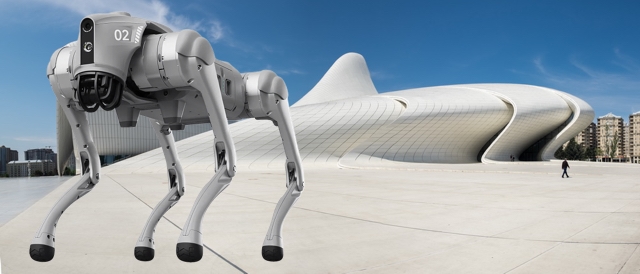
The Deep Robotics Lite Series centers on the Lite3 — a compact, agile 12–13.5 kg quadruped built for research, education, and development, with one of the most open ecosystems in legged robotics: published reinforcement-learning sim-to-real code, ROS2 interfaces, simulation models, and hardware-extension documentation. Offered in Venture, Pro, and LiDAR variants, this guide covers the Lite3's capabilities, specifications, applications, and what buyers should know before purchasing.
Deep Robotics Lite Series
Introduction / Overview
The Deep Robotics Lite Series, led by the Lite3, is the research quadruped that comes with its homework already published. Where most robot dogs ship with an SDK and a manual, the Lite3 ships into one of the most genuinely open ecosystems in legged robotics: Deep Robotics maintains public reinforcement-learning sim-to-real deployment code for the platform, a learning-based locomotion controller, up-to-date URDF, MJCF, and USD simulation models for ROS 2, Isaac Sim, and MuJoCo workflows, and even hardware-extension documentation — including a worked reproduction of the FAST-LIVO2 LiDAR-inertial-visual odometry system as an official example. For the university labs and development teams that are its core market, that ecosystem is the product as much as the robot.
The robot itself earns its place in it. At 12.2–13.5 kg and roughly 610 × 370 × 445–496 mm standing, the Lite3 is genuinely portable — one researcher carries it to the field site or the classroom — yet delivers the dynamic, highly agile locomotion of its industrial X Series siblings' engineering lineage: 40° slopes, 18 cm stairs and obstacles, 2.5–4.5 kg of payload, and 1.5–2 hours of endurance covering up to 5 km per charge. Offered in Venture, Pro, and LiDAR variants spanning entry development to full autonomous-navigation research, the Lite3 carries Deep Robotics' industrial engineering DNA — the same company whose X30 patrols live substations — into a format and price built for laboratories, curricula, and multi-unit programs.
For buyers comparing research quadrupeds, the Lite3's proposition is distinct: not the cheapest, not the most consumer-polished, but the most research-complete — hardware, simulation, learning stack, and extension pathways from one coherent, documented source.
Design and Features
Compact, Agile, Portable
- 12.2–13.5 kg, carry-anywhere format — light enough for single-person transport between lab, classroom, and field site, with the durability heritage of an industrial quadruped maker.
- Dynamic locomotion — highly agile movement across terrain: 40° slope capability, 18 cm stair and obstacle negotiation, and the responsive, stable gait work that made Deep Robotics' reputation.
- Practical payload — 2.5–4.5 kg (variant-dependent) carries cameras, LiDAR, compute modules, grippers, and custom sensor rigs.
- Field-relevant endurance — 1.5–2 hours and 2.7–5 km per charge, matched to experimental sessions and teaching blocks.
The Open Research Ecosystem
The Lite3's defining asset, maintained publicly by Deep Robotics:
- RL sim-to-real code — official reinforcement-learning deployment pipelines for the Lite3, taking policies from simulation to the real robot: the exact workflow modern locomotion research runs on, pre-built.
- Learning-based locomotion controller — a published neural locomotion controller supporting the platform, giving researchers a working baseline to study, modify, and benchmark against.
- Full simulation asset set — current URDF, MJCF, and USD models for ROS 2, Isaac Sim, MuJoCo, and modern simulation workflows.
- Hardware extension documentation — official guides for physically extending the platform, with the FAST-LIVO2 odometry reproduction as a worked example — a template for mounting and integrating advanced perception.
- Open SDKs — low-level and high-level interfaces with ROS2-ready integration for locomotion, perception, and control research.
Three Variants
- Lite3 Venture — the accessible development entry: core platform and SDK access for education and initial research.
- Lite3 Pro — enhanced compute and capability for advanced development and heavier experimental workloads.
- Lite3 LiDAR — integrated LiDAR for SLAM, autonomous navigation, and perception research out of the box.
Industrial DNA at Lab Scale
The Lite3 inherits Deep Robotics' engineering culture — the traction control, gait adaptation, and robustness philosophy proven on the substation-patrolling X30 — meaning student handling, repeated falls, and daily demonstration duty are within its design assumptions, not beyond them.
Technology and Specifications
Representative Specifications
Standing dimensions 610 × 370 × 445–496 mm; weight 12.2–13.5 kg (variant-dependent); payload 2.5–4.5 kg; slope capability 40°; stair and obstacle clearance 18 cm; endurance 1.5–2 hours; range 2.7–5 km per charge; ROS2-ready open SDKs; published RL sim-to-real pipelines and locomotion controller; URDF/MJCF/USD simulation models; Venture, Pro, and LiDAR variants. Confirm current datasheets before specifying — configurations evolve.
Why Ecosystem Depth Decides Research Value
A research quadruped's real cost is time-to-first-result: months disappear into building simulation models, writing deployment scaffolding, and reverse-engineering control stacks before the actual research begins. The Lite3's published models, RL pipelines, and worked extension examples collapse that ramp — which is why ecosystem completeness, not hardware price, is the rational comparison axis for laboratory buyers.
Position in the Market
Against the Unitree Go2's volume-and-price leadership in the compact class, the Lite3 competes on research completeness — official sim-to-real RL code, maintained simulation assets, and documented hardware extension — plus the industrial-lineage robustness of its maker. For consumer and hobbyist use the Go2 economics win; for laboratories building on the platform, the Lite3's ecosystem is the differentiator.
Applications and Use Cases
Locomotion and RL Research
The design center: reinforcement-learning gait development, sim-to-real transfer studies, and controller benchmarking on a platform whose official pipelines already implement the workflow — with the published locomotion controller as baseline.
University Robotics Education
Courses in legged locomotion, control theory, ROS2, and embodied AI gain a portable, durable teaching platform with curriculum-ready code examples — at multi-unit lab budgets.
SLAM and Perception Research
The LiDAR variant plus the FAST-LIVO2 extension template make the Lite3 a ready platform for odometry, mapping, and autonomous-navigation research in indoor, outdoor, and GPS-denied settings.
Algorithm and Payload Prototyping
Teams developing inspection concepts, sensor payloads, or navigation stacks prototype on the Lite3 before scaling to the X Series — one vendor, one SDK philosophy, an industrial upgrade path.
Demonstrations and Outreach
Agile, engaging, and portable, the Lite3 handles open days, exhibitions, and STEM outreach with the robustness daily demonstration demands.
Advantages / Benefits
- The most research-complete compact quadruped — official RL sim-to-real code, neural locomotion baseline, and full simulation assets: the ramp to first results measured in days.
- Documented extensibility — worked hardware-extension examples turn "can we mount this?" from risk into recipe.
- Industrial-lineage durability — engineering culture from live-deployment quadrupeds survives lab reality.
- Variant fit — Venture, Pro, and LiDAR tiers match budget and mission without platform change.
- Genuine portability — a 12–13 kg robot one person carries to wherever the experiment is.
- An upgrade path that matters — skills and code transfer toward the X Series when research becomes deployment.
For buyers researching where to buy the Deep Robotics Lite3, or comparing the Lite3's price and cost against the Unitree Go2 and other compact quadrupeds, the evaluation should weigh ecosystem completeness, simulation and RL support, extension documentation, durability lineage, and variant fit — the dimensions where the Lite3 leads for serious research use.
FAQ
What is the Deep Robotics Lite3?
The Lite3 is Deep Robotics' compact research quadruped — 12.2–13.5 kg with 40° slope and 18 cm obstacle capability — offered in Venture, Pro, and LiDAR variants, and backed by one of legged robotics' most open ecosystems: published RL sim-to-real code, simulation models, and hardware-extension documentation.
How does the Deep Robotics Lite3 work?
The Lite3 combines Deep Robotics' dynamic locomotion control with open low- and high-level SDKs and ROS2 interfaces, while official reinforcement-learning pipelines let researchers train policies in simulation (Isaac Sim, MuJoCo) and deploy them directly to the real robot.
What is the difference between the Lite3 Venture, Pro, and LiDAR?
The Venture is the accessible development entry, the Pro adds enhanced compute and capability for advanced workloads, and the LiDAR variant integrates laser perception for SLAM and autonomous-navigation research out of the box.
Is the Lite3 good for reinforcement-learning research?
Exceptionally — Deep Robotics publishes official RL sim-to-real deployment code and a learning-based locomotion controller for the Lite3, plus maintained URDF/MJCF/USD models, making it one of the few quadrupeds whose maker ships the modern research workflow itself.
How does the Lite3 compare to the Unitree Go2?
The Go2 leads on price and consumer polish, while the Lite3 leads on research completeness — official RL pipelines, simulation assets, documented hardware extension, and industrial-lineage durability — making the Go2 the hobbyist choice and the Lite3 the laboratory choice.
What payloads can the Lite3 carry?
The Lite3 carries 2.5–4.5 kg depending on variant — cameras, LiDAR units, compute modules, and custom sensor rigs — with official hardware-extension documentation (including a FAST-LIVO2 odometry reproduction) as an integration template.
Why is the Lite3 important?
The Lite3 set the standard for what a research quadruped's ecosystem should include: not just hardware and an SDK, but the simulation models, learning pipelines, and extension recipes that collapse months of setup into days.
How much does a Deep Robotics Lite3 cost?
The Lite3 sits in the accessible research tier, with the Venture, Pro, and LiDAR variants spanning education to advanced-lab budgets. Contact a distributor for current pricing, variant guidance, datasheets, and delivery timelines for your region.
Summary
The Deep Robotics Lite3 answers the question laboratories actually ask — not "what can the robot do?" but "how fast can we start doing research on it?" With official sim-to-real RL pipelines, a published neural locomotion baseline, maintained simulation models for every modern toolchain, worked hardware-extension examples, and three variants from classroom to LiDAR-equipped autonomy lab — all in a 12-kilogram package carrying the industrial durability of the company whose quadrupeds patrol live substations — the Lite3 is the research-complete compact quadruped. For anyone looking to buy a Deep Robotics Lite3, compare its cost against the Unitree Go2 and other compact platforms, or plan a locomotion, SLAM, or education deployment, this guide provides the essential foundation.