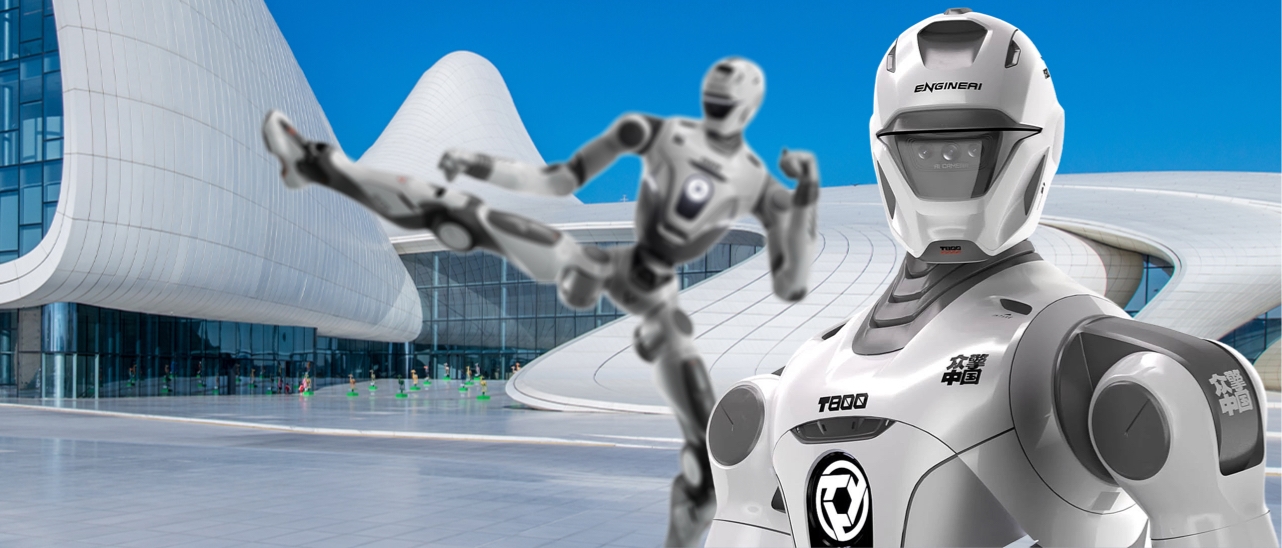
Keenon Humanoid Robots
Keenon Humanoid Robots explained: specifications, applications, accessories, comparisons, pricing, and buying considerations.
Introduction / Overview
Keenon Humanoid Robots belongs to a specialized robotics category within the Keenon product ecosystem. Pages at this level are useful for buyers who are no longer comparing robotics in general, but are evaluating a specific model family, product series, accessory group, or application-focused robot category. The key question is not simply whether the product is advanced, but whether it fits the intended operating environment, budget, integration plan, and support expectations.
Modern robot buyers typically compare platform type, mobility, payload, software access, sensor compatibility, runtime, charging requirements, spare parts, and regional availability. Keenon Humanoid Robots should therefore be considered in the context of the complete deployment: what the robot or accessory is expected to do, who will operate it, where it will be used, and what technical support may be needed after purchase.
Design and Features
Product Role
The Humanoid Robots category can represent a complete robot platform, a model family, a subsystem, or an accessory grouping. In each case, its purpose is to solve a defined robotics problem: movement, manipulation, sensing, interaction, charging, control, safety, maintenance, or task automation. Buyers should first identify whether Keenon Humanoid Robots is intended for research, education, commercial service, industrial use, inspection, logistics, public interaction, or system integration.
Important design features may include structural materials, actuator type, degrees of freedom, onboard computing, battery format, communication interfaces, payload options, mounting points, environmental tolerance, and accessory compatibility. For accessory categories, mechanical fit, electrical compatibility, firmware requirements, warranty impact, and installation method are especially important.
Usability and Integration
Usability depends on how easily the system can be configured, operated, maintained, and expanded. A robot may offer high performance but still require training, software setup, network configuration, or maintenance procedures. Integration-focused buyers should confirm documentation, SDK or API access, update mechanisms, safety limits, and whether the product can be used with existing hardware or workflows.
Technology and Specifications
Specifications for Keenon Humanoid Robots should be reviewed in relation to the planned task. Common robotics specifications include size, weight, payload, speed, runtime, charging time, battery capacity, degrees of freedom, sensor options, network interfaces, controller compatibility, and supported accessories. No single specification determines suitability. A lightweight platform may be ideal for education, while a larger system may be required for field use, logistics, or industrial operation.
Software and autonomy also matter. Some systems are designed for remote operation, some for semi-autonomous workflows, and others for developer experimentation. Features such as mapping, obstacle avoidance, motion planning, teleoperation, data logging, simulation support, and fleet management can significantly affect practical value.
Applications and Use Cases
Keenon Humanoid Robots may be relevant to education, research, demonstrations, industrial automation, mobile inspection, service robotics, logistics, warehouse operations, healthcare support, public safety, entertainment, customer engagement, or technology development. The correct use case depends on the exact model and configuration.
Research and Education
Schools, universities, and laboratories often use robot platforms and accessories to teach programming, mechatronics, artificial intelligence, control theory, perception, and human-robot interaction. In these settings, software openness, documentation, repeatability, and repairability can be more important than polished commercial behavior.
Commercial and Industrial Deployment
Commercial users usually prioritize reliability, safety, serviceability, and return on investment. Deployment planning should include operator training, maintenance schedules, replacement parts, charging infrastructure, data handling, and any site-specific safety procedures. A successful robotics project normally begins with a narrow task definition and expands after performance is proven.
Advantages / Benefits
The main benefit of evaluating Keenon Humanoid Robots as a defined category is clarity. Buyers can compare relevant products, accessories, or model variants without mixing unrelated robot types. This helps with budgeting, technical planning, and long-term support.
Potential benefits include improved task automation, safer data collection in difficult environments, more consistent demonstrations, reduced manual repetition, better training tools, and a clearer upgrade path. For accessories, benefits may include longer runtime, easier control, improved manipulation, safer charging, better sensing, or expanded deployment options.
Comparisons
Keenon Humanoid Robots should be compared with similar products in the same functional class. A humanoid series should be compared with other humanoids, a quadruped model with comparable robot dogs, a collaborative arm with similar cobots, and an accessory with compatible accessories for the same platform. This prevents misleading comparisons between products designed for different tasks.
Important comparison points include payload, runtime, control method, software ecosystem, accessory support, durability, warranty, price, lead time, regional availability, and total cost of ownership. Buyers should also compare what is included in the base package and what requires optional purchase.
Pricing and Availability
Pricing for Keenon Humanoid Robots can vary by configuration, payload, battery package, controller, sensors, software license, support level, and shipping region. Some robotics products are sold as standard packages, while others require quotation because the final price depends on accessories, integration, or enterprise support.
Availability may depend on manufacturer production schedules, import rules, lithium battery shipping restrictions, regional distribution, and whether the product is a current model or a specialized item. Buyers should confirm lead time, warranty handling, spare-part availability, training options, and compatibility before finalizing a purchase.
FAQ Section
What is Keenon Humanoid Robots?
Keenon Humanoid Robots is a robotics category, model family, product series, or accessory group associated with Keenon. It should be evaluated by its specifications, intended application, compatibility, and support requirements.
How does Keenon Humanoid Robots work?
The system generally combines mechanical hardware, electronics, software, sensors, power management, and user controls. The exact operation depends on whether the item is a complete robot, a subsystem, or an accessory.
Why is Keenon Humanoid Robots important?
It helps buyers identify products or accessories that match a specific robotics use case instead of comparing unrelated platforms. This improves technical planning and purchasing accuracy.
Where can I buy Keenon Humanoid Robots?
Availability depends on regional distribution, stock, shipping rules, and configuration. Buyers should confirm current availability, included accessories, warranty, and support options before ordering.
What are the benefits of Keenon Humanoid Robots?
Benefits may include better automation, improved research capability, safer inspection, stronger demonstrations, easier integration, expanded accessories, or more reliable operation in the intended use case.
What should I check before buying?
Check compatibility, payload, runtime, software access, controller requirements, accessories, spare parts, warranty, delivery time, training needs, and total cost of ownership.
References / External Links
- Manufacturer manuals, specification sheets, and compatibility notes
- Robot Operating System documentation for robotics software concepts
- IEEE Robotics and Automation Society publications on robot design and deployment
- Relevant safety guidance for robots operating near people or equipment
Summary
Keenon Humanoid Robots should be assessed as part of a complete robotics deployment rather than as an isolated product name. Buyers should consider the task, operating environment, software requirements, accessories, maintenance plan, and support options before choosing a model or configuration.
A structured comparison of specifications, compatibility, pricing, and availability leads to better purchasing decisions and reduces the risk of choosing a robot or accessory that does not fit the intended application.
Frequently Asked Questions (FAQ)
What are KEENON's humanoid robots?
KEENON's humanoid robots are the XMAN-R1 (wheeled humanoid, introduced March 31, 2025) and XMAN-F1 (bipedal humanoid, premiered at WAIC 2025 on July 26, 2025), developed under the Keenon Humanoid brand. Both run on KOM2.0, the world's first Vision-Language-Action (VLA) model for the service industry, developed from real-world data across KEENON's 60-country commercial robot deployment portfolio. The XMAN-R1 has been commercially deployed at the Shangri-La Traders Hotel. The XMAN-F1 demonstrated personalized beverage mixing and popcorn preparation at WAIC 2025, including a Johnnie Walker Blue Label collaboration.
What is KOM2.0 and how does it differ from KEENON ProS?
KOM2.0 is KEENON's proprietary Vision-Language-Action (VLA) model that provides the foundation of general service intelligence for the XMAN humanoid robots. It processes visual perception, natural language instructions, and physical action generation in a unified architecture, trained on real-world service data from KEENON's commercial deployments. KEENON ProS is a domain-specific optimization layer built on top of KOM2.0 for particular deployment verticals, described as "vocational training" that provides specific professional job skills for contexts like hotel operations. KOM2.0 provides broad service competency; KEENON ProS provides the deep domain-specific expertise.
What is the "Robot Role-Orientation" concept?
Robot Role-Orientation is KEENON's proposed commercial deployment framework for humanoid service robots. It "involves deconstructing commercial service scenarios into independent work modules, where each module corresponds to a single, standardized role with clearly defined boundaries and responsibilities, establishing a precise 'Robot-to-Role' correspondence." For buyers, this means identifying the specific service roles they need filled, matching those roles to standardized robot role specifications, and deploying with confidence in defined performance expectations rather than managing ambiguity about a general-purpose robot's varied task performance.
What was the XMAN-F1's Johnnie Walker Blue Label collaboration at WAIC 2025?
KEENON's WAIC 2025 official press release described: "The bar area features a highlight collaboration with Johnnie Walker Blue Label, the world's leading premium whisky, where robotic bartenders work alongside delivery robot T10 to craft and serve bespoke beverages." The XMAN-F1 performed the beverage preparation tasks while the T10 delivery robot handled distribution. This collaboration with a globally recognized luxury whisky brand at China's most prestigious AI conference provided implicit brand-level validation of the XMAN-F1's operational quality and guest-facing appropriateness.