Research Robots
Research Robots: Types, Use Cases, Costs & Benefits (Complete Guide)
Research robots are robotic platforms used in academic, government, and industrial research to study robotics itself, develop new capabilities, test algorithms in physical environments, and conduct scientific investigations that benefit from robotic precision, endurance, or access. The category includes purpose-built research platforms, adapted commercial robots, and fully custom experimental systems built in university and national laboratory workshops.
Research robots are the incubators of the wider robotics industry. Most capabilities that are today commercially deployed - SLAM navigation, robotic manipulation, drone autonomy, surgical precision - were developed and validated on research robot platforms before reaching commercial products. Understanding research robots means understanding where commercial robotics is going before it arrives.
Types of Research Robots
Humanoid Research Robots
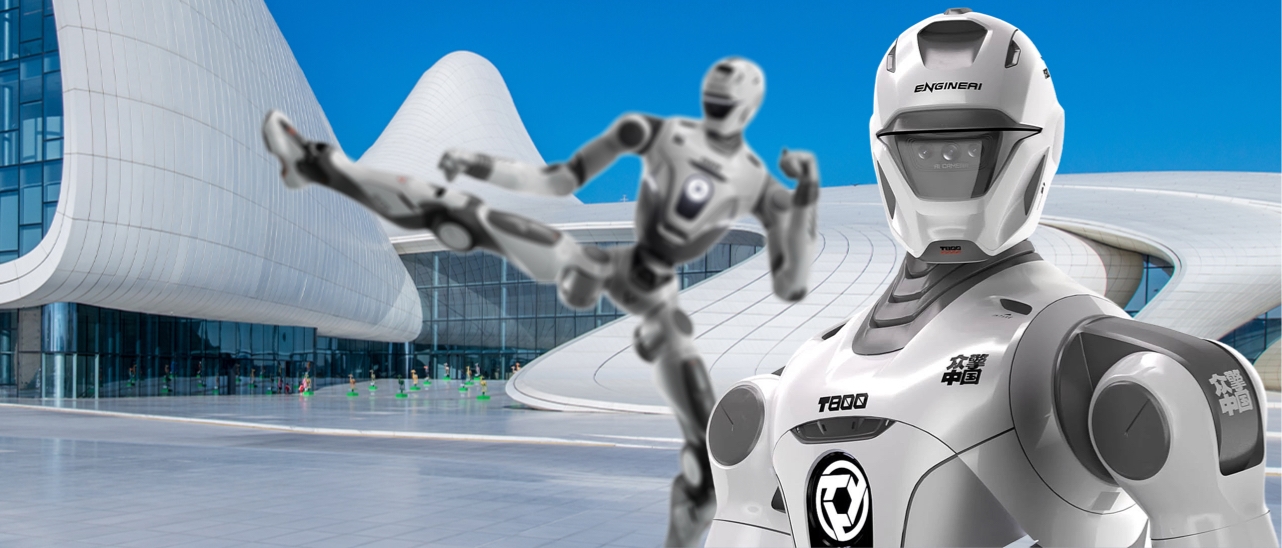
Full-body humanoid platforms designed to study locomotion, manipulation, human-robot interaction, and whole-body control. Boston Dynamics Atlas is the most capable publicly known research humanoid; Agility Robotics Digit bridges research and commercial; PAL Robotics TALOS and the various university-built platforms (IHMC's robots, the DARPA Robotics Challenge entrants) define the research frontier. Honda ASIMO was a long-running research demonstration platform.
Wheeled and Legged Mobile Research Robots
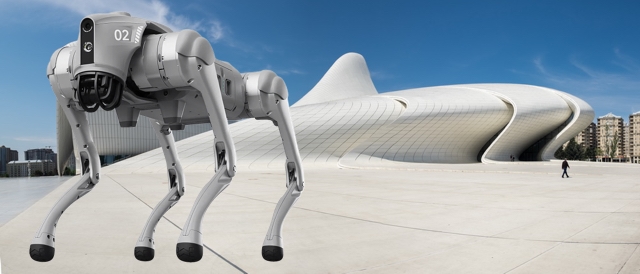
Ground vehicles designed for navigation, perception, and mapping research. TurtleBot (Clearpath/Open Robotics) is the most widely used research mobile base in university labs globally. Clearpath Husky, Jackal, and Spot (Boston Dynamics) serve as mobile research platforms. These robots provide a standardized hardware foundation on which research software (typically ROS-based) is developed and tested.
Manipulation Research Robots
Robotic arm platforms for grasping, assembly, and manipulation research. Universal Robots UR series, Franka Emika Panda, and Kinova Jaco are popular research manipulation platforms. These are typically compliant, low-force robots safe for unstructured lab environments where rigid industrial arms would be hazardous.
Aerial Research Robots (Research UAVs)
Custom and commercial drone platforms modified for research. DJI platforms are commonly used for aerial perception and navigation research; custom quad- and hexacopters are built for specialized payload and flight envelope research. NASA and research laboratories use custom UAV platforms for atmospheric research.
Underwater Research Robots
ROVs and AUVs for ocean research, seafloor mapping, underwater archaeology, and environmental monitoring. Woods Hole Oceanographic Institution, MBARI, and similar organizations operate advanced underwater research robots. MIT's Soft Robotics group has developed soft-bodied robots for deep ocean research.
Swarm Robotics Platforms
Collections of simple, coordinated robots designed to study emergent behavior, collective intelligence, and distributed algorithms. Kilobot (Harvard), e-puck, and various custom swarm platforms are used in academic research on swarm intelligence and multi-robot coordination.
Bio-Inspired Research Robots
Robots designed to mimic animal locomotion or biological structures to understand biological systems and develop novel movement capabilities. Harvard's Wyss Institute produces soft robots and insect-scale flying robots (RoboBee). Boston Dynamics' early work was explicitly bio-inspired.
Use Cases of Research Robots
Locomotion and Navigation Research
Developing and testing algorithms for robot movement - walking, running, climbing, swimming - is a core use of research robots. The dynamics of bipedal locomotion, for example, require a physical humanoid robot to develop and validate; simulation is insufficient for real-world validation. Boston Dynamics Atlas has been used to push the limits of dynamic balance and athletic movement capability.
Grasping and Dexterous Manipulation
Robotic grasping remains a hard problem. Research robots equipped with robotic hands and soft grippers are used to study how robots can reliably pick up and manipulate objects of varying shape, weight, and surface texture. OpenAI's Dexterous In-Hand Manipulation project used a Shadow Dexterous Hand on a fixed manipulator to study learning-based manipulation.
Simultaneous Localization and Mapping (SLAM)
SLAM - the ability to build a map of an unknown environment while simultaneously tracking position within that map - is a foundational capability for autonomous robots. Research robots in university labs have been testing and refining SLAM algorithms for decades. The SLAM algorithms in today's warehouse robots and autonomous vehicles trace directly to academic research robot experiments.
Human-Robot Interaction Research
How humans perceive, interact with, and respond to robots is studied using robot platforms in controlled experiments. Research in this field informs the design of industrial cobots, companion robots, and service robots. Pepper and NAO (SoftBank) are popular HRI research platforms specifically because they have human-relatable form factors and expressive capability.
Field Robotics and Environmental Research
Robots deployed in outdoor, unstructured, and harsh environments for research purposes: agricultural field research robots, Antarctic exploration robots, volcano exploration platforms, and rainforest ecological survey robots. These applications push robot reliability and autonomy in environments where human presence is dangerous or impractical.
AI and Machine Learning Development
Physical research robots provide the real-world grounding for AI and machine learning research. Reinforcement learning algorithms trained in simulation are tested on physical robots to verify that simulated performance transfers to physical reality. Sim-to-real transfer - making AI trained in simulation work on real robots - is a major active research challenge.
Medical and Surgical Research
Research robots in medical contexts develop new surgical techniques, test prosthetic limb designs, advance rehabilitation robotics, and study human motor systems. The research-to-clinical pipeline for surgical robots runs through university and hospital research labs using custom platforms before reaching commercialization.
Space Exploration Research
NASA's Jet Propulsion Laboratory and other space agencies develop planetary exploration robots - the direct predecessors to Mars rovers and lunar exploration vehicles. Research robots at JPL test mobility systems, sample collection tools, and autonomous navigation in Mars analog environments.
Industries That Use Research Robots
Academic Institutions
Universities globally conduct robotics research. MIT, Carnegie Mellon, ETH Zurich, Stanford, and hundreds of other institutions operate research robot laboratories. Academic research is where most foundational robotics capability originates.
Government Research Laboratories
DARPA, NASA, NIST, national laboratories (Sandia, Oak Ridge), and defense research agencies fund and operate robotics research programs with significant government investment.
Corporate Research Divisions
Alphabet (Google) Research, Microsoft Research, Amazon Robotics, and most major technology and robotics companies operate research divisions that use robot platforms to develop next-generation capabilities.
Medical Research Institutions
NIH-funded research centers, hospital research departments, and medical device companies use research robots to develop surgical systems, rehabilitation robotics, and prosthetics.
Defense and Intelligence
DoD research agencies (DARPA, ONR, ARL) fund robotics research across multiple platforms and applications. The DARPA Robotics Challenge (2013-2015) was a landmark funded research program that advanced humanoid robot disaster response capability across multiple university and corporate teams.
Space Agencies
NASA, ESA, JAXA, and other national space agencies operate robotics research programs directly tied to planetary and spacecraft exploration missions.
Benefits of Research Robots
Physical Reality Validation
The physical world introduces constraints - friction, gravity, unmodeled dynamics, sensor noise - that simulation cannot fully replicate. Research robots provide the grounding reality that separates demonstrations that work from ones that don't. This validation is fundamental to scientific progress in robotics.
Standardized Research Infrastructure
Widely adopted research platforms (TurtleBot, Franka Panda, Spot) allow researchers at different institutions to compare results on common hardware, build on each other's software contributions, and reproduce experiments. The research ecosystem around platforms like TurtleBot, which runs ROS natively, has dramatically accelerated the pace of navigation and perception research.
Capability Advancement
Direct research investment in robot capability - manipulation, locomotion, perception, reasoning - advances the entire industry. Boston Dynamics' Atlas research platform has pushed the limits of humanoid locomotion globally, raising the state of the art that commercial developers aim for.
Training Data Generation
Physical robots in research contexts generate real-world data - labeled images, trajectory recordings, sensor readings - that train machine learning models. The quality of real-world training data from carefully instrumented research robots exceeds what simulation alone provides.
Safety and Reliability Research
Research focused specifically on robot safety - how to make robots reliable and safe in unstructured environments with humans present - is essential before commercial deployment. Research robots test safety systems in controlled failure scenarios that would be unacceptable to introduce into commercial deployments.
Interdisciplinary Discovery
Research robots bring together computer science, mechanical engineering, electrical engineering, cognitive science, and domain expertise (medicine, agriculture, oceanography). The interdisciplinary nature of robotics research generates discoveries that benefit multiple fields.
Challenges & Limitations of Research Robots
High Cost of Research Platforms
High-end research robots are expensive. Boston Dynamics Spot is approximately $75,000; Franka Emika Panda is $15,000-$20,000; a full humanoid research platform costs hundreds of thousands to millions. Research budgets at most universities are constrained, limiting access to cutting-edge hardware.
Reproducibility Challenges
Robot experiments are difficult to reproduce exactly - physical hardware varies between units, environments vary between labs, and software configurations are complex. The reproducibility crisis in AI research extends to physical robotics research.
Sim-to-Real Gap
Machine learning algorithms trained in simulation often perform poorly on physical robots due to the gap between simulated and real physics, sensor models, and actuator dynamics. Bridging this gap is a major ongoing research challenge that requires extensive physical experimentation.
Brittleness Outside Defined Conditions
Research robots often perform impressively in the specific conditions they were developed for and fail outside those conditions. A robot that navigates a lab perfectly may fail in a different building. This brittleness makes generalization a persistent research challenge.
Hardware Maintenance and Reliability
Research robots operated by graduate students in lab conditions sustain significant mechanical wear and damage. Maintenance expertise, spare parts availability, and repair time constrain research productivity. Hardware failures interrupt experiments at critical moments.
Talent Concentration
World-class robotics research requires rare combinations of skills in mechanical engineering, control theory, computer vision, and machine learning. The talent pool is concentrated at a small number of top institutions, creating geographic and institutional concentration of capability.
Cost & ROI of Research Robots
For up-to-date prices, browse and buy research robots for sale here.
Entry-level research mobile bases: TurtleBot4 approximately $1,500-$2,000; e-puck approximately $1,500.
Mid-range research platforms: Clearpath Jackal approximately $15,000; Franka Emika Panda approximately $15,000-$20,000; UR3e approximately $25,000.
High-end research platforms: Boston Dynamics Spot approximately $75,000; Clearpath Husky approximately $25,000; Universal Robots UR10e approximately $45,000.
Elite research platforms: Boston Dynamics Atlas (research version) is provided to select research partners under program agreements; NAO research version approximately $9,000-$12,000.
Custom research robots built in laboratories: $50,000-$500,000+ depending on complexity and components.
ROI in research robots is measured in knowledge production - publications, patents, student training, and technology transfer to commercial applications. The commercial ROI of robotics research investment is exceptionally high at the aggregate level: the entire warehouse robot, surgical robot, and autonomous vehicle industries trace to academic research robot programs funded by government and university grants.
Key Technologies Behind Research Robots
ROS (Robot Operating System) is the dominant software framework for research robots globally. Developed at Willow Garage and now maintained by Open Robotics, ROS provides communication infrastructure, driver libraries, and simulation tools (Gazebo) that allow researchers to build on a common software foundation rather than building from scratch.
ROS 2 is the current version, designed for real-time performance and production deployment as well as research use. The transition from ROS 1 to ROS 2 is ongoing in the research community.
Motion capture systems (OptiTrack, Vicon) provide ground-truth position data in research labs, enabling precise evaluation of robot localization and navigation algorithms.
Force-torque sensors on research manipulators enable compliance control and contact-rich manipulation research. Six-axis force-torque sensing is standard on research manipulation platforms.
High-resolution depth cameras (Intel RealSense, Azure Kinect) provide 3D perception inputs for computer vision and navigation research. Structured light and time-of-flight depth sensing at affordable price points has democratized 3D perception research.
How to Implement Research Robots
-
Research objective definition. Identify the specific research questions and what robot capabilities they require. Platform selection follows from research objectives, not availability.
-
Platform selection. Evaluate standard platforms (TurtleBot, Franka, Spot) before committing to custom builds. Standard platforms offer community support, existing software libraries, and reproducibility benefits.
-
Software environment setup. Establish ROS 2 infrastructure, simulation environment (Gazebo, Isaac Sim), and lab networking. Software setup often requires more time than hardware procurement.
-
Safety protocols. Establish lab safety procedures for robot operation, particularly for dynamic robots capable of significant force. Robot safety in research labs is frequently underemphasized.
-
Student training. Train graduate students and postdocs on hardware operation, maintenance, and safety before independent operation. Lab culture around careful hardware handling significantly affects research productivity.
-
Documentation and reproducibility. Document experimental setups, software configurations, and hardware modifications from the start. Reproducibility depends on systematic documentation practice.
-
Community engagement. Engage with the ROS community, share code, and contribute to open platforms. The research robot ecosystem advances through open contribution.
Research Robot Safety & Regulations
Research robots in laboratory settings are subject to institutional safety protocols under OSHA laboratory safety requirements and university/research institution safety programs.
ISO 10218 (industrial robot safety) and ISO 15066 (collaborative robot safety) apply to research robots operating in shared human-robot spaces. Many university labs use collaborative robot arms precisely because their force limits provide safety margins not available from industrial arms.
IRB (Institutional Review Board) approval is required for research involving human subjects interacting with robots. Human-robot interaction experiments, prosthetics research, and rehabilitation robotics require IRB review.
Export control regulations (ITAR, EAR in the US) apply to certain robotic technologies with potential defense applications. Research involving advanced locomotion, navigation, or autonomy systems may trigger export control review.
Space robotics research for NASA and ESA projects follows agency-specific safety and mission assurance requirements that go substantially beyond standard lab safety.
Top Research Robot Brands / Companies
|
Company |
Key Platform |
Research Application |
|
Boston Dynamics |
Atlas, Spot |
Locomotion, manipulation research |
|
Clearpath Robotics |
Husky, Jackal, Dingo |
Mobile robot research |
|
Open Robotics / Clearpath |
TurtleBot4 |
Entry-level mobile research |
|
Franka Robotics |
Franka Panda |
Manipulation research |
|
Universal Robots |
UR3e, UR5e |
Manipulation, HRI research |
|
SoftBank Robotics |
NAO, Pepper |
HRI, social robot research |
|
Agility Robotics |
Digit |
Bipedal locomotion research |
|
PAL Robotics |
TALOS, TIAGo |
Humanoid research |
|
Kinova |
Jaco, Gen3 |
Lightweight manipulation |
|
DJI |
Matrice series |
Aerial research platforms |
Overview of the Research Robotics Market
The research robotics market operates differently from commercial robotics - it is driven by funding (government grants, corporate R&D budgets, university investment) rather than commercial sales cycles. Global annual government investment in robotics research is in the billions of dollars - DARPA alone funds hundreds of millions in robotics annually; NSF, NIH, and DOE fund additional programs; EU Horizon programs fund European academic robotics research.
The ROS ecosystem has become the de facto standard for research robot software globally, with over 3,000 packages and adoption across hundreds of institutions. This standardization has accelerated research productivity by enabling code sharing and reproducibility across the global research community.
The research-to-commercial pipeline is shortening. Boston Dynamics' commercial products emerged from DARPA-funded research; Franka Emika's research-origin manipulator is now commercially deployed in cobotic applications; the autonomous vehicle industry traces directly to the DARPA Grand Challenge and Urban Challenge programs of the mid-2000s. The velocity of technology transfer from research to commercial deployment continues to accelerate.
Frequently Asked Questions
What are research robots?
Research robots are robotic platforms used in academic, government, and industrial research to develop new robot capabilities, test algorithms in physical environments, study human-robot interaction, and conduct scientific investigations. They are the platforms on which tomorrow's commercial robots are developed.
What is ROS?
ROS (Robot Operating System) is an open-source software framework for robot development, providing communication infrastructure, hardware drivers, simulation tools, and a vast library of algorithm packages. It is the dominant software platform for research robots globally and is increasingly used in commercial robot development. ROS 2 is the current version.
What is TurtleBot?
TurtleBot is a series of low-cost mobile research robots (TurtleBot 2, TurtleBot 3, TurtleBot 4) developed for ROS-based navigation and mapping research. It is the most widely used research mobile base in university robotics labs globally. TurtleBot 4 is developed by Clearpath Robotics and Open Robotics, priced at approximately $1,500-$2,000.
What was the DARPA Robotics Challenge?
The DARPA Robotics Challenge (2013-2015) was a government-funded competition challenging teams to develop humanoid robots capable of performing disaster response tasks: driving vehicles, opening doors, climbing stairs, turning valves, and using tools. It advanced the state of humanoid robotics capability significantly and produced research results that influenced multiple generations of commercial humanoid development.
What is Franka Emika Panda?
The Franka Emika Panda (now Franka Research 3) is a 7-DOF research manipulation arm widely used in grasping, manipulation, and learning-based robotics research. It features torque sensing at all joints, is human-safe at its operating speeds, integrates natively with ROS, and has become a standard platform for manipulation research globally.
How does research in simulation relate to physical robots?
Many robot algorithms are developed and initially trained in simulation (Gazebo, Isaac Sim, PyBullet) before being tested on physical robots. The sim-to-real gap - differences between simulated and real physics, sensors, and actuators - means that algorithms must be adapted and refined through physical testing. Research robots are essential for this validation step.
What robots does NASA use for research?
NASA's Jet Propulsion Laboratory (JPL) develops and tests planetary rover prototypes in Mars analog environments. Current research platforms inform future Mars and lunar surface exploration missions. NASA also researches robotic assembly in microgravity, humanoid robots for station maintenance (Robonaut), and free-flying inspection robots.
Can I use a research robot for commercial purposes?
Some research robot platforms (Spot, Universal Robots arms) are dual-use - deployed in both research and commercial contexts. Research-only platforms like Atlas (Boston Dynamics) are not sold commercially. The licensing terms of research platforms vary; many carry restrictions on commercial use.
What programming language is used for research robots?
Python and C++ are the dominant languages for ROS-based research robot programming. Python is used for rapid prototyping and machine learning integration; C++ for real-time performance-critical control. MATLAB is used in academic research for algorithm development and simulation, particularly in control theory contexts.