Quadruped Robots
Quadruped Robots: Types, Use Cases, Costs & Benefits (Complete Guide)
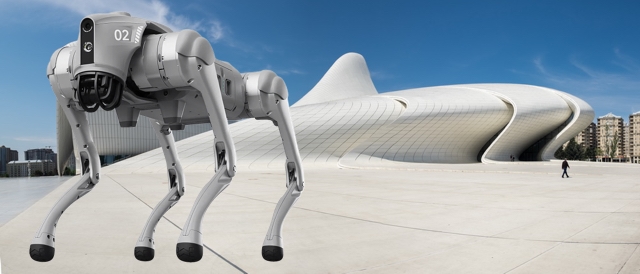
A quadruped robot moves on four legs. That is the defining feature, and it matters more than it might seem. Four-legged locomotion gives a robot the ability to traverse terrain that wheels and tracks cannot handle - uneven ground, rubble, slopes, stairs, mud, snow - while maintaining the kind of dynamic stability that makes bipeds so mechanically demanding.
The robot dog, as the category is popularly called, went from a viral curiosity when Boston Dynamics released Spot footage around 2016 to a serious commercial product category by the early 2020s. Today, Unitree, Boston Dynamics, ANYbotics, Spot, Ghost Robotics, and a crowded field of Chinese manufacturers sell quadruped platforms into industrial inspection, defense, construction, and research markets. The price curve has dropped sharply: units that cost $75,000 four years ago now have credible competitors at $10,000-$20,000.
Types of Quadruped Robots
Electric Quadruped Robots
The dominant commercial category. Electric actuation (brushless DC motors, series elastic actuators) provides precise control, relatively quiet operation, and lower maintenance overhead than hydraulic systems. Boston Dynamics Spot, Unitree Go2, and ANYmal are all electric platforms.
Hydraulic Quadruped Robots
Hydraulic systems deliver higher force density and payload capacity. Boston Dynamics' earlier BigDog was hydraulic. Modern commercial platforms have largely moved to electric, but hydraulic designs are still relevant for heavy-payload military and industrial applications.
Legged-Wheeled Hybrid Quadrupeds
Some platforms combine legs and wheels - wheels on the end of legs for flat-terrain speed, switchable to full legged mode for obstacles. ANYbotics and several research platforms have explored this configuration.
Mini / Consumer Quadruped Robots
Smaller, lower-cost platforms like Unitree Go1/Go2 Pro, Xiaomi CyberDog, and various research-grade mini quadrupeds have opened the category to universities, developers, and well-funded hobbyists. Prices start under $3,000 for basic units.
Military-Grade Quadrupeds
Ghost Robotics Vision 60, designed for military reconnaissance and logistics support, and similar platforms from defense contractors represent a hardened, mission-specific subset of the category.
Use Cases of Quadruped Robots
Industrial Inspection
The core commercial use case today. Quadruped robots conduct routine inspection rounds at oil refineries, chemical plants, power generation facilities, and manufacturing sites. They carry sensor payloads - thermal cameras, gas detectors, acoustic sensors - and transmit data in real time. They can operate in environments too hazardous or too inaccessible for human inspectors.
Construction Site Monitoring
Quadrupeds walk construction sites, capturing photogrammetric data, checking progress against BIM models, and identifying safety hazards. Companies like Trimble and Hilti have integrated quadruped platforms into site management workflows.
Mining Operations
Underground mining environments - low ceilings, irregular floors, dust, gas hazards - are well suited to quadruped robots. They inspect tunnels, check equipment status, and operate in areas temporarily closed to human workers.
Search and Rescue
Quadrupeds can enter collapsed structures, navigate debris fields, and locate survivors using thermal imaging and acoustic sensors. Their low center of gravity and dynamic balance make them useful where wheeled robots get stuck.
Military Reconnaissance and Logistics
Ghost Robotics and similar platforms carry sensors, communications gear, or light payloads in field environments. Applications range from perimeter security to carrying equipment in rough terrain where vehicles cannot operate.
Research and Development
Universities and robotics labs use quadruped platforms to research locomotion algorithms, terrain adaptation, multi-robot coordination, and AI-guided navigation. The hardware has matured enough that researchers can focus on software rather than building mechanical systems from scratch.
Security and Perimeter Patrol
Quadruped robots conduct automated security patrols in data centers, warehouses, ports, and critical infrastructure sites, augmenting or replacing human security rounds during off-hours.
Agriculture and Outdoor Monitoring
Quadrupeds navigate uneven agricultural terrain - crop fields, orchards, vineyards - performing crop health monitoring, pest detection, and infrastructure inspection in environments that defeat wheeled platforms.
Industries That Use Quadruped Robots
Oil, Gas, and Petrochemicals
Hazardous site inspection is the flagship application. Quadruped robots conduct autonomous inspection rounds at refineries and offshore platforms, reducing human exposure to toxic or explosive atmospheres.
Construction
BIM model verification, safety monitoring, and site documentation are active use cases at large construction projects.
Mining
Underground inspection and situational awareness in environments with restricted human access.
Defense and Government
Military and law enforcement agencies use quadruped platforms for reconnaissance, EOD support, and logistics in field environments.
Power and Utilities
Substation inspection, transmission line assessment, and power plant monitoring are established use cases.
Research and Education
Universities, robotics research institutions, and technical schools represent a large share of current deployments.
Security Services
Commercial and industrial security operations use quadruped robots for autonomous patrol and monitoring.
Benefits of Quadruped Robots
Terrain Versatility
Four-legged locomotion handles stairs, slopes, gravel, mud, snow, and debris that stop wheeled and tracked robots. This is the fundamental advantage of the form factor.
Hazardous Environment Access
Quadrupeds operate in environments with gas hazards, extreme temperatures, radiation, or structural instability - places where human entry is prohibited or high-risk.
Consistent Data Collection
Autonomous inspection rounds eliminate the variability of human inspection schedules and attention. Quadruped robots collect sensor data on a precise, repeatable schedule at defined waypoints.
Payload Flexibility
Modular payload systems allow the same platform to carry different sensor packages for different tasks. One robot can do thermal imaging today and acoustic emission testing next week.
Reduced Inspection Downtime
When robots can conduct inspections without halting operations or requiring human entry into hazardous zones, facilities run more continuous production schedules.
Rapid Deployment
Compared to fixed sensor installations, quadruped robots can be deployed and repositioned quickly as facility layouts or inspection priorities change.
Challenges & Limitations of Quadruped Robots
Battery Life
Most commercial quadrupeds run 1-2 hours on a charge under load. For extended inspection routes in large facilities, this requires either multiple units, charging stations along the route, or battery swap infrastructure.
Payload Capacity
Current commercial platforms carry 5-15 kg of payload. Heavy sensor packages or tool payloads push against these limits.
Rough Terrain Recovery
Despite impressive locomotion capabilities, quadrupeds still fall in sufficiently challenging terrain - ice, extreme mud, large obstacles. Recovery from falls in confined spaces is an active research problem.
Communication in GPS-Denied Environments
Underground, indoor, or RF-contested environments challenge the communication and positioning systems that quadrupeds rely on for navigation and data transmission.
Cost
Quality commercial platforms still run $15,000-$75,000+. For many potential buyers, the ROI case depends on high-frequency inspection requirements and demonstrated cost savings from incident prevention.
Regulatory and Insurance Complexity
Operating quadruped robots autonomously near human workers, in public spaces, or in safety-critical industrial environments involves navigating evolving regulatory frameworks and insurance underwriting that is not yet standardized.
Skill Gap
Deploying, operating, and maintaining quadruped robots requires skills most organizations do not currently have. Vendor support and training programs vary significantly in quality.
Cost & ROI of Quadruped Robots
For up-to-date prices, browse and buy quadruped robots for sale here.
Entry-level platforms (Unitree Go2, consumer-facing mini quadrupeds): $3,000-$10,000. These are suitable for research and light inspection tasks.
Mid-range commercial platforms (Boston Dynamics Spot, Unitree B2): $30,000-$75,000 with standard payload packages. These are the workhorse units for industrial inspection deployments.
Enterprise/defense platforms (Ghost Robotics Vision 60, ANYmal): $70,000-$150,000+ depending on specification.
ROI in industrial inspection is typically calculated around avoided incident costs, reduced inspection labor hours, and extended intervals between human-entry inspections. A refinery running 4-6 inspection rounds per day across a large site can recover unit costs within 12-24 months in high-labor-cost markets. Payload sensors add to upfront cost but often have the highest ROI impact (gas leak detection, thermal anomaly identification).
Key Technologies Behind Quadruped Robots
Leg Actuation: Series elastic actuators (SEAs) provide compliance and force sensing in legs, allowing dynamic balance recovery. Brushless DC motors with high-torque gearboxes are standard.
Onboard Sensing: Stereo cameras, depth sensors, LiDAR, IMUs, and joint torque sensors provide real-time environmental awareness and balance feedback.
Locomotion Algorithms: Reinforcement learning has largely replaced hand-coded gait controllers for modern platforms. Robots trained in simulation develop robust gaits that handle novel terrain without explicit programming.
AI Navigation: SLAM (Simultaneous Localization and Mapping) enables autonomous navigation in unknown environments. Pre-mapped facilities can be navigated with high precision on repeating inspection routes.
Payload Interface: Standardized payload mounting systems (Boston Dynamics' Spot uses a payload port with power and data) allow sensor manufacturers to develop plug-and-play packages.
Cloud and Edge Compute: Inspection data is processed on-robot, at an edge server, or transmitted to cloud platforms for analysis and reporting. Integration with CMMS and asset management systems is increasingly standard.
How to Implement Quadruped Robots
-
Identify inspection routes and tasks. Map the specific waypoints, sensor readings, and data formats required.
-
Environment assessment. Walk the intended routes to identify obstacles, terrain challenges, and communication dead zones.
-
Platform selection. Match payload capacity, battery life, and IP rating to site requirements.
-
Sensor payload selection. Define the sensor suite (thermal, gas, visual, acoustic) needed for your inspection program.
-
Communication infrastructure. Ensure WiFi or private LTE coverage across the entire route. Identify any gaps and plan infrastructure upgrades.
-
Software integration. Connect the robot's data output to your CMMS, asset management platform, or reporting system.
-
Pilot and route programming. Drive the robot through inspection routes to teach waypoints. Run supervised autonomous trials before full deployment.
-
Operator training. Train the operators who will monitor missions, handle exceptions, and perform basic maintenance.
-
Maintenance planning. Establish charging schedules, cleaning routines, and a maintenance contract with the vendor.
Quadruped Robot Safety & Regulations
Quadruped robots operating in industrial environments are subject to applicable machinery safety directives (EU Machinery Directive / upcoming EU Machinery Regulation, OSHA robotic system guidelines). Key considerations:
-
Operational zone definition and access control during autonomous runs
-
Emergency stop accessibility and remote E-stop capability
-
Collision avoidance system verification
-
Payload safety (secure mounting, weight limits)
-
Data security for sensor data transmitted from critical infrastructure
ISO 13482 (personal care robots) and ISO 10218 (industrial robots) provide partial guidance, but purpose-specific standards for mobile ground robots in industrial environments are still developing. Organizations like ASTM and IEC have working groups addressing this gap.
Top Quadruped Robotics Brands / Companies
|
Company |
Key Platform |
Origin |
Primary Market |
|
Boston Dynamics |
Spot |
USA |
Industrial, Research |
|
Unitree Robotics |
Go2, B2, H1 |
China |
Research, Industrial |
|
ANYbotics |
ANYmal |
Switzerland |
Industrial Inspection |
|
Ghost Robotics |
Vision 60 |
USA |
Defense, Security |
|
Agility Robotics |
Cassie (research) |
USA |
Research |
|
Xiaomi |
CyberDog |
China |
Consumer, Research |
|
DEEP Robotics |
Jueying |
China |
Industrial |
|
Sany Heavy Industry |
Various |
China |
Construction |
|
Spot by BD (partner ecosys.) |
Multiple |
USA |
Various |
Overview of the Quadruped Robotics Market
The global quadruped robot market was valued at approximately $400-500 million in 2024 and is projected to grow at a CAGR of 30-40% through 2030, driven by industrial inspection adoption, defense spending, and dramatic price compression from Chinese manufacturers.
Unitree has been particularly aggressive on pricing - their B2 industrial platform at roughly $30,000 undercuts Boston Dynamics Spot significantly - accelerating market adoption among buyers who couldn't justify Spot's price point. This price competition is positive for market growth overall, though it pressures Western manufacturers to differentiate on software and support.
The inspection automation market is the dominant near-term driver. Oil and gas companies, utilities, and chemical manufacturers have mature use cases, proven ROI, and strong incentives (safety regulations, insurance costs) to deploy. Defense and security represent the second major growth vector.
Frequently Asked Questions
What is a quadruped robot?
A quadruped robot is a legged robot that moves on four legs, inspired by four-legged animals. The four-legged design provides stability and terrain traversal capability beyond what wheeled or tracked robots can achieve.
What is a robot dog?
"Robot dog" is the informal name for quadruped robots, popularized by Boston Dynamics' Spot and Unitree's Go series. The name reflects their animal-like movement and appearance, though commercial units bear little cosmetic resemblance to actual dogs.
How much does a quadruped robot cost?
Prices range from under $3,000 for entry-level research platforms to $75,000+ for industrial-grade units like Boston Dynamics Spot. Chinese manufacturers like Unitree have significantly reduced the cost floor for capable platforms.
What can quadruped robots be used for?
Industrial inspection, construction monitoring, mining operations, security patrol, search and rescue, military reconnaissance, agricultural monitoring, and research/development are the primary commercial applications.
How long does a quadruped robot's battery last?
Most commercial platforms operate for 1-2 hours per charge under typical inspection loads. Hot-swap battery systems and charging docks along inspection routes are used to extend operational time.
Can quadruped robots climb stairs?
Yes. Stair climbing is a standard capability of commercial platforms like Boston Dynamics Spot and Unitree B2. The specific stair dimensions they can handle vary by platform - check vendor specifications for the target environment.
Are quadruped robots waterproof?
Most commercial industrial platforms carry IP54 or IP67 ratings for dust and water resistance. Offshore and mining-specific deployments may require platforms with higher IP ratings or additional enclosure protection.
How do quadruped robots navigate autonomously?
Quadruped robots use SLAM (Simultaneous Localization and Mapping) combined with pre-mapped waypoint sequences and real-time obstacle avoidance. Operators typically teach routes through a supervised first pass, after which the robot navigates autonomously.
What sensors can quadruped robots carry?
Common payloads include thermal cameras (for detecting heat anomalies in equipment), gas detectors (for detecting leaks), acoustic sensors (for detecting mechanical faults by sound), 360-degree cameras, LiDAR, and radiation detectors. Most commercial platforms use a modular payload system for hot-swapping sensor packages.