Kepler Robotics
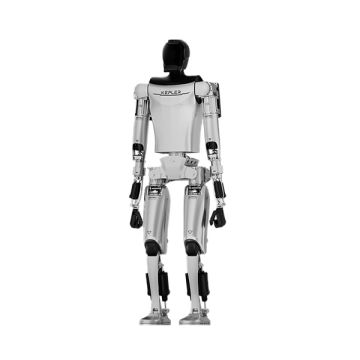
Kepler Robotics (Shanghai) builds the Forerunner series of industrial "blue-collar" humanoids, led by the fifth-generation K2 "Bumblebee" — the robot that set the industry's endurance benchmark with the first 8-hour nonstop bipedal humanoid livestream, backed by roller-screw actuation, 15 kg-per-arm strength, and deployment inside a SAIC-GM automotive plant. This guide covers Kepler's lineup, technology, applications, and what buyers should know before purchasing.
-
Out of stock
Kepler Robotics
Introduction / Overview
Kepler Robotics (Shanghai Kepler Exploration Robot Co.) builds humanoids for a job description, not a highlight reel: the company's stated mission is the "ultimate blue-collar robot" — machines for repeatable industrial work in structured environments — and its Forerunner series has pursued that target across five generations of iteration. The current flagship, the Forerunner K2 "Bumblebee," made the case with the industry's most operationally meaningful stunt: at WAIC 2025, a K2 completed the world's first 8-hour nonstop livestream by a bipedal humanoid robot — 9 AM to 5 PM, a full working shift, demonstrating its "1-hour charge, 8-hour operation" capability while performing sorting, retrieval, games, and dance. Endurance has long been the quiet killer of humanoid economics; Kepler made it the headline.
The K2's credentials extend well past stamina. It debuted inside the SAIC-GM automotive plant in Shanghai in April 2025 before its public unveiling at ICRA 2025, and at WAIC it worked four simulated industrial zones — logistics sorting, material handling, automotive manufacturing, and education/research — simultaneously with four units. The platform stands 175 cm at 75 kg with 52 degrees of freedom, more than 80 integrated sensors, and 100 TOPS of onboard compute, driven by Kepler's signature hybrid actuation of roller-screw linear plus rotary actuators — the strength-and-efficiency architecture behind reported per-hand payloads of up to 15 kg (30 kg dual-arm) and shift-length operation on a 2.33 kWh battery. Dexterous tactile-sensing hands, imitation and reinforcement learning for skill acquisition, cloud-supported planning, and the customizable Kepler OS complete an industrial-first package positioned for manufacturing, warehousing, logistics, and high-risk inspection. For buyers evaluating humanoid labor on economics rather than spectacle, Kepler is the endurance-and-strength pole of the market.
Design and Features
The Endurance Architecture
- "1-hour charge, 8-hour operation" — the K2's defining specification, proven publicly across a full 9-to-5 shift: the first bipedal humanoid to livestream eight nonstop hours, converting the industry's weakest metric into Kepler's strongest.
- Roller-screw hybrid actuation — planetary roller-screw linear actuators paired with rotary units: the high-force, high-efficiency drive philosophy (shared with Tesla's Optimus approach) that delivers industrial strength and the energy economy behind the endurance figure.
- Shift-economics by design — 2.33 kWh of battery translated into a working day: the trifecta Kepler names explicitly — scenario adaptability, technological optimization, economic practicality.
Strength and Manipulation
- 15 kg per hand, 30 kg dual-arm (as widely reported) — strength-first positioning for the totes, boxes, and components of real material handling.
- Tactile dexterous hands — sensor-dense fingertips supporting the contact-rich grasping industrial variety demands.
- 52 degrees of freedom, 80+ sensors — full-body coordination with the proprioceptive and environmental awareness for dynamic factory floors.
The Embodied-Intelligence Stack
- Fifth-generation refinement — the K2 carries major upgrades over the K1 in dynamic perception, task planning, full-body coordination, and autonomous learning.
- Learning-based skills — imitation learning and reinforcement learning acquiring task competence for defined scenarios, with 100 TOPS onboard for autonomous execution of complex sequences.
- Cloud-supported planning + Kepler OS — on-robot control blended with cloud learning, and an operating system open to customization for research, education, and emergency-response builds.
Proven Where It Counts
- Automotive-plant deployment — the SAIC-GM Shanghai debut put the K2 on a real carmaker's floor before its first conference stage.
- Four-zone WAIC demonstration — logistics sorting, material handling, automotive tasks, and research scenarios run in parallel: breadth under public scrutiny.
Naming Note
The platform appears across materials as Forerunner K2, K2 "Bumblebee," and in some commercial listings K2 "Hornet" — branding variants of the same underlying K2 family; buyers should confirm the exact configuration and generation when specifying.
Technology and Specifications
Representative Specifications — Forerunner K2
Height 175 cm; weight 75 kg; 52 degrees of freedom; 80+ integrated sensors; 100 TOPS onboard compute; roller-screw linear + rotary hybrid actuation; tactile dexterous hands; reported payload up to 15 kg per hand (30 kg dual-arm); 2.33 kWh battery; 1-hour charge / 8-hour operation. Some third-party listings cite slightly different height/weight figures across configurations — confirm current official datasheets before specifying; datasheets are available on request.
Why Endurance Is the Real Humanoid Metric
A humanoid that works two hours per charge needs four robots and a charging carousel to cover one shift; a humanoid that works eight needs one. Kepler's engineering around this arithmetic — actuation efficiency, battery sizing, thermal management — is what "blue-collar robot" means in practice, and the 8-hour livestream was less stunt than audited claim.
Position in the Market
Against the UBTECH Walker S2's hot-swap continuity and Deep Robotics DR02's all-weather sealing in your catalog's industrial-humanoid tier, the K2 stakes the single-charge endurance record plus strength-forward actuation — the fit for shift-structured operations where swap infrastructure isn't wanted and per-arm payload is the gating spec.
Applications and Use Cases
Automotive Manufacturing
The proven vertical: real plant deployment at SAIC-GM, with WAIC-demonstrated automotive task work — component handling and structured line support.
Logistics and Warehousing
Sorting and material handling — two of the K2's four WAIC demonstration zones — leveraging dual-arm 30 kg capacity across totes and parcels.
High-Risk Inspection and Patrol
Structured inspection workflows in environments where human exposure carries cost — an explicit Kepler positioning.
Research and Education
Kepler OS customization and the learning stack serving embodied-AI research programs, with the K2's four-zone breadth spanning to education scenarios.
Emergency Response Development
OS-level customization extending the platform toward response applications.
Advantages / Benefits
- The endurance record — the first 8-hour nonstop bipedal humanoid operation, publicly livestreamed: shift economics no rival has matched on one charge.
- Strength where it pays — reported 15 kg per hand and roller-screw force density for genuine material handling.
- Factory-proven — automotive-plant deployment before public debut: industrial-first in fact, not framing.
- Five generations deep — iterated hardware and learning maturity behind the current platform.
- Fast energy turnaround — one hour of charging per working day.
- Customizable foundation — Kepler OS opening the platform beyond fixed industrial roles.
For buyers researching where to buy Kepler robots, or comparing the Forerunner K2's price and cost against the Walker S2, DR02, and other industrial humanoids, the evaluation should weigh single-charge endurance, payload capacity, actuation architecture, deployment evidence, and customization — the dimensions where Kepler's blue-collar focus leads.
FAQ
What is Kepler Robotics?
Kepler Robotics (Shanghai Kepler Exploration Robot Co.) is a Chinese humanoid company building the Forerunner series of industrial "blue-collar" robots — currently the fifth-generation K2 "Bumblebee," proven in automotive-plant deployment and holder of the industry's 8-hour single-charge endurance milestone.
What is the Kepler Forerunner K2?
The Forerunner K2 "Bumblebee" is Kepler's fifth-generation industrial humanoid: 175 cm, 75 kg, 52 degrees of freedom, 80+ sensors, 100 TOPS onboard compute, roller-screw hybrid actuation, tactile hands, reported 15 kg per-hand payload, and 1-hour-charge / 8-hour-operation endurance.
How long can the Kepler K2 work on one charge?
Eight hours — demonstrated by the industry's first 8-hour nonstop bipedal humanoid livestream at WAIC 2025, running 9 AM to 5 PM on the K2's 2.33 kWh battery with a one-hour recharge.
What is roller-screw actuation and why does it matter?
Kepler pairs planetary roller-screw linear actuators with rotary units — a drive architecture delivering high force density with high energy efficiency, the combination behind both the K2's strength positioning and its endurance economics.
Is the Kepler K2 the same as the K2 Hornet?
Commercial listings use K2 "Hornet" alongside Forerunner K2 and K2 "Bumblebee" for the same underlying platform family — branding variance across releases and resellers; confirm the exact configuration when ordering.
Where has the Kepler K2 been deployed?
The K2 debuted inside the SAIC-GM automotive plant in Shanghai in April 2025 before its ICRA 2025 public unveiling, and worked four simulated industrial zones — logistics, material handling, automotive, and research — at WAIC 2025.
Why is Kepler important?
Kepler attacked the humanoid industry's binding constraint — endurance — and set its benchmark, pairing shift-length operation with industrial strength and real factory deployment: the blue-collar thesis executed rather than announced.
How much does a Kepler K2 cost?
The Forerunner K2 sits in the industrial humanoid tier, with positioning that emphasizes cost-effective deployment economics. Contact a distributor for current pricing, configuration guidance, datasheets, and delivery timelines for your region.
Summary
Kepler Robotics named its target — the ultimate blue-collar robot — and built toward it for five generations: the Forerunner K2 "Bumblebee" clocking the industry's first eight-hour shift on a single charge, live on camera; hauling fifteen kilograms per hand on roller-screw muscle; and earning its industrial framing the honest way, inside a SAIC-GM plant before any conference stage. With 52 degrees of freedom, tactile hands, learning-based skills, and Kepler OS customization atop one-hour-charge endurance economics, the K2 is the humanoid built for the arithmetic of real shifts. For anyone looking to buy a Kepler Forerunner K2, compare its cost against the Walker S2, DR02, and other industrial humanoids, or plan a manufacturing, logistics, or inspection deployment, this guide provides the essential foundation.