Military Robots
Military Robots: Types, Use Cases, Costs & Benefits (Complete Guide)
Military robots perform tasks too dangerous, too dull, or too remote for soldiers - defusing IEDs, conducting forward reconnaissance, carrying supplies through hostile terrain, maintaining persistent surveillance over denied areas, and engaging targets under human command. The military has been the most consistent investor in robotics development globally, with DARPA-funded research programs producing foundational advances that now drive commercial robotics across every sector.
The fundamental military robot value proposition is simple: send a machine into danger instead of a soldier. Every IED that an EOD robot neutralizes rather than a bomb disposal technician is a soldier whose life was preserved. Every forward reconnaissance mission conducted by an unmanned ground vehicle rather than a mounted patrol reduces exposure to ambush. The military driver for robotics adoption is not cost - the defense budget can absorb expensive systems - it is reducing soldier casualties in operations where the risk is otherwise high.
Types of Military Robots
Unmanned Ground Vehicles (UGVs)
Tracked and wheeled ground robots for explosive ordnance disposal, reconnaissance, and logistics support. iRobot PackBot and Throwbot, QinetiQ TALON, Northrop Grumman Andros, and Textron Systems RIPSAW are widely deployed military UGVs. These range from small man-packable systems to large vehicle-class platforms.
Unmanned Aerial Vehicles (UAVs / Military Drones)
From hand-launched tactical drones (AeroVironment Raven, Puma) to large high-altitude persistent surveillance platforms (General Atomics MQ-9 Reaper) to loitering munitions (AeroVironment Switchblade). Military UAVs are the largest category by deployment numbers and encompass reconnaissance, strike, communications relay, and electronic warfare functions.
Autonomous Underwater Vehicles (AUVs) and UUVs
Unmanned underwater vehicles for mine countermeasures, submarine hunting, seafloor intelligence gathering, and underwater infrastructure inspection. Northrop Grumman REMUS series, Boeing Echo Voyager, and various classified platforms serve US and NATO naval forces.
Combat Support Robots
Ground robots providing direct combat support: ammunition resupply, casualty evacuation, fire support platform carrying. The US Army Squad Multipurpose Equipment Transport (SMET) competition produced the General Dynamics MUTT and other logistics robots for soldier support.
EOD and Counter-IED Robots
The most widely deployed category of military ground robot. iRobot PackBot was deployed extensively in Iraq and Afghanistan for IED investigation and disposal. These robots approach suspected IEDs, examine them with cameras and sensors, and can manipulate components with robotic arms - allowing bomb disposal technicians to work from safe standoff distances.
Loitering Munitions
Autonomous aerial systems that circle a target area, identify a target, and attack autonomously or on human command. AeroVironment Switchblade, Israeli Harop, and others represent this category. Loitering munitions have been extensively used in the Ukraine conflict since 2022.
Military Patrol and Perimeter Robots
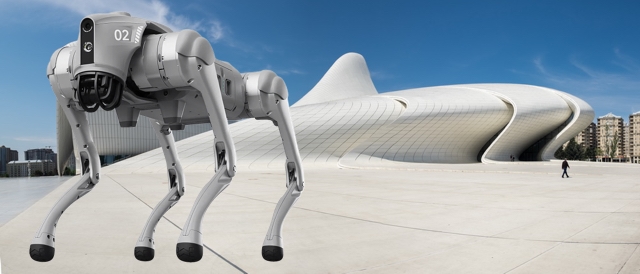
Ground robots that patrol installation perimeters, detect intruders, and provide persistent monitoring of protected areas. Both wheeled and legged platforms serve this function at military installations globally.
Use Cases of Military Robots
Improvised Explosive Device (IED) Disposal
The most operationally significant military robot use case over the past two decades. Coalition forces in Iraq and Afghanistan deployed iRobot PackBot and QinetiQ TALON robots extensively for IED investigation and disposal. Military reports estimate these systems saved thousands of lives - bomb disposal technicians who would otherwise have approached IEDs in person now use robots for initial investigation and neutralization.
The tactical procedure is well established: a suspected IED triggers a halt, the robot is deployed from a vehicle, approaches the device, examines it with cameras and manipulators, and either renders it safe or provides sufficient information for human technicians to safely approach.
Forward Reconnaissance
Small hand-launched tactical UAVs (AeroVironment Raven, Puma) provide company and platoon-level commanders with eyes beyond line of sight - seeing around corners, over ridgelines, and into urban structures before committing soldiers to potential ambush positions. This reconnaissance capability has fundamentally changed infantry tactics.
UGVs conduct ground-level reconnaissance in urban environments - clearing rooms, checking building approaches, and examining suspicious positions before human soldiers enter.
Persistent Wide-Area Surveillance
High-altitude, long-endurance UAVs (General Atomics MQ-9 Reaper, Northrop Grumman Global Hawk) maintain persistent surveillance over large geographic areas for intelligence collection. These platforms fly for 24+ hours, monitoring areas of interest continuously with synthetic aperture radar, electro-optical/infrared cameras, and signals intelligence payloads.
Strike Operations
Armed UAVs under human control (MQ-9 Reaper with Hellfire missiles) conduct precision strike operations in contested airspace against high-value targets. The MQ-9 has conducted thousands of airstrikes. Loitering munitions provide lower-cost strike capability against mobile or time-sensitive targets.
Logistics Resupply
Unmanned ground vehicles carry ammunition, water, and supplies to forward positions that are dangerous to reach with manned vehicles. Aerial resupply drones deliver critical supplies to isolated units. The Squad Multipurpose Equipment Transport (SMET) program fielded logistics robots with US Army units for burden reduction during foot patrols.
Maritime Mine Countermeasures
Naval UUVs locate, identify, and neutralize sea mines in harbors, shipping lanes, and coastal areas. The Northrop Grumman REMUS and similar platforms conduct mine hunting operations that previously required divers in extremely dangerous conditions.
Installation and Base Protection
Perimeter security robots monitor military installation boundaries, detect intrusions, and provide persistent coverage of installation perimeters. Fixed and mobile surveillance systems reduce the manpower required for guard force operations at large military installations.
Industries That Use Military Robots
Conventional Military Forces
Army, Navy, Marine Corps, and Air Force all operate unmanned systems. The US military is the largest single deployer of military robots globally, followed by NATO allies, Israel, China, and Russia.
Special Operations Forces
Special operations units operate specialized, advanced unmanned systems for reconnaissance, direct action support, and sensitive site exploitation.
Intelligence Agencies
Intelligence agencies operate surveillance drones and other unmanned platforms for collection operations.
Defense Contractors
Lockheed Martin, Northrop Grumman, Boeing, General Dynamics, Raytheon, and specialized robotics companies (iRobot, AeroVironment, Textron Systems) are the primary military robot manufacturers.
Allied Nations and Partners
US military robot systems are sold through Foreign Military Sales (FMS) to allies and partners; Israeli and European manufacturers export military robot systems independently.
Paramilitary and Law Enforcement
Military-derived EOD robots and tactical platforms are used by law enforcement bomb squads and tactical units, as covered in the Emergency Response Robots section.
Benefits of Military Robots
Soldier Casualty Reduction
The most directly measurable benefit. US military reports from Iraq and Afghanistan operations document thousands of IED render-safe events conducted by robots rather than human operators. Each of these events represents a bomb technician who did not stand next to an explosive device. At reported IED injury rates, thousands of casualties were prevented.
Force Multiplication
Robots extend the operational reach of military units without proportionally increasing manpower. A platoon that can deploy multiple UAVs for reconnaissance, UGVs for forward clearing, and logistics robots for resupply can accomplish more operationally with the same number of soldiers.
Reduced Soldier Cognitive and Physical Load
Logistics robots that carry equipment reduce the physical burden on dismounted soldiers. This burden reduction is operationally significant: a soldier carrying 20 fewer pounds moves faster, fatigues later, and arrives at the objective in better condition.
Access to Denied Environments
Robots access environments where human military personnel would be rapidly killed - high-altitude surveillance at night, deep ocean mine hunting, forward positions under direct fire observation, nuclear contaminated areas. This access provides intelligence and operational capability without soldier exposure.
Persistent Presence
Military robots maintain continuous presence where human rotations are impractical. A high-altitude surveillance drone maintains persistent watch over an area of interest for 24+ hours; a ground perimeter robot patrols continuously without shift-change vulnerabilities.
Precision and Controlled Engagement
Armed systems operating under human control allow more precise targeting than traditional munitions. Remote engagement with visual confirmation reduces collateral damage risk compared to indirect fire. The precision of robot-enabled engagement is a genuine military and ethical benefit over less precise alternatives.
Challenges & Limitations of Military Robots
Ethical and Legal Questions About Autonomous Weapons
The prospect of fully autonomous weapon systems - robots that identify and engage targets without human decision - raises profound ethical and legal questions. International humanitarian law requires distinction between combatants and civilians, proportionality in attack, and human accountability for lethal decisions. Fully autonomous lethal action without human control is contested across legal, ethical, and policy dimensions.
The current operational standard for armed unmanned systems is "meaningful human control" - a human operator authorizes each lethal engagement. This standard is under pressure as autonomous target identification improves, but it remains the US military policy baseline.
Vulnerability to Electronic Warfare
Military robots rely on electromagnetic communications for control and data links. Adversary electronic warfare - jamming, GPS spoofing, communications interception - can degrade or deny control of unmanned systems. Autonomous fallback behaviors when communications are lost must be carefully designed to avoid unintended autonomous action.
Counter-Drone Proliferation
The proliferation of armed drones to non-state actors, state proxies, and peer adversaries has created a counter-drone challenge. Defeating adversary drone swarms requires capability investment that offsets the cost advantages of drone proliferation. Ukraine has demonstrated both the effectiveness of drone systems and the tactical countermeasures they generate.
Reliability in Operational Conditions
Military robots operate in extreme conditions - desert heat, arctic cold, rain, mud, shock from vehicle transport and gunfire proximity. Reliability requirements for systems whose failure could leave soldiers without critical capability are extremely high. Military qualification testing is intensive.
Operator Training and Skill Perishability
Effective UAV operation requires significant training and regular proficiency maintenance. Skill is perishable - operators who don't fly regularly lose proficiency. Managing operator training at scale in large military organizations is a significant logistical challenge.
Adversary Adaptation
Military adversaries adapt to unmanned system capabilities. Insurgent forces in Iraq and Afghanistan developed countermeasures to patrol UAVs; Ukraine has documented rapid adaptation on both sides to drone capabilities. The cat-and-mouse dynamic of military robot capability and adversary countermeasure is a persistent operational feature.
Cost & ROI of Military Robots
For up-to-date prices, browse and buy military robots for sale here.
EOD robots (PackBot, TALON): $50,000-$150,000 per unit.
Small tactical UAVs (AeroVironment Raven B): approximately $35,000 per air vehicle; full three-airframe system $250,000+.
Medium UAVs (Shadow, Gray Eagle): $5-15 million per unit.
Large HALE/MALE UAVs (MQ-9 Reaper): approximately $32 million per aircraft; Global Hawk approximately $220 million.
Loitering munitions (Switchblade 300): approximately $6,000 per munition; Switchblade 600 approximately $25,000-$30,000.
Naval AUVs (REMUS series): $100,000-$2,000,000+ depending on capability class.
ROI in military context is measured in operational effectiveness and casualty reduction. A comprehensive analysis from a US military report estimated that IED robots saved approximately 20 soldier lives per $1 million invested during the Iraq/Afghanistan period - an ROI calculation that dwarfs any commercial efficiency metric.
Key Technologies Behind Military Robots
Synthetic aperture radar (SAR) provides all-weather, day/night ground imaging from high-altitude UAVs - the persistent surveillance backbone of long-endurance military drone operations.
Electro-optical/infrared (EO/IR) sensor payloads on strike and surveillance drones provide targeting-quality imagery under all light conditions.
Anti-jamming GPS and alternative positioning systems maintain navigation accuracy in contested electronic environments where adversary jamming is expected.
Multi-spectral imaging and signals intelligence payloads extend UGV and UAV intelligence collection beyond visual observation.
Man-machine teaming research develops how human-robot teams can operate effectively together - how soldiers can command and trust robot teammates in dynamic tactical situations.
AI-based target identification systems - currently under strict human control oversight in all deployed US systems - are advancing toward supporting faster human targeting decisions.
How to Implement Military Robots
Military robot acquisition and deployment follows formal defense acquisition processes (DAU, JCIDS, PPBE in the US) rather than commercial procurement frameworks. Key elements include:
-
Requirements definition. Military robot requirements derive from operational needs analysis, Joint Capabilities Integration and Development System (JCIDS) process, and doctrine development.
-
Acquisition pathway. Rapid acquisition pathways (OTA - Other Transaction Authority, Middle Tier Acquisition) are used for urgently needed capabilities. Standard Major Defense Acquisition Programs have longer timelines.
-
Operational test and evaluation. All major military systems undergo extensive operational testing under realistic conditions before fielding.
-
Doctrine and TTPs development. Tactics, Techniques, and Procedures (TTPs) for robot employment must be developed and published to ensure consistent, effective, and legally compliant operational use.
-
Training program development. Institutional training programs at service schools and unit-level sustainment training are required for effective employment.
-
Maintenance and logistics. Military robots require sustainment support from the manufacturer or through military organic maintenance capability.
-
Rules of engagement integration. For any armed system, ROE must explicitly address unmanned system employment and the requirement for human control of lethal engagement.
Military Robot Safety & Regulations
International Humanitarian Law (IHL) - the Laws of Armed Conflict - applies to military robot operations just as to human combatants. The principles of distinction, proportionality, and military necessity must be satisfied by robot-enabled military operations. Human accountability for robot-conducted operations is required under current law.
US DoD Directive 3000.09 (Autonomous Weapons Systems) requires human judgment for lethal engagements by autonomous systems. This directive establishes "meaningful human control" as the operational standard for armed unmanned systems.
ITAR (International Traffic in Arms Regulations) controls the export of military robot systems. Foreign military sales of US military robotic systems require State Department authorization.
Arms control treaties (New START, Conventional Armed Forces in Europe) may apply to certain unmanned systems categories; treaty compliance analysis is required for new system development.
NATO STANAG standards govern interoperability of unmanned systems among alliance members.
Top Military Robot Brands / Companies
|
Company |
Key Platform |
Military Application |
|
AeroVironment |
Raven, Puma, Switchblade |
Tactical UAV, loitering munitions |
|
General Atomics |
MQ-9 Reaper, Predator C |
Armed surveillance UAV |
|
Northrop Grumman |
Global Hawk, REMUS |
HALE surveillance, AUV |
|
iRobot (now Arlington) |
PackBot, Throwbot |
EOD, reconnaissance |
|
QinetiQ / Cobham |
TALON, Dragon Runner |
EOD, reconnaissance |
|
Textron Systems |
RIPSAW, Aerosonde |
Combat UGV, tactical UAV |
|
Boeing |
MQ-25, Echo Voyager |
Carrier UAV, UUV |
|
Leonardo DRS / DRS |
Various |
Systems integration |
|
Elbit Systems (Israel) |
Hermes, Lanius |
Surveillance, loitering munitions |
|
IAI (Israel) |
Harop, Heron TP |
Loitering munition, MALE UAV |
Overview of the Military Robotics Market
The global military robot market was valued at approximately $15-20 billion in 2024 and is one of the largest and most consistently funded robotics markets globally. The US Department of Defense is the single largest purchaser, with significant procurement programs across all services. NATO allies, Israel, China, and Russia all maintain substantial military robotics development and procurement programs.
The Ukraine conflict (2022-present) has dramatically accelerated operational learning about drone warfare. The mass use of small commercial-derived FPV drones as precision weapons, the employment of loitering munitions, counter-drone operations, and electronic warfare dynamics have produced the most extensive real-world data on drone warfare at scale since any previous conflict. The lessons are reshaping military robot procurement and doctrine globally.
Autonomous systems integration is the defining development challenge. All major militaries are developing frameworks for increasing autonomy in unmanned systems while maintaining human control of lethal decisions. The competition between capability push (AI enabling more autonomous targeting) and policy constraint (human control requirements) will define military robot development through the 2030s.
Frequently Asked Questions
What are military robots?
Military robots are unmanned systems operated by armed forces for reconnaissance, surveillance, explosive ordnance disposal, logistics support, combat operations, and base protection. They range from small hand-launched drones to large armed UAVs to ground vehicles and autonomous underwater systems.
What is a loitering munition?
A loitering munition is an autonomous or remotely piloted aerial system that can circle (loiter) over a target area for an extended period, identify a target, and attack it. Unlike conventional missiles, loitering munitions can be recalled if no suitable target is found. AeroVironment Switchblade, Israeli Harop, and various other systems represent this category. They have been extensively used in the Ukraine conflict.
Can military robots operate autonomously?
Military robots have varying degrees of autonomy. UAVs can fly autonomously to waypoints and return home if communications are lost. But under current US DoD policy (DoD Directive 3000.09), lethal engagement by armed systems requires "meaningful human control" - a human must make the decision to use lethal force. Fully autonomous lethal action without human authorization is not authorized policy.
What is the MQ-9 Reaper?
The MQ-9 Reaper is a large remotely piloted aircraft operated by the US Air Force, designed for persistent surveillance and precision strike. It carries Hellfire missiles and precision guided bombs, is remotely controlled by crews at ground stations, and can fly for over 24 hours. It has been the primary US armed UAV platform since the mid-2000s.
How are military robots controlled?
Military robots use encrypted radio communications for control. Small tactical UAVs are controlled by soldiers on the ground with handheld or ruggedized controllers. Large military drones are controlled by remote cockpit crews at ground control stations, often far from the operational area. EOD robots are teleoperated by trained bomb disposal technicians.
Are robots replacing soldiers?
Military robots are force multipliers, not soldier replacements. They extend soldier capability, reduce soldier risk in specific high-hazard operations, and provide capabilities that soldiers alone cannot provide. The human judgment, adaptability, and ethical accountability of soldiers remain essential to military operations. Robots allow soldiers to take fewer unnecessary risks, not to be removed from the operational calculus.
What is the DARPA Robotics Challenge?
The DARPA Robotics Challenge (2013-2015) was a government competition that challenged teams globally to develop humanoid robots capable of disaster response tasks: driving vehicles, opening doors, using tools, climbing stairs. Funded following the Fukushima nuclear disaster, it advanced humanoid robot capability significantly. Team KAIST's DRC-Hubo won the finals in 2015.
What concerns exist about military robot ethics?
The central ethical concern is autonomous lethal action - robots killing without a human decision authorizing each engagement. International humanitarian law requires human accountability for lethal decisions; critics of autonomous weapons argue that algorithmic targeting cannot satisfy the ethical and legal requirements of discrimination and proportionality in armed conflict. This debate is active in international policy forums including the UN Convention on Certain Conventional Weapons (CCW).
How does the military use drones in combat?
Military drones serve multiple combat functions: persistent surveillance identifies enemy positions and movements; armed drones conduct precision strikes against high-value targets under human operator authorization; tactical drones give infantry commanders visual reconnaissance ahead of their units; loitering munitions provide on-call strike capability against mobile targets; electronic warfare drones jam enemy communications. The Ukraine conflict has demonstrated the tactical utility of small commercial-derived FPV drones as precision weapons at very low cost.