
Agibot A Series
AgiBot A Series explained: specifications, applications, accessories, comparisons, pricing, and buying considerations.
Introduction / Overview
AgiBot A Series belongs to a specialized robotics category within the AgiBot product ecosystem. Pages at this level are useful for buyers who are no longer comparing robotics in general, but are evaluating a specific model family, product series, accessory group, or application-focused robot category. The key question is not simply whether the product is advanced, but whether it fits the intended operating environment, budget, integration plan, and support expectations.
Modern robot buyers typically compare platform type, mobility, payload, software access, sensor compatibility, runtime, charging requirements, spare parts, and regional availability. AgiBot A Series should therefore be considered in the context of the complete deployment: what the robot or accessory is expected to do, who will operate it, where it will be used, and what technical support may be needed after purchase.
Design and Features
Product Role
The A Series category can represent a complete robot platform, a model family, a subsystem, or an accessory grouping. In each case, its purpose is to solve a defined robotics problem: movement, manipulation, sensing, interaction, charging, control, safety, maintenance, or task automation. Buyers should first identify whether AgiBot A Series is intended for research, education, commercial service, industrial use, inspection, logistics, public interaction, or system integration.
Important design features may include structural materials, actuator type, degrees of freedom, onboard computing, battery format, communication interfaces, payload options, mounting points, environmental tolerance, and accessory compatibility. For accessory categories, mechanical fit, electrical compatibility, firmware requirements, warranty impact, and installation method are especially important.
Usability and Integration
Usability depends on how easily the system can be configured, operated, maintained, and expanded. A robot may offer high performance but still require training, software setup, network configuration, or maintenance procedures. Integration-focused buyers should confirm documentation, SDK or API access, update mechanisms, safety limits, and whether the product can be used with existing hardware or workflows.
Technology and Specifications
Specifications for AgiBot A Series should be reviewed in relation to the planned task. Common robotics specifications include size, weight, payload, speed, runtime, charging time, battery capacity, degrees of freedom, sensor options, network interfaces, controller compatibility, and supported accessories. No single specification determines suitability. A lightweight platform may be ideal for education, while a larger system may be required for field use, logistics, or industrial operation.
Software and autonomy also matter. Some systems are designed for remote operation, some for semi-autonomous workflows, and others for developer experimentation. Features such as mapping, obstacle avoidance, motion planning, teleoperation, data logging, simulation support, and fleet management can significantly affect practical value.
Applications and Use Cases
AgiBot A Series may be relevant to education, research, demonstrations, industrial automation, mobile inspection, service robotics, logistics, warehouse operations, healthcare support, public safety, entertainment, customer engagement, or technology development. The correct use case depends on the exact model and configuration.
Research and Education
Schools, universities, and laboratories often use robot platforms and accessories to teach programming, mechatronics, artificial intelligence, control theory, perception, and human-robot interaction. In these settings, software openness, documentation, repeatability, and repairability can be more important than polished commercial behavior.
Commercial and Industrial Deployment
Commercial users usually prioritize reliability, safety, serviceability, and return on investment. Deployment planning should include operator training, maintenance schedules, replacement parts, charging infrastructure, data handling, and any site-specific safety procedures. A successful robotics project normally begins with a narrow task definition and expands after performance is proven.
Advantages / Benefits
The main benefit of evaluating AgiBot A Series as a defined category is clarity. Buyers can compare relevant products, accessories, or model variants without mixing unrelated robot types. This helps with budgeting, technical planning, and long-term support.
Potential benefits include improved task automation, safer data collection in difficult environments, more consistent demonstrations, reduced manual repetition, better training tools, and a clearer upgrade path. For accessories, benefits may include longer runtime, easier control, improved manipulation, safer charging, better sensing, or expanded deployment options.
Comparisons
AgiBot A Series should be compared with similar products in the same functional class. A humanoid series should be compared with other humanoids, a quadruped model with comparable robot dogs, a collaborative arm with similar cobots, and an accessory with compatible accessories for the same platform. This prevents misleading comparisons between products designed for different tasks.
Important comparison points include payload, runtime, control method, software ecosystem, accessory support, durability, warranty, price, lead time, regional availability, and total cost of ownership. Buyers should also compare what is included in the base package and what requires optional purchase.
Pricing and Availability
Pricing for AgiBot A Series can vary by configuration, payload, battery package, controller, sensors, software license, support level, and shipping region. Some robotics products are sold as standard packages, while others require quotation because the final price depends on accessories, integration, or enterprise support.
Availability may depend on manufacturer production schedules, import rules, lithium battery shipping restrictions, regional distribution, and whether the product is a current model or a specialized item. Buyers should confirm lead time, warranty handling, spare-part availability, training options, and compatibility before finalizing a purchase.
FAQ Section
What is AgiBot A Series?
AgiBot A Series is a robotics category, model family, product series, or accessory group associated with AgiBot. It should be evaluated by its specifications, intended application, compatibility, and support requirements.
How does AgiBot A Series work?
The system generally combines mechanical hardware, electronics, software, sensors, power management, and user controls. The exact operation depends on whether the item is a complete robot, a subsystem, or an accessory.
Why is AgiBot A Series important?
It helps buyers identify products or accessories that match a specific robotics use case instead of comparing unrelated platforms. This improves technical planning and purchasing accuracy.
Where can I buy AgiBot A Series?
Availability depends on regional distribution, stock, shipping rules, and configuration. Buyers should confirm current availability, included accessories, warranty, and support options before ordering.
What are the benefits of AgiBot A Series?
Benefits may include better automation, improved research capability, safer inspection, stronger demonstrations, easier integration, expanded accessories, or more reliable operation in the intended use case.
What should I check before buying?
Check compatibility, payload, runtime, software access, controller requirements, accessories, spare parts, warranty, delivery time, training needs, and total cost of ownership.
References / External Links
- Manufacturer manuals, specification sheets, and compatibility notes
- Robot Operating System documentation for robotics software concepts
- IEEE Robotics and Automation Society publications on robot design and deployment
- Relevant safety guidance for robots operating near people or equipment
Summary
AgiBot A Series should be assessed as part of a complete robotics deployment rather than as an isolated product name. Buyers should consider the task, operating environment, software requirements, accessories, maintenance plan, and support options before choosing a model or configuration.
A structured comparison of specifications, compatibility, pricing, and availability leads to better purchasing decisions and reduces the risk of choosing a robot or accessory that does not fit the intended application.
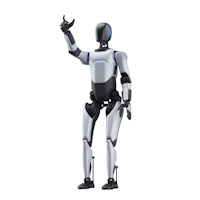
What is the AgiBot A Series? The AgiBot A Series is the flagship humanoid robot product line from AgiBot (Zhiyuan Robotics), a Shanghai-based robotics company. It includes four generations: the RAISE A1 (2023), the Expedition A2 and its variants A2-Max, A2-W, and A2 Ultra (2024-2025), and the Expedition A3 (2026). Each model is a full-size, bipedal or wheeled general-purpose humanoid robot powered by AgiBot's proprietary AI software stack, including the GO-1 foundation model and the WorkGPT multimodal engine.
How does the AgiBot A2 robot work? The AgiBot A2 processes sensory input from onboard cameras, LiDAR, and microphones through its WorkGPT AI engine, which runs at 200 TOPS on local hardware without requiring cloud connectivity. The GO-1 foundation model interprets the robot's environment, understands natural-language instructions, plans multi-step actions, and sends commands to the robot's PowerFlow joint motors and SkillHand dexterous hands. The system supports voice commands, face recognition, obstacle avoidance, and fine-manipulation tasks like threading a needle — all through onboard edge inference.
What are the differences between the AgiBot A2, A2-Max, A2-W, and A2 Ultra? The standard A2 is a general-purpose bipedal humanoid for commercial and industrial use. The A2-Max is a heavy-duty variant with a 40-kilogram payload and 67 degrees of freedom for demanding industrial work. The A2-W is a wheeled version with dual force-controlled arms for repeatable factory assembly tasks at sub-millimeter accuracy. The A2 Ultra is a refined service-oriented model with 40 degrees of freedom, triple-market certification (China, US, EU), up to 1,300 hours of validated continuous walking endurance, and software customization tools for commercial deployments.
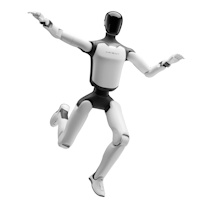
What is the AgiBot Expedition A3 robot? The Expedition A3 is AgiBot's third-generation full-size humanoid, unveiled in February 2026. It is designed for high-interaction environments like retail, entertainment, and live events. The A3 features a flexible waist with human-like range of motion, lightweight exoskeleton legs for agility, an eight-hour battery life via a dual-battery torso system, fast battery-swapping, and an end-to-end AI model for wake-word-free conversation. It gained widespread attention for performing aerial flying kicks, consecutive airborne strikes, and cyclone kicks in demonstrations filmed without CGI.
What industries use the AgiBot A Series? The A Series is deployed across automotive manufacturing, electronics assembly, logistics and warehousing, commercial reception and guided tour services, retail and brand activation, research and education, entertainment and live events, and trade show exhibitions. AgiBot has identified industrial manufacturing as the primary near-term revenue driver, with commercial service and household applications projected to grow over the next five to eight years.
How does the AgiBot A2 compare to Tesla Optimus? Both are full-size bipedal humanoid robots designed for general-purpose industrial and commercial tasks. The A2 is available for enterprise purchase today at $100,000 to $190,000, with over 5,000 units shipped in 2025 and triple-market certification. Tesla Optimus was still in limited production as of early 2026 with no public purchase availability, though Tesla has projected an eventual retail price of approximately $20,000 to $30,000 once scale is reached. The competitive dynamics between the two programs will become clearer as Optimus moves toward broader deployment in 2026 and beyond.