Unitree Robotics
Unitree Robotics is the world's highest volume humanoid and quadruped maker, shipping over 5,500 humanoids in a single year across the G1, R1, H series and flagship H2, alongside the Go2, A2 and B2 robot dog family. Explore the full Unitree lineup, price and cost information, and find Unitree robots for sale with purchasing details available below.
Unitree Robotics
Every technology has a company that makes it real for the masses, and in legged robotics that company is Unitree. Founded in Hangzhou in 2016 by engineer Wang Xingxing, Unitree Robotics took two of the hardest machines in existence, the four legged robot and the humanoid, and did what nobody else could: manufactured them at scale, priced them within reach and shipped them everywhere, making Unitree robot dogs the default quadruped of research labs, industry and viral videos worldwide, and Unitree humanoids the best selling bipeds on earth.
The numbers define the category. Unitree shipped more than 5,500 humanoid robots in 2025 alone, the highest volume of any maker, while its quadrupeds count tens of thousands of units across more than 60 countries. Its machines performed history's firsts, the first electric humanoid backflip by the H1, synchronized robot dog troupes dancing on the biggest stages in broadcasting, and in July 2026, Unitree's IPO was approved for Shanghai's STAR Market, positioning it as China's first listed pure play humanoid and quadruped company and cementing the financial foundation beneath its lead.
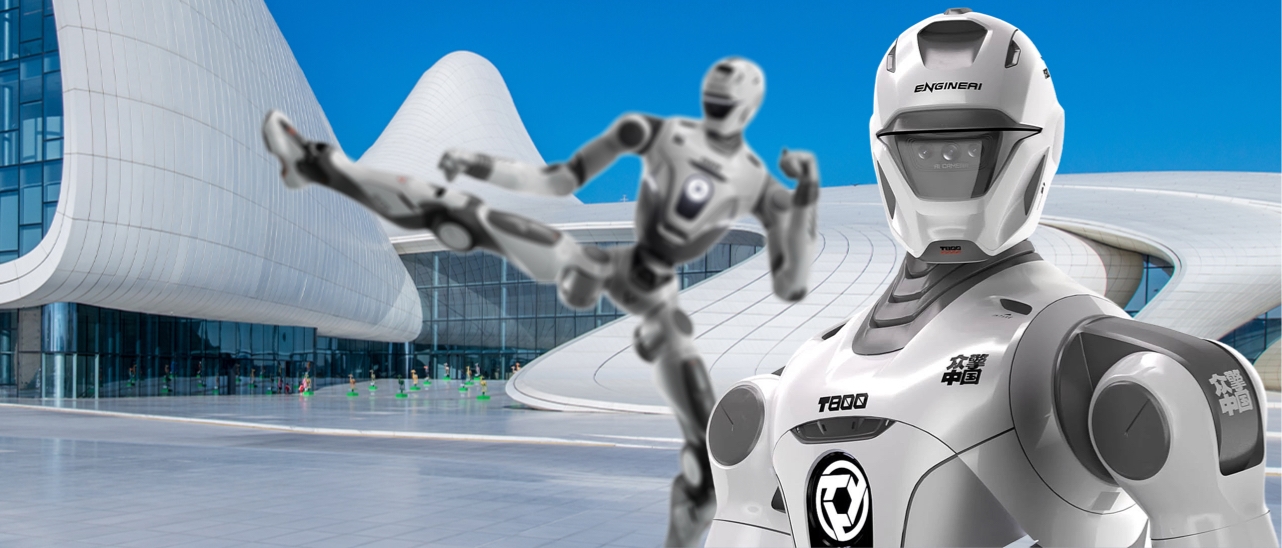
The lineup spans the humanoid family, from the accessible R1 and the world's most popular humanoid, the G1, to the flagship H2, the quadruped family led by the Go2, A2 and industrial B2, and a complete accessories ecosystem. The full range of Unitree robots for sale can be explored through the Unitree catalog on this page.
The Unitree Humanoid Lineup
Unitree G1: The World's Most Popular Humanoid
The G1 made humanoid robotics a global research standard: a 1.32 meter biped with up to 43 degrees of freedom, dexterous force controlled options and the agility for running, jumping and dynamic recovery, at accessibility that put it into universities, labs and companies on every continent. Backed by Unitree's open sourced vision language action models and the industry's largest user community, the G1 is where more humanoid development happens than on any other platform, with the wheeled G1-D extending the family into the wheeled humanoid format for manipulation focused deployment.
Unitree R1: The Accessibility Breakthrough
The R1 shattered the humanoid price floor: an ultra light, roughly 25 kg biped that brought two legged robotics to individual developers, schools and small labs, the most affordable humanoid from any major manufacturer and the widest gate yet opened into the field.
Unitree H1, H1-2 and H2: The Flagship Line
The H1 and H1-2 wrote Unitree into robotics history, the H1 performed the world's first electric humanoid backflip and set legged speed records, while the flagship H2 brings full human proportions at 180 cm with computing options up to 2,070 TOPS of NVIDIA Jetson Thor, the frontier platform for embodied AI research and the anchor of the bipedal humanoid category's top tier.
Humanoid Accessories
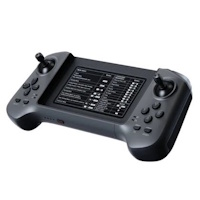
Deployments run on the humanoid accessories tree: batteries, chargers, remote controllers, development gantries and dexterous hands, the operational layer that keeps fleets running.
The Unitree Quadruped Lineup
Unitree Go2: The World's Robot Dog
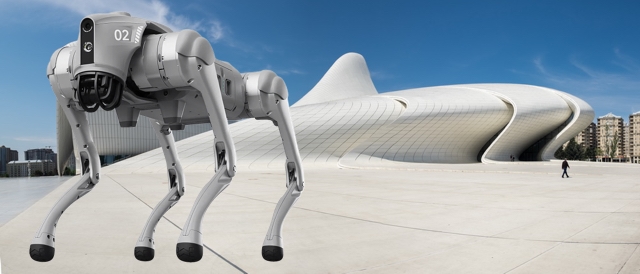
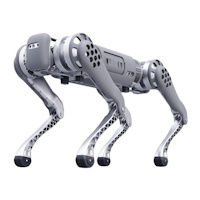
The Go2 is the most recognizable quadruped on earth, a LiDAR equipped, AI enabled robot dog agile enough for research and affordable enough for enthusiasts, offered in Go2 Air, Go2 Pro and wheeled Go2-W editions with a dedicated accessories line. Its predecessor Go1 opened the category; the Go2 made it mainstream, including troupes of over a hundred dancing in synchrony on China's most watched broadcasts.
Unitree A2 and AS2: The Explorer Class
The A2 "Stellar Explorer" is the endurance and payload professional, built for patrol, inspection and logistics missions with searchlight and sensing payloads that turn night into information, joined by the AS2 advancing the class, the platforms behind serious security and inspection deployments.
Unitree B2 and the Industrial Tier
The B2 is the industrial flagship: serious payload, endurance and all terrain capability for substations, plants, construction sites and perimeters, with its own accessories, following the pioneering B1 and AlienGo platforms that built Unitree's industrial reputation, supported by quadruped batteries, chargers and the wider quadruped accessories range.
Technology and Specifications
Actuators That Changed the Economics
Unitree's foundation is vertical integration: self developed high torque density joint motors, reducers and controllers manufactured at scale, the engineering that collapsed legged robotics from six figure lab equipment to accessible products without surrendering the performance that lands backflips and survives shoves.
Learning Based Motion at the Frontier
Reinforcement learning trained locomotion gives Unitree machines their signature athleticism, dynamic balance, terrain adaptation, recovery from kicks and slips, demonstrated publicly from combat sport exhibitions to synchronized swarm choreography, while open sourced vision language action models invite the world's developers to build the intelligence layer on Unitree hardware.
Perception and Positioning
Across the range, 4D LiDAR, depth cameras and inertial sensing fuse into the navigation that carries Go2s through living rooms and B2s across substations, with flagship platforms adding the computing headroom, up to 2,070 TOPS, for onboard embodied AI.
The Ecosystem Advantage
The industry's largest installed base compounds: the biggest developer community, the deepest third party accessory and payload market, comprehensive support resources including dedicated G1 support, and now public market financing behind capacity, the network effects that keep Unitree the default choice.
Applications and Use Cases
Research and Education
The G1, R1 and Go2 anchor research and education worldwide, the platforms on which embodied AI is taught, benchmarked and published more than any other.
Industrial Inspection and Security
B2 and A2 fleets patrol substations, plants and perimeters across industrial, security and emergency response missions, carrying thermal, searchlight and sensing payloads over terrain wheels cannot cross.
Entertainment, Sport and Events
From gala broadcasts to robot boxing and sports entertainment, Unitree machines are the most booked performers in robotics, headlining exhibitions and activations worldwide.
Development Toward Deployment
Enterprises across warehouse and commercial robotics build on Unitree platforms as the pipeline from pilot to production, the on ramp through which humanoid programs enter the field.
Consumer and Enthusiast Robotics
The Go2 and R1 tier brings legged robotics into consumer reach, the enthusiast base that made robot dogs a cultural phenomenon.
Advantages and Benefits
- The volume leader, twice over. Most humanoids and most quadrupeds shipped of any maker on earth.
- History's firsts on record. First electric humanoid backflip and the stage moments the world has seen.
- Accessibility without compromise. Self made actuators deliver flagship athletics at breakthrough prices.
- The largest ecosystem. Biggest developer community, accessory market and support base in legged robotics.
- A tier for every buyer. From enthusiast robot dogs to 2,070 TOPS research flagships and industrial fleets.
- Open by strategy. Open sourced models invite the world to build on the hardware.
- Public market strength. STAR Market listing approval secures capacity and longevity.
- Proven everywhere. Sixty plus countries, every continent, every application class.
Pricing and Availability
Unitree robots are available for purchase worldwide, from single education units to industrial fleet programs, with the complete lineup and accessories browsable through the Unitree catalog on Robots International. Unitree price and cost vary by model, edition, configuration and destination, so buyers seeking Unitree robots for sale should request a current quotation for their requirements. Purchasing inquiries, specification sheets and availability details for those looking to buy Unitree robots can be found on this page.
Frequently Asked Questions
What is Unitree Robotics?
Unitree Robotics is a Hangzhou based company founded in 2016 by Wang Xingxing and the world's highest volume maker of legged robots, spanning the G1, R1, H1 and H2 humanoids and the Go2, A2 and B2 quadrupeds.
How do Unitree robots work?
Unitree robots run reinforcement learning trained locomotion on self developed high torque density actuators, perceiving through 4D LiDAR, depth cameras and inertial sensing, with flagship platforms carrying up to 2,070 TOPS of onboard computing and open sourced vision language action models supporting custom development.
Why is Unitree important?
Unitree made legged robotics real: it collapsed prices through vertical integration, shipped more humanoids and quadrupeds than any competitor, performed the milestones the public remembers and built the ecosystem the research world runs on, now backed by China's first pure play humanoid IPO approval.
What are the benefits of Unitree robots?
Key benefits include the industry's best price to performance, the largest developer community and accessory ecosystem, proven athletic robustness, platforms spanning enthusiast to industrial tiers, open model support for custom AI and the supply security of the category's volume and financing leader.
Which Unitree robot should a buyer choose?
Research and education start with the G1, R1 or Go2, industrial patrol and inspection take the B2 or A2, frontier embodied AI runs on the H2, and manipulation focused programs evaluate the G1-D.
How many robots has Unitree shipped?
Unitree shipped more than 5,500 humanoid robots in 2025, the most of any manufacturer, alongside tens of thousands of quadrupeds deployed across more than 60 countries, with its July 2026 STAR Market IPO approval funding further capacity expansion.
Where can I buy Unitree robots and what do they cost?
Unitree robots are for sale through Robots International, serving markets worldwide with delivery, customs clearance and support. Because Unitree cost varies by model, edition and configuration, buyers should request a tailored quotation. Full purchasing details and the complete catalog are available on this page.
Summary
Unitree Robotics turned legged machines from laboratory treasures into the world's robots: the G1 in a thousand labs, the Go2 in living rooms and substations alike, the H1's backflip in history and the H2 at the embodied AI frontier, all built on self made actuators, shipped at volumes no rival approaches and now backed by China's first pure play humanoid listing. With the largest ecosystem, the broadest lineup and the references everyone has already seen, Unitree stands as the definitive starting point for anyone entering legged robotics today.
v3, August 3, 2026