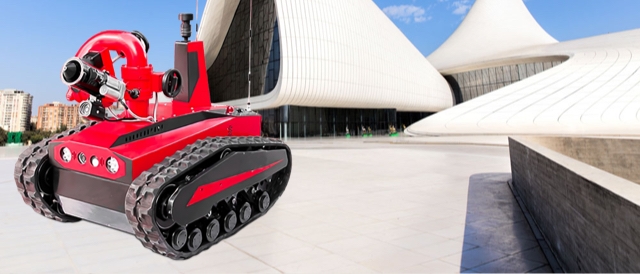
Emergency Response
Emergency Response Robots: Types, Use Cases, Costs & Benefits (Complete Guide)
Emergency response robots operate in the most dangerous environments humans face - collapsed buildings after earthquakes, chemical plant explosions, nuclear accidents, flooded tunnels, and active shooter scenes. They extend the reach of first responders into situations where sending a human would mean certain or highly probable death, and they provide reconnaissance, victim location, and sometimes direct intervention capability that saves lives.
The Fukushima Daiichi nuclear disaster in 2011 was a watershed moment for emergency response robotics. The limitations of available robot systems to operate in high-radiation environments - many failed due to radiation-induced electronics damage - drove significant investment in more capable platforms. The DARPA Robotics Challenge (2013-2015) translated that investment into advances in humanoid robot capability specifically designed for disaster response. A generation of robot development later, emergency response robots are significantly more capable.
Types of Emergency Response Robots
Ground Search and Rescue Robots
Mobile ground robots that enter collapsed structures, rubble, and confined spaces to locate survivors, assess structural conditions, and deliver supplies. iRobot PackBot, Remotec ANDROS, and the Boston Dynamics Spot are deployed by first responders for search and reconnaissance. These robots carry cameras, thermal imaging, gas sensors, and two-way communication capability.
Aerial Search and Rescue Drones
UAVs that survey disaster areas from above, searching for survivors with thermal cameras, mapping debris fields, and providing situational awareness to incident command. Drones are among the most widely deployed emergency response robots globally because of their low cost, ease of deployment, and versatility.
Disaster Reconnaissance Robots
Small, highly mobile robots designed specifically for entering tight spaces in structural collapse scenarios - crawling through rubble, accessing sub-floor voids, and searching areas too dangerous or too small for human entry. Snake robots, miniature tracked vehicles, and spherical robots are designed for this application.
Hazardous Material (HAZMAT) Response Robots
Robots designed to operate in chemical, biological, radiological, and nuclear (CBRN) environments. These platforms carry detection sensors for chemical agents and radiation, handle or contain hazardous materials, and perform interventions (closing valves, moving containers) in environments where human entry is prohibited.
Firefighting Robots
Ground and aerial robots that fight fires by applying water, foam, or other suppression agents. Thermite Robotics RS1 (used by US military and some fire departments), Howe & Howe Thermite, and various European firefighting robot platforms. Covered in more depth in the Firefighting Robots article, but integral to broader emergency response operations.
Medical Response and Triage Robots
Robots that provide first aid assistance, drug delivery, or remote medical assessment in mass casualty events or areas where medics cannot safely access patients. These platforms carry basic medical supplies and provide telemedicine connectivity between injured patients and remote medical personnel.
Explosive Ordnance Disposal (EOD) Robots
Robots designed to locate, examine, and dispose of improvised explosive devices and unexploded ordnance. iRobot PackBot and Northrop Grumman Andros are widely used by military and law enforcement EOD teams. These robots have saved thousands of lives by enabling bomb technicians to work remotely from explosive hazards.
Use Cases of Emergency Response Robots
Structural Collapse Search and Rescue
After earthquakes, building collapses, and explosions, robots enter rubble voids to search for survivors. The Sendai earthquake (2011), Turkey-Syria earthquake (2023), and other major structural collapse events have seen robot deployment for victim search. Robots carry thermal cameras that detect body heat signatures through debris, and two-way audio to communicate with trapped survivors.
The challenge in structural collapse is extreme: robots must navigate highly irregular terrain, fit through small openings, and operate with enough reliability that they can be trusted to conduct searches without human supervision.
Nuclear and Radiological Incident Response
At nuclear facilities, decontamination sites, and radiological emergency scenes, robots handle tasks that would expose human responders to lethal radiation doses. Robot deployment at Fukushima Daiichi - despite the limitations that drove subsequent development investment - allowed responders to assess reactor conditions, map radiation levels, and perform intervention tasks at radiation levels incompatible with human survival.
CBRN robot design requires radiation-hardened electronics, sealed enclosures, and materials that resist radiation damage over extended operational periods.
Tunnel and Confined Space Search
Mine collapse events, tunnel flooding, and confined space emergencies present search and rescue environments too dangerous and physically constrained for human entry. Small tracked and snake robots enter mine shafts, utility tunnels, and pipe systems to search for survivors and assess conditions.
Chemical Plant and Industrial Accident Response
Industrial accidents involving toxic chemical releases, explosions, or structural failures require emergency response in environments with toxic atmosphere, fire risk, and structural instability. HAZMAT robots enter these environments to assess the situation, close valves, move containers, and monitor conditions before any human responder approaches.
Law Enforcement Tactical Operations
Robots are standard equipment for law enforcement tactical teams. EOD robots neutralize IEDs; tactical robots provide reconnaissance in active shooter situations; mobile robots deliver phones to barricaded suspects for negotiation. The Los Angeles County Sheriff's Department, New York City Police Department, and most major US law enforcement agencies use tactical robots.
Mass Casualty Event Response
Robots equipped with medical supply payloads and telemedicine capability can reach injured individuals in areas where moving medical personnel is dangerous. During active shooter events, medical robots can reach injured individuals under fire to deliver tourniquets, wound packing, and connectivity with remote trauma physicians.
Natural Disaster Assessment
After hurricanes, floods, and wildfires, robots conduct infrastructure assessments, survey damage to structures, and provide situational awareness for emergency managers. Drones map flood zones, assess bridge integrity, and locate stranded individuals. Ground robots enter flood-damaged structures to assess structural conditions before human entry.
Industries That Use Emergency Response Robots
Fire Services and Emergency Management
Fire departments, emergency management agencies, and urban search and rescue (USAR) teams are the primary first responder users of emergency response robots.
Law Enforcement
Police tactical units, SWAT teams, and bomb disposal units use EOD and tactical robots as standard equipment.
Military
Military forces use ground robots extensively for IED disposal, reconnaissance, and CBRN operations. Military applications are addressed in the Military Robots article.
Nuclear and Energy Industries
Nuclear operators, power utilities, and government nuclear agencies use specialized CBRN robots for facility maintenance, incident response, and decommissioning.
Industrial Emergency Response
Chemical plants, refineries, and industrial facilities maintain emergency response robots for internal emergency response capability.
Government and Civil Defense
National emergency management agencies (FEMA in the US, equivalent bodies internationally) maintain robot assets and coordinate robot deployment in national-scale disaster events.
Benefits of Emergency Response Robots
Protection of First Responder Lives
The primary benefit is unambiguous: robots enter situations where human entry would mean death or serious injury. Every first responder life saved by substituting a robot for a human in a high-lethality environment is the clearest possible measure of value. EOD robots have saved thousands of lives globally by enabling bomb disposal without human proximity to explosive devices.
Extended Access
Robots reach spaces humans cannot - rubble voids too small for human entry, high-radiation areas with lethal dose rates, confined spaces with toxic atmospheres. This extended access translates directly into survivor location capability that human teams alone cannot match.
Persistent Monitoring
Robots can maintain continuous position in a hazardous environment for extended periods - monitoring a structural collapse scene overnight, continuously measuring radiation levels at a nuclear site, maintaining surveillance at a tactical scene - without rotation, fatigue, or the risk to human personnel that continuous human presence would require.
Situational Awareness
Cameras, sensors, and communications on emergency response robots provide incident commanders with real-time information about conditions inside hazardous environments. Decision-making quality improves when commanders have current, direct information rather than relying on inferential assessments.
Hazardous Material Handling
Robots manipulate hazardous materials - chemical containers, explosive devices, radioactive samples - that humans cannot safely handle. The ability to physically interact with hazardous material is a capability category that has no safe human equivalent.
Post-Event Documentation
Robots document emergency scenes with video, photography, and sensor data that supports post-event analysis, lessons learned, and legal or regulatory compliance documentation. Structured documentation of hazardous environments is difficult to obtain by other means.
Challenges & Limitations of Emergency Response Robots
Reliability in Extreme Environments
Emergency environments are hostile to electronics: high temperatures, water immersion, radiation, physical impact from debris, and dust. Robot reliability in these conditions is lower than in controlled environments. A robot that fails in a nuclear reactor building or a collapsed tunnel has limited recovery options.
Navigation in Unstructured Environments
Structural collapse scenes, debris fields, and disaster environments are the most challenging navigation environments for mobile robots. Pre-built maps are useless; terrain is highly irregular; surfaces are unstable. Autonomous navigation in these conditions remains at the research frontier; most deployed emergency response robots are teleoperated.
Teleoperation Skill Requirements
Remote operation of a robot in a complex three-dimensional debris environment requires trained operators with significant practice time. First responder agencies that deploy robots but don't train operators regularly find performance degrades. The operator skill constraint limits the practical deployment effectiveness of robots that are technically capable.
Communication in Structural Collapse
Radio signals penetrate poorly through concrete and steel debris. Maintaining communication with a robot deep inside a collapsed structure requires tethered communication, mesh network deployment, or advanced radio technology. Communication loss means losing robot control and potentially losing the robot itself.
Limited Manipulation Capability
Most deployed emergency response robots have limited manipulation capability. Dexterous manipulation in unstructured environments - moving debris, operating tools, providing physical first aid - remains technically challenging. The gap between what first responders need robots to do and what robots can reliably do in field conditions is significant.
Cost and Maintenance in Emergency Services Context
Emergency response robots are expensive relative to most emergency services equipment budgets. A capable ground robot costs $50,000-$200,000. First responder agencies in many jurisdictions lack funding for robot acquisition and maintenance. Grant programs and regional resource sharing models address this constraint partially.
Cost & ROI of Emergency Response Robots
For up-to-date prices, browse and buy emergency response robots for sale here.
Ground search and rescue robots (iRobot PackBot, Spot): $50,000-$80,000 for packbot; $75,000+ for Spot with accessories.
EOD/tactical robots (Remotec ANDROS): $90,000-$200,000 depending on configuration.
Aerial reconnaissance drones (DJI Matrice 300 with thermal): $10,000-$20,000 for deployable first responder drone systems.
Small search robots (Qinetiq Dragon Runner, miniature tracked): $30,000-$60,000.
Firefighting ground robots (Thermite RS1): $250,000-$400,000.
CBRN specialized robots: $200,000-$1,000,000+ for nuclear-hardened platforms.
ROI is measured in lives saved and responder injuries prevented, not financial return. A single first responder death prevented - with average career and liability value approaching $2-3 million including compensation, legal costs, and indirect costs - financially justifies substantial robot investment from a pure economics perspective. The human value of lives saved makes financial ROI calculation secondary.
Key Technologies Behind Emergency Response Robots
CBRN-hardened electronics use radiation-tolerant components, sealed enclosures, and shielded circuitry to operate in environments that would destroy standard electronics within minutes.
Thermal imaging (FLIR and similar) detects body heat signatures through darkness, smoke, and light debris - enabling victim detection in conditions where visible-light cameras fail.
Tethered and mesh network communications maintain robot control in high-attenuation environments like collapsed concrete structures.
Teleoperation interfaces with intuitive controls and haptic feedback enable first responders to operate robots with limited training. First responder robots prioritize operator simplicity over platform capability because field operators are not robotics specialists.
Sensor suites for CBRN detection - chemical agent sensors, radiation dosimeters, gas analyzers, and biological agent detection systems - provide the environmental data that justifies robot deployment in CBRN incidents.
How to Implement Emergency Response Robots
-
Hazard assessment and use case definition. Identify the specific hazardous scenarios the department faces. Different scenarios (structural collapse, HAZMAT, EOD, tactical) require different robot platforms and capabilities.
-
Platform selection. Match capability to use case. Evaluate robot reliability, environmental ratings, communication systems, and operator interface quality. Prioritize operational reliability over advanced features for first responder use.
-
Training program. Develop regular robot operator training — minimum monthly practice, ideally integrated into scenario exercises. Operator proficiency is the primary determinant of effective robot deployment.
-
Maintenance program. Establish preventive maintenance schedules, operator maintenance training, and manufacturer service agreements. Emergency response robots must be ready when needed; deferred maintenance creates operational failure at critical moments.
-
Regional coordination. Identify other agencies with robot assets in the region. Mutual aid agreements for robot sharing reduce per-agency cost and increase available capability for large-scale events.
-
Communication infrastructure. Assess communication requirements for your deployment scenarios. Plan for communication relay deployment and tethered operation where wireless communication is unreliable.
-
Integration with ICS. Integrate robot operations into Incident Command System structure. Establish who has authority over robot deployment decisions and how robot intelligence is communicated to incident command.
Emergency Response Robot Safety & Regulations
NFPA 1 (Fire Code) and NFPA 1500 (Firefighter Safety) govern first responder operations; robot deployment in tactical scenarios must comply with incident safety officer requirements.
Drone operations by first responders are regulated by FAA Part 107, with public safety provisions allowing emergency waivers for disaster response operations. First responder agencies should maintain Part 107 certification for drone operators.
EOD robot operations follow established military and law enforcement EOD procedures. ITAR (International Traffic in Arms Regulations) controls exports of EOD robot technology.
CBRN robot operations at nuclear facilities must comply with NRC (Nuclear Regulatory Commission) requirements and facility-specific emergency operating procedures.
OSHA 29 CFR 1910.120 (HAZWOPER) governs hazardous waste operations including emergency response; robot deployment in HAZMAT operations is conducted within this framework.
Top Emergency Response Robot Brands / Companies
|
Company |
Key Platform |
Emergency Application |
|
iRobot (Arlington Industries) |
PackBot |
USAR, EOD, tactical |
|
Northrop Grumman / Remotec |
ANDROS series |
EOD, tactical |
|
Boston Dynamics |
Spot |
USAR, inspection, tactical |
|
Thermite Robotics |
RS1 |
Firefighting, first response |
|
Telerob |
Telemax |
EOD, HAZMAT |
|
QinetiQ |
Dragon Runner, TALON |
EOD, military/police |
|
Endeavor Robotics |
Firstlook 110 |
USAR, reconnaissance |
|
Brokk |
Brokk 60 |
Demolition, collapse rescue |
|
Mitsubishi |
MERIS |
Nuclear emergency |
|
DJI / Autel |
Matrice 300, EVO II |
Aerial reconnaissance |
Overview of the Emergency Response Robotics Market
The emergency response and public safety robot market was valued at approximately $1-2 billion in 2024, spanning EOD robots, USAR platforms, CBRN response systems, and tactical police robots. Growth is approximately 12-18% CAGR driven by government procurement programs, increasing natural disaster frequency, and lessons from high-profile incidents that highlight capability gaps.
The Fukushima nuclear disaster (2011) and the DARPA Robotics Challenge it prompted remain the defining events for emergency response robotics capability development. The resulting research investment produced a generation of more capable humanoid robots, more robust ground vehicles, and better CBRN-rated electronics that are now entering first responder deployment.
Drone adoption has been the fastest-growing segment. First responder drones are now standard equipment for most major fire departments and law enforcement tactical units, driven by the low cost, versatility, and minimal training requirements of commercial drone platforms compared to ground robots.
The military EOD robot market is mature and large; transition of proven military platforms to civilian first responder use is an ongoing pattern that brings combat-tested reliability to civilian emergency response applications.
Frequently Asked Questions
What are emergency response robots?
Emergency response robots are robots deployed by first responders, military, and emergency management personnel in hazardous situations - structural collapse, HAZMAT incidents, EOD operations, and natural disasters - to extend human capability into environments too dangerous for human entry.
What is an EOD robot?
EOD (Explosive Ordnance Disposal) robots are remotely operated platforms used by military and law enforcement bomb disposal units to examine, neutralize, or move explosive devices without human proximity. iRobot PackBot and Northrop Grumman ANDROS are the most widely deployed platforms. EOD robots have saved thousands of lives globally by enabling safe standoff disposal of IEDs and unexploded ordnance.
Do rescue robots save lives?
Yes. Documented cases exist of robots locating survivors in structural collapse scenarios who were subsequently rescued. The direct life-saving contribution is difficult to quantify systematically, but robot deployment in major collapse events (Turkey-Syria earthquake 2023, various mine rescues) has located survivors. The clearest life-saving impact is in EOD applications where robot deployment prevents bomb technician deaths.
What robots do police use?
Law enforcement tactical units use EOD robots for IED disposal and suspicious package investigation, reconnaissance robots for active shooter and barricaded suspect situations, and negotiation delivery robots to bring phones to suspects. Drones for aerial surveillance are near-universal in major departments.
How do emergency robots communicate?
Most tactical and USAR robots use encrypted radio communication in frequency bands designed to penetrate building materials. Tethered communication systems are used when radio penetration is insufficient. Mesh network relay deployment extends communication range in large collapse environments.
What is DARPA's role in emergency response robots?
DARPA (Defense Advanced Research Projects Agency) funded the DARPA Robotics Challenge (2013-2015), which challenged teams globally to develop humanoid robots capable of performing disaster response tasks. The program generated significant advances in humanoid locomotion, manipulation, and autonomous operation specifically for emergency response contexts, with results that influenced multiple generations of subsequent development.
Can emergency robots operate autonomously?
Most deployed emergency response robots are teleoperated - controlled remotely by human operators. Autonomous capabilities (autonomous navigation, obstacle avoidance) assist operators but decision-making in complex emergency environments remains human-controlled. Research is advancing toward greater autonomy for defined subtasks (victim search, area mapping), but field deployment in emergency response prioritizes operator control reliability.
How are first responder robots maintained?
First responder robots require regular preventive maintenance, operator-level field maintenance training, and manufacturer service agreements. Batteries must be maintained on regular charge cycles; mechanical systems require lubrication and inspection; software requires updates. Regular operational exercises - not just training events - keep systems in operational readiness.
What is the future of emergency response robots?
Key development directions include: improved autonomy for defined tasks (victim search, structural mapping); better manipulation capability for debris removal and first aid; improved CBRN hardening for nuclear environments; longer battery life for extended operations; and lower cost to expand access beyond well-funded agencies. Humanoid platforms capable of operating tools designed for human hands represent a longer-term frontier for disaster response capability.