Unitree Go1 Robot Dog
The Unitree Go1 is the discontinued 2021 quadruped that first brought robot dogs to consumer prices, launching from around 2,700 dollars with its patented side follow system and multi camera sensing before being delisted and comprehensively superseded by the Unitree Go2, which carries the line forward with 4D LiDAR, large model voice AI and a full trim ladder.
-
Out of stock
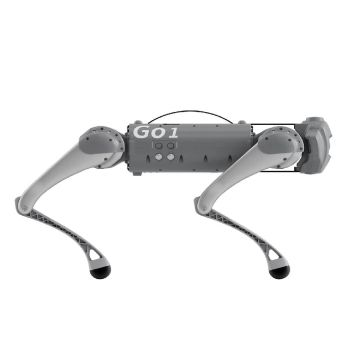
Unitree Go1
Every mass technology has the machine that opened the door, and for robot dogs it was the Unitree Go1: the 2021 quadruped that launched from roughly 2,700 dollars, a fraction of anything comparable, and turned the legged robot from an institutional purchase into something individuals, schools and small labs could simply order. It sold in numbers the category had never seen, filled the internet's first wave of affordable robot dog videos and proved the thesis Unitree was built on. It is also, importantly for anyone reading this page as a buyer, a discontinued product: Unitree delisted the Go1 around the launch of the Go2, which supersedes it on every axis, sensing, agility, intelligence, software and support, and which is where new purchases belong.
This page therefore serves three readers honestly. The historian gets the Go1's real story, the machine that made the market. The owner gets continuity: Go1 batteries and parts remain in Unitree's accessory catalog, and support paths exist. And the buyer gets the plain recommendation the review consensus itself reaches: the Go1's remaining role is to explain how good the Go2 is, and secondhand Go1 money is almost always better spent one generation forward.
The Go1's place in the quadruped story, and the line that succeeded it, can be explored through this page.
Background
The price that made the market
Before the Go1, consumer legged robotics did not meaningfully exist: research quadrupeds cost like laboratory instruments, and Unitree's own earlier Laikago and AlienGo, though category defining, still sold to institutions. The Go1's 2021 launch changed the customer: an approximately 12 kilogram dog, agile, camera studded and app controlled, at a price individuals could reach, offered in a trim ladder from consumer Air through Pro tiers to the developer EDU. The formula, vertical integration, self built actuators, volume pricing, became the template every subsequent Unitree product repeats, from the Go2 through the R1 humanoid.
What the Go1 pioneered
The Go1 introduced the features its successors refined: the patented Intelligent Side follow System that walked the dog beside its owner rather than trailing behind, the ancestor of today's ISS 3.0, multi camera sensing through fisheye stereo arrays with onboard AI processing, and the accessible EDU development tier that seeded the community the Go2 inherited. Its years in the wild produced the installed base, the shared code and the thousand classroom curricula on which the Go2's ecosystem dominance was built.
Retirement
The Go2's arrival ended the Go1's run on merit: self developed 4D LiDAR against camera only sensing, simulation trained gaits a generation better, large model voice interaction, longer support horizons, at pricing that removed any reason to reach backward. Unitree delisted the Go1, and the industry's comparison literature now exists, in one reviewer's words, mostly to talk people out of secondhand units.
Unitree Go1 vs Unitree Go2
| Feature | Go1 (discontinued) | Go2 (current) |
|---|---|---|
| Status | Delisted by Unitree | In production, full trim ladder |
| Launch / Price Floor | 2021, from ~$2,700 | Current, entry pricing lower still |
| Weight | ~12 kg | ~15 kg |
| Primary Sensing | Fisheye stereo camera arrays | L2 4D LiDAR, 360°×96°, 0.05 m min, plus HD camera |
| Peak Joint Torque | First generation joints | 45 N·m with heat pipe cooling |
| Gait Intelligence | Scripted and early learned gaits | Large scale simulation trained; inverted walking, self righting |
| Voice / AI | Basic interaction | GPT class large model empowerment |
| Follow System | Patented side follow (original) | ISS 2.0, +50% accuracy, >30 m range |
| Development | Go1 EDU tier | Go2 EDU: Jetson Orin, full SDK, ROS 2, largest community |
| Software Future | Legacy | OTA improving, active ecosystem |
| Parts and Batteries | Available via accessory catalog | Full current support |
The table is the upgrade argument in miniature: every Go1 strength exists in the Go2 matured, and every Go1 gap is filled.
Guidance for Go1 Owners
Keeping a Go1 running
Existing units remain serviceable: Go1 batteries continue to appear in Unitree's accessory listings, spare parts can be sourced through distribution channels, and support resources cover the platform's documentation, so a working Go1 in a classroom or collection can keep working, with parts availability confirmed at inquiry through the robot accessories channel.
When to migrate
The migration case writes itself for active programs: research and teaching built on the Go1's EDU tier transfers naturally to the Go2 EDU's Jetson Orin, SDK and ROS 2 stack, where the community, current documentation and OTA improving software now live, and where curriculum built today will stay supported, the continuity path Unitree's ecosystem was designed around.
On secondhand Go1 units
Candor serves buyers best: secondhand Go1s surface regularly at tempting numbers, but the review consensus is consistent, the savings against a new Go2 are small, the capability gap is large and the software future belongs entirely to the successor. Collectors and parts buyers excepted, the Go1 shaped budget is a Go2 budget.
The Go1's Legacy in Today's Lineup
The Go1's DNA runs through everything Unitree now sells: its price collapsing playbook reappeared in the Go2, then jumped species to the R1 humanoid; its side follow system matured into the ISS 3.0 aboard the AS2; its EDU tier concept became the standard development ladder across the G1 and beyond; and the community it gathered became the largest in legged robotics, now compounding around its successors across the dog line from Go2 through A2 and B2, serving research, education, consumer and inspection missions the Go1 first made thinkable.
Pricing and Availability
The Unitree Go1 has been discontinued and delisted by Unitree, and new units are no longer in production; remaining stock, spare parts and Go1 batteries are subject to availability and can be inquired about through Robots International, while buyers seeking Go1 class capability today are served by the Unitree Go2 across its Air, Pro, X and EDU trims, quoted alongside the full Unitree catalog. For Go1 parts inquiries, migration guidance or current Go2 pricing and cost, buyers should request a quotation, with full details available on this page.
Frequently Asked Questions
What is the Unitree Go1?
The Go1 is Unitree's 2021 quadruped robot, the approximately 12 kilogram machine that first brought robot dogs to consumer prices from around 2,700 dollars, pioneering side follow behavior and accessible development tiers before being discontinued and succeeded by the Unitree Go2.
Is the Unitree Go1 still available?
No, Unitree has delisted the Go1 and ended production; remaining stock and spare parts are subject to availability by inquiry, and the Go2 serves as its direct successor across every capability, with parts and battery continuity for existing Go1 owners handled through accessory channels.
Why was the Unitree Go1 important?
It created the consumer legged robotics market: the first quadruped priced for individuals and ordinary schools, whose sales volumes, community and classroom presence built the foundation the Go2 inherited, and whose price collapsing formula became the strategy behind Unitree's entire lineup, humanoids included.
What replaced the Unitree Go1?
The Unitree Go2 supersedes it comprehensively: self developed L2 4D LiDAR against camera only sensing, simulation trained agility, GPT class voice interaction, ISS 2.0 following, a Jetson Orin equipped EDU tier and an OTA improving software future, at entry pricing below the Go1's own.
Can I still get batteries and parts for a Go1?
Go1 batteries remain listed in Unitree's accessory catalog and spare parts can be sourced through distribution, with availability confirmed at inquiry, so existing units in classrooms, labs and collections can be kept running while their programs plan migration.
Should I buy a secondhand Unitree Go1?
For use, generally not: the review consensus finds the savings against a new Go2 small and the capability and support gap large, with all current software development flowing to the successor; secondhand Go1s make sense mainly for collectors, parts and strictly budget bound experimentation.
Where can I buy the Unitree Go2, the Go1's successor?
The Go2 is for sale through Robots International in Air, Pro, X and EDU trims plus the wheeled Go2-W, serving markets worldwide with delivery, customs clearance and support; because cost varies by trim and options, buyers should request a tailored quotation, with full purchasing details available on this page.
Summary
The Unitree Go1 is the robot dog history will keep citing: the 2021 machine that priced legged robotics for everyone, walked beside its owners before following was a feature category, and built the community its whole industry now runs on, before retiring the way successful pioneers do, comprehensively out-built by its own descendant. Its batteries still ship, its units still teach, and its real monument is the Go2 that absorbed everything it proved. For owners, this page is the continuity path; for buyers, it is the signpost one generation forward; and for the record, the Go1 stands as the definitive origin point of the consumer robot dog.
v3, August 9, 2026