Humanoid Robots
Humanoid Robots: Types, Use Cases, Costs & Benefits (Complete Guide)
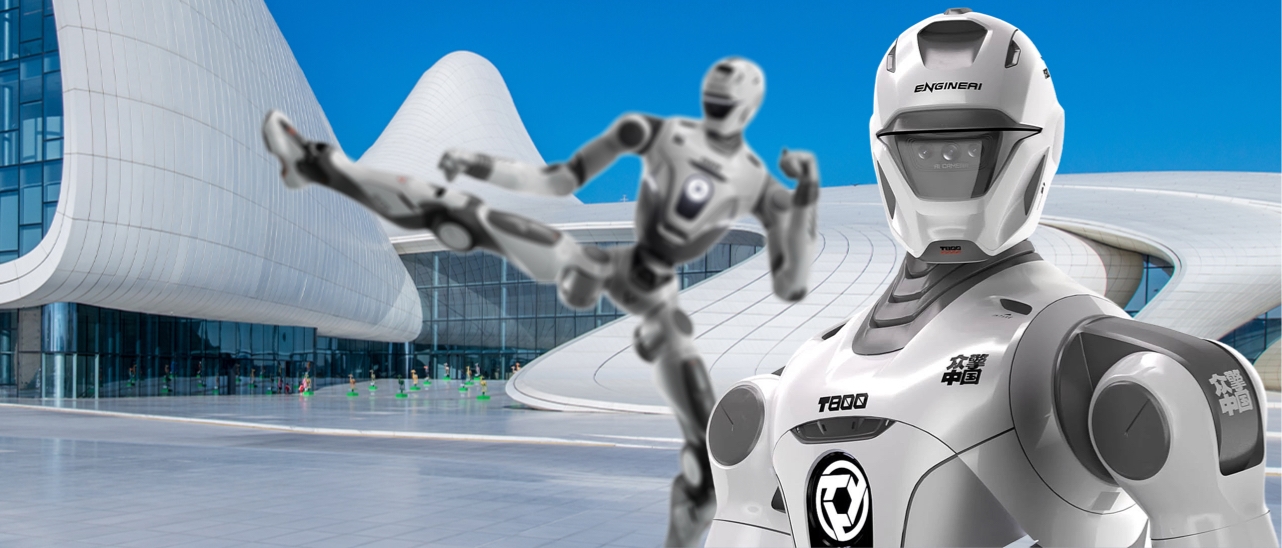
Humanoid robots are machines built to resemble and replicate the human form - two legs, two arms, a torso, and a head. That physical likeness is not cosmetic. It lets a humanoid robot operate in spaces designed for people: climb stairs, open doors, use tools built for human hands, work on a factory floor without retrofitting the environment.
The first credible humanoid platforms arrived in research labs in the 1970s. By the mid-2000s, Honda's ASIMO had captured public imagination. Today, the category has shifted from demo novelty to commercial product. Boston Dynamics, Figure AI, Agility Robotics, Unitree, UBTECH, Agibot, Booster Robotics, and a wave of well-funded Chinese manufacturers are shipping or actively deploying units into warehouses, factories, and research facilities. The question has moved from "can it walk?" to "what can it actually do on a shift?"
Types of Humanoid Robots
Fully Humanoid Robots
Full-body humanoid robots replicate the entire human silhouette - bipedal locomotion, articulated arms and hands, a sensor-equipped head. Examples include Tesla Optimus, Figure 02, Agility Digit, Unitree H1 and G1, UBTECH Walker S, and Agibot A2. These units are designed to operate in unstructured environments alongside human workers.
Wheeled Humanoid Robots
Some platforms use wheels for the lower body instead of legs, trading terrain flexibility for speed, stability, and lower mechanical complexity. The upper body retains human-like arms and manipulation capability. These are common in service and hospitality contexts where floors are flat.
Android / Social Humanoid Robots
Androids prioritize human-like appearance - silicone skin, facial expressions, natural language conversation. Hanson Robotics' Ameca and Sophia are well-known examples. The use case is human interaction: reception, customer service, research into human-robot social dynamics.
Research and Development Humanoids
Platforms like MIT's Atlas-derived research robots, SoftBank's Pepper, and various university-built systems are designed primarily to advance robotics science - locomotion algorithms, dexterous manipulation, AI decision-making. They are rarely deployed commercially in their base form.
Industrial Humanoid Robots
This is the fastest-growing segment. Units like Figure 02 (deployed at BMW), Apptronik Apollo, and Agibot A2 are purpose-built for manufacturing and logistics tasks: pick-and-place, assembly, material handling. They prioritize payload, uptime, and integration with existing industrial software over social interaction features.
Use Cases of Humanoid Robots
Manufacturing and Assembly
Humanoid robots are being deployed on automotive assembly lines - BMW and Figure AI announced a commercial partnership in 2024, with units handling body shop tasks. The argument is straightforward: factories were designed for humans, so a robot shaped like a human can drop into existing workflows without retooling the line.
Warehouse and Logistics
Sorting, picking, packing, and moving pallets are repetitive, physically demanding tasks with high injury rates. Humanoid robots like Agility Digit handle tote movement in Amazon facilities. The ergonomic advantage of a biped in a shelf-lined warehouse is real: they navigate aisles, reach high shelves, and handle irregular items in ways wheeled AMRs cannot.
Hazardous Environment Operations
Humanoid robots can enter environments that are dangerous for humans: nuclear facilities, chemical plants, collapsed buildings, offshore platforms. DARPA's Robotics Challenge was explicitly built around this use case - robots performing disaster response tasks in human-scale environments.
Healthcare and Eldercare
Humanoid robots assist with patient mobility, medication reminders, vital sign monitoring, and companionship in elder care facilities. The human form reduces patient anxiety compared to industrial-looking machines. Japan, facing acute demographic pressure, has invested heavily in this application.
Research and Scientific Exploration
Universities and research institutions use humanoid platforms to study locomotion, manipulation, human-robot interaction, and AI decision-making in embodied systems. Data gathered from these platforms feeds into the next generation of commercial deployments.
Retail and Hospitality
Front-of-house humanoid robots handle customer greeting, wayfinding, product information, and check-in tasks in hotels, airports, and retail stores. Their human-like appearance sets visitor expectations appropriately - people know how to interact with something that looks human.
Military and Defense
DARPA and various defense contractors are developing humanoid platforms for logistics support, reconnaissance, and operating in contested environments where human life is at risk. Specific capabilities and programs are, predictably, not fully public.
Education
Humanoid robots serve as teaching tools in STEM curricula, demonstrating concepts in programming, mechanics, and AI. Smaller consumer-grade humanoids like NAO (Softbank) are widely used in university robotics courses worldwide.
Industries That Use Humanoid Robots
Automotive Manufacturing
The automotive sector is the most active early adopter. BMW, Mercedes-Benz, and other OEMs are running pilot deployments, attracted by the ability to deploy humanoids on existing lines without facility redesign.
Logistics and E-Commerce
Amazon, DHL, and other logistics giants are investing in or deploying humanoid platforms for warehouse operations. Labor shortages and rising fulfillment costs are driving urgency.
Healthcare
Hospitals, rehabilitation centers, and elder care facilities are testing humanoid robots for patient assistance, delivery tasks, and social engagement roles.
Defense and Public Safety
Military, police, and emergency services are evaluating humanoid platforms for remote operations in environments too dangerous for personnel.
Retail
High-footfall retail environments are using humanoid robots for customer interaction, inventory scanning, and basic assistance tasks.
Education and Research
Universities and research labs represent a substantial portion of current deployments, functioning as both end users and development partners for manufacturers.
Benefits of Humanoid Robots
Human Environment Compatibility
The single biggest advantage of a humanoid form factor is that human environments do not need to be redesigned to accommodate them. Stairs, doors, tools, vehicles - everything already works.
Workforce Flexibility
A humanoid robot can be retrained via software for different tasks. Today it does assembly; next quarter it handles packing. That task flexibility is harder to achieve with fixed-function automation.
Labor Gap Coverage
In manufacturing, logistics, and eldercare, labor shortages are structural, not cyclical. Humanoid robots are a direct answer to positions that cannot be filled with human workers.
Reduced Workplace Injury
Repetitive strain injuries, heavy lifting injuries, and exposure-related illness drive enormous insurance and productivity costs. Humanoid robots absorb the most physically punishing tasks.
AI and Sensor Integration
Modern humanoid platforms carry depth cameras, LiDAR, IMUs, and on-board compute that feed into real-time AI decision-making. They do not just execute pre-programmed routines - they adapt to dynamic environments.
Brand and PR Value
Deploying a humanoid robot generates press coverage and signals innovation to customers, investors, and recruits. This is not trivial for companies competing on technology perception.
Challenges & Limitations of Humanoid Robots
Cost
Enterprise humanoid robots currently price between $30,000 and $250,000+ per unit depending on capability tier. At current prices, ROI calculations are tight unless the robot operates high-hours-per-day on high-value tasks.
Reliability and Uptime
Bipedal locomotion is mechanically complex. Falls happen. Actuator wear, battery cycles, and sensor drift all require maintenance infrastructure that most potential buyers do not currently have.
Dexterity Limitations
Human hands can manipulate an extraordinary range of objects. Current robotic hands are still significantly behind on grip strength, tactile sensitivity, and fine manipulation - the tasks that most need a humanoid robot are often the ones current hands struggle most with.
Software and AI Maturity
Full autonomy in unstructured environments remains unsolved. Most current commercial deployments involve constrained tasks in semi-structured environments. True general-purpose operation is still a research problem.
Integration Complexity
Connecting a humanoid robot to existing factory MES, WMS, or ERP systems requires engineering work. Standards are not yet mature, and vendor ecosystems are fragmented.
Safety and Certification
Operating a humanoid robot near human workers requires meeting safety standards that are still being written. ISO and regulatory bodies are actively developing frameworks, but compliance paths are not always clear.
Public Acceptance
People's reactions to humanoid robots range from fascinated to unsettled (the uncanny valley effect). Social acceptance, particularly in consumer-facing contexts, varies significantly by culture and demographics.
Cost & ROI of Humanoid Robots
For up-to-date prices, browse and buy humanoid robots for sale here.
Current pricing for commercial humanoid robots runs from approximately $30,000 for entry-level research/light-duty platforms (Unitree G1 starts around $16,000 in base spec) to $150,000-$250,000+ for industrial-grade units like Figure 02 or Apptronik Apollo.
ROI depends heavily on task type and deployment hours. A humanoid running two shifts in a high-wage market on a task that would cost $25/hour in human labor can reach payback in 2-4 years at current prices - before factoring in benefits, turnover, and injury costs. As prices drop (manufacturers are targeting sub-$30,000 for mass-production units), ROI windows compress significantly.
Operational costs include maintenance contracts (typically 15-20% of unit cost annually), connectivity infrastructure, software licensing, and integration engineering.
Key Technologies Behind Humanoid Robots
Actuators: Electric motors (brushless DC, series elastic) are standard. Hydraulic actuators provide higher force density but add complexity and weight. Actuator quality directly determines payload capacity, speed, and efficiency.
Sensors: Depth cameras (Intel RealSense, custom stereo rigs), LiDAR, IMUs, force-torque sensors in joints, and tactile sensors in hands. Sensor fusion is handled by onboard compute.
AI and Machine Learning: Modern humanoids run foundation models for perception and decision-making, combined with reinforcement learning for locomotion and manipulation skill acquisition. Simulation-to-real transfer (training in sim, deploying in real world) is a key workflow.
Power Systems: Current battery technology limits operational time to 1.5-4 hours per charge. This is a significant constraint for commercial deployment and an active area of development.
Communication: 5G, WiFi 6, and edge compute architectures allow humanoids to offload heavy inference tasks to cloud or on-premise servers, reducing onboard compute requirements.
Manipulation Systems: Multi-fingered dexterous hands, parallel grippers, and tool-change systems. Some platforms use interchangeable end effectors optimized for specific tasks.
How to Implement Humanoid Robots
-
Define the task precisely. Identify specific, repetitive tasks with clear start/end states. Avoid starting with tasks requiring high dexterity or unstructured environments.
-
Site assessment. Evaluate floor surface, lighting conditions, obstacle density, and co-worker proximity. Identify any infrastructure gaps.
-
Vendor selection. Match platform capability to task requirements. Request demo deployments or pilot programs before committing to volume purchase.
-
Integration planning. Map the robot's software interfaces to your existing systems (WMS, MES, ERP). Identify the integration engineering scope.
-
Safety framework. Define operational zones, emergency stop procedures, and human-robot interaction protocols. Review applicable ISO standards.
-
Pilot deployment. Run a constrained pilot in a real environment. Measure task success rate, cycle time, uptime, and maintenance events.
-
Workforce preparation. Train workers to work alongside humanoid robots. Address safety protocols and task handoff procedures.
-
Scale decision. Use pilot data to build the ROI case for scale deployment.
Humanoid Robot Safety & Regulations
Safety standards for humanoid robots are still maturing. Key frameworks include:
-
ISO 10218 (industrial robot safety) and its collaborative robot extension ISO/TS 15066 — currently the most applicable standards for humanoid robots operating near humans.
-
ISO 13482 covers personal care robots and is relevant for healthcare humanoid deployments.
-
OSHA guidelines on robotic workplace safety apply in US deployments.
-
The EU AI Act (effective 2024–2026 phased implementation) creates risk-based obligations for AI systems embedded in robots operating in high-risk contexts.
Most manufacturers publish their own safety documentation and require buyers to implement defined operational zones and E-stop accessibility. Third-party safety assessments are advisable for new deployments in human-occupied spaces.
Top Humanoid Robotics Brands / Companies
|
Company |
Key Platform |
Origin |
Primary Market |
|
Boston Dynamics |
Atlas |
USA |
R&D, Defense |
|
Figure AI |
Figure 02 |
USA |
Industrial |
|
Agility Robotics |
Digit |
USA |
Logistics |
|
Apptronik |
Apollo |
USA |
Industrial |
|
Unitree Robotics |
H1, G1 |
China |
Research, Industrial |
|
UBTECH |
Walker S |
China |
Commercial, Industrial |
|
Agibot |
A2 |
China |
Industrial |
|
Booster Robotics |
B1 |
China |
Industrial |
|
Hanson Robotics |
Ameca |
Hong Kong |
Social/Research |
|
Tesla |
Optimus |
USA |
Industrial (internal) |
|
PAL Robotics |
TALOS, TIAGo |
Spain |
Research |
|
SoftBank Robotics |
Pepper, NAO |
Japan/France |
Education, Service |
Overview of the Humanoid Robotics Market
The global humanoid robot market was valued at approximately $2.4 billion in 2024 and is projected to reach $38 billion by 2035 at a CAGR above 40%, driven by manufacturing labor shortages, AI capability advances, and aggressive cost reduction by Chinese manufacturers.
China has emerged as the dominant manufacturing base, with Unitree, UBTECH, Agibot, MagicLab, and SIASUN among the active players. US companies lead on AI software and systems integration capability. The competitive dynamic is shaping up as Chinese hardware volume versus American software sophistication.
Investment has been extraordinary: Figure AI raised $675 million in early 2024 at a $2.6 billion valuation; Physical Intelligence, 1X Technologies, and Apptronik have all raised significant rounds. The race to reach cost points that unlock mass commercial deployment - widely cited as sub-$30,000 per unit - is the defining competitive battleground for the next five years.
Frequently Asked Questions
What are humanoid robots?
Humanoid robots are robotic systems designed to resemble the human body in structure and movement - typically with a head, torso, two arms, and two legs. They are built to operate in environments designed for humans and interact using human-compatible interfaces.
How much do humanoid robots cost?
Pricing ranges from approximately $16,000-$30,000 for research/light-duty platforms (e.g., Unitree G1) to $150,000-$250,000+ for full industrial-grade commercial units. Prices are expected to decline significantly as production volumes increase.
What tasks can humanoid robots currently perform?
Current commercial deployments focus on material handling, pick-and-place, packing, assembly assistance, and basic logistics tasks. Fully autonomous general-purpose operation in unstructured environments remains in development.
How long can a humanoid robot operate on a single charge?
Most current platforms operate 1.5-4 hours on a single battery charge. Hot-swap battery systems and fast-charging infrastructure are being developed to extend effective operational time per shift.
Are humanoid robots safe to work alongside humans?
When properly deployed within defined safety frameworks, yes. Standards like ISO 10218 and ISO/TS 15066 govern safe human-robot collaboration. Most manufacturers include collision detection, force limiting, and E-stop systems. Proper site assessment and worker training are required.
Which companies are leading in humanoid robots?
In the US: Figure AI, Agility Robotics, Apptronik, Boston Dynamics, and Tesla (Optimus). In China: Unitree, UBTECH, Agibot, Booster Robotics, and MagicLab. In Europe: PAL Robotics (Spain).
What industries are adopting humanoid robots first?
Automotive manufacturing and logistics/warehousing are the leading early adopters, followed by healthcare/eldercare and research institutions.
What is the difference between a humanoid robot and a cobot?
A cobot (collaborative robot) is designed specifically to work safely alongside humans, but typically takes the form of a robotic arm, not a full humanoid body. Humanoid robots have a full body form factor; some humanoid robots are also designed for collaborative operation.
How are humanoid robots programmed?
Modern humanoid robots use a combination of teleoperation (human demonstration), reinforcement learning (training in simulation), and pre-programmed task sequences. Foundation model AI is increasingly being used for task planning and environmental understanding.
What is the biggest technical challenge for humanoid robots?
Dexterous manipulation - the ability to reliably grasp and manipulate a wide range of objects with human-like precision - remains the most significant unsolved challenge. Battery life and operational reliability in unstructured environments are close behind.