Research Robots
Research Robots explained: applications, design, features, benefits, comparisons, pricing, and buying considerations.
Introduction / Overview
Research Robots are part of the wider robotics market, where machines are designed to perform physical tasks, collect data, assist people, automate workflows, or operate in environments that are repetitive, hazardous, expensive, or difficult for humans. This category may include complete robot platforms, specialized systems, accessories, or application-specific product groups.
Understanding Research Robots requires more than looking at a single specification. Buyers should evaluate the intended environment, operating task, level of autonomy, safety requirements, payload, runtime, software tools, support options, and total cost of ownership. A robot that works well in one setting may be unsuitable in another if the terrain, workflow, operators, or integration requirements are different.
Design and Features
Core System Design
The design of Research Robots depends on the job they are expected to perform. Some systems emphasize mobility, allowing robots to move through factories, warehouses, offices, hospitals, stores, farms, construction sites, or outdoor environments. Others focus on manipulation, sensing, interaction, cleaning, delivery, inspection, safety, data collection, or precision automation.
Common design elements include mechanical structure, actuators, batteries, sensors, onboard computing, communication hardware, control interfaces, and optional payloads. In many deployments, accessories and supporting equipment are as important as the robot itself. Chargers, batteries, end effectors, sensors, mounting kits, controllers, and software licenses can determine whether a robotics system is practical for daily use.
User Experience and Deployment
Successful robotics deployment depends on usability. Operators need clear controls, training materials, maintenance procedures, and support channels. For commercial and industrial users, the system should fit existing workflows rather than requiring a complete redesign of the workplace. For research and education, openness, documentation, programmability, and repeatability may be more important than polished commercial features.
Technology and Specifications
Specifications for Research Robots may include dimensions, weight, payload, reach, speed, runtime, battery capacity, charging time, degrees of freedom, navigation method, sensor options, software compatibility, environmental rating, and connectivity. The importance of each specification depends on whether the robot is used indoors, outdoors, around people, in industrial spaces, or in research environments.
Modern robots often use cameras, depth sensors, LiDAR, ultrasonic sensors, force sensors, inertial measurement units, microphones, GPS, or specialized application sensors. Software may include remote operation, autonomous navigation, mapping, task scheduling, fleet management, data logging, API access, and over-the-air updates.
Applications and Use Cases
Research Robots can support a wide range of use cases depending on the platform. They may be used for inspection, education, logistics, cleaning, customer interaction, healthcare support, manufacturing, warehouse automation, public safety, agriculture, construction, sports, entertainment, service delivery, or demonstration projects.
Commercial and Industrial Use
Commercial buyers often use robots to improve consistency, reduce manual repetition, collect operational data, extend service hours, or support staff. Industrial users may focus on productivity, safety, uptime, and integration with existing equipment. A narrow, well-defined use case generally produces better results than a vague goal of automation.
Education, Research, and Demonstration
Educational and research buyers may value software access, modularity, repairability, experiment repeatability, and technical documentation. Demonstration users may prioritize visual impact, reliability, ease of transport, and safe operation around visitors or customers.
Advantages / Benefits
The benefits of Research Robots can include improved productivity, safer operation in difficult environments, better data collection, reduced repetitive labor, consistent demonstrations, and expanded technical capability. In some cases, robots make entirely new workflows possible by combining mobility, sensing, manipulation, and software control.
Robots can also improve training and planning. They allow teams to test automation strategies, collect operational data, and build internal expertise before scaling to larger deployments. For accessories and supporting categories, the primary benefit may be extended runtime, improved control, added sensing, better manipulation, safer charging, or easier maintenance.
Comparisons
Research Robots should be compared with alternatives in the same functional class. A mobile robot should be compared with other mobile robots, a manipulator with other robotic arms or hands, a service robot with other service platforms, and an accessory with compatible accessories for the same robot family. Comparing unrelated robot types can lead to poor purchasing decisions.
Important comparison factors include task fit, payload, runtime, autonomy, durability, software ecosystem, available accessories, warranty, support, lead time, regional availability, and total cost of ownership. Buyers should also compare what is included in the base package and what must be purchased separately.
Pricing and Availability
Pricing for Research Robots varies by model, configuration, accessories, software, warranty, support level, and shipping region. Entry-level educational systems may be priced very differently from industrial or enterprise-grade platforms. Some products are available as standard packages, while others require a custom quotation.
Availability may depend on stock, manufacturer lead times, lithium battery shipping restrictions, import requirements, and regional support coverage. Buyers should confirm current availability, package contents, compatibility, training options, and warranty handling before placing an order.
FAQ Section
What are Research Robots?
Research Robots are robots, robotic systems, accessories, or product groups designed for specific automation tasks, environments, or applications. Their exact function depends on the model and configuration.
How do Research Robots work?
They combine mechanical hardware, electronics, sensors, batteries, software, and user controls. Some operate manually, some are semi-autonomous, and others use navigation, perception, or task-planning software.
Why are Research Robots important?
They help automate tasks, support staff, collect data, improve safety, enable research, or create new service and operational capabilities in environments where traditional equipment may be limited.
Where can I buy Research Robots?
Availability depends on product type, stock, region, configuration, and shipping requirements. Buyers should confirm included accessories, warranty, support, and lead time before purchase.
What are the benefits of Research Robots?
Benefits may include improved productivity, safer operation, better data collection, reduced repetitive work, stronger demonstrations, improved training, and better automation planning.
What should be checked before buying?
Check task fit, compatibility, runtime, payload, software access, accessories, spare parts, warranty, support, training needs, and total cost of ownership.
References / External Links
- Manufacturer specification sheets, manuals, and compatibility documentation
- Robot Operating System documentation for robotics software concepts
- IEEE Robotics and Automation Society publications on robotics applications
- Relevant safety standards and workplace guidance for robots operating near people
Summary
Research Robots should be evaluated by matching the robot or accessory to a clearly defined task, environment, and support plan. The best choice depends on more than headline specifications; it depends on compatibility, usability, maintenance, software, training, and long-term value.
A structured comparison of applications, specifications, pricing, and availability helps buyers choose robotics products that fit real operational needs and avoid systems that are impressive but poorly matched to the intended use case.
Research Robots: Advancing Science and Innovation with AI-Powered Robotics
Research robots are transforming the way scientists, engineers, and innovators conduct experiments, collect data, and develop cutting-edge technologies. By combining artificial intelligence, automation, and precise robotics engineering, these robots provide unparalleled capabilities for research institutions, universities, laboratories, and innovation centers. Designed for versatility, accuracy, and adaptability, research robots are crucial tools for accelerating discovery and pushing the boundaries of knowledge in fields such as AI, robotics, engineering, and applied sciences.
What Are Research Robots?
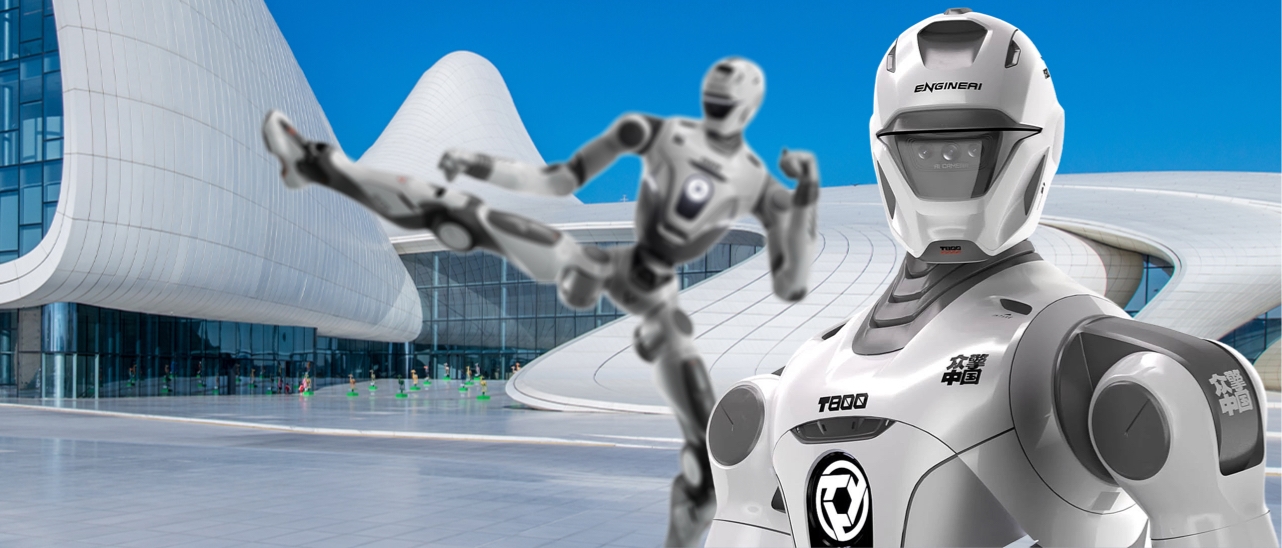
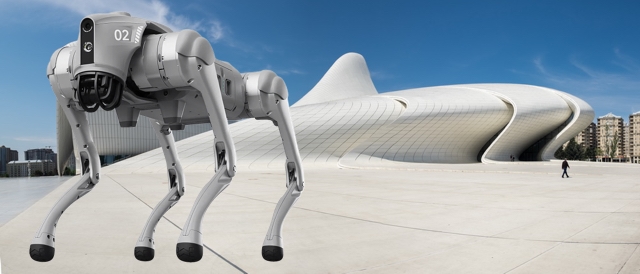
Research robots are specially designed robotic systems used to support experiments, testing, and innovation. They can range from humanoid robots for human-robot interaction studies to quadruped robots for mobility and terrain research. Equipped with sensors, AI algorithms, and automation software, research robots can:
-
Perform repetitive or precise laboratory tasks with accuracy
-
Collect and analyze data efficiently
-
Simulate real-world scenarios for experimentation
-
Interact with humans for behavioral and robotics studies
-
Adapt autonomously to changing experimental conditions
These capabilities make research robots indispensable for institutions that aim to enhance productivity, reliability, and scientific innovation.
Applications of Research Robots
1. Academic Research
Universities and technical institutions use research robots to teach robotics, artificial intelligence, and engineering concepts. Students can program and experiment with robots to understand robotics mechanics, AI behavior, and data-driven decision-making, making learning interactive and practical.
2. Laboratory Automation
Research robots streamline laboratory work by automating repetitive or high-precision tasks, such as pipetting, sample handling, and environmental monitoring. This not only reduces human error but also speeds up experimentation and increases reproducibility of results.
3. Robotics and AI Development
Research robots provide an ideal platform for testing AI algorithms, robotic motion planning, and machine learning models. Engineers can experiment in controlled environments before deploying robots in real-world applications, advancing innovation in industrial, service, and exploration robotics.
4. Healthcare and Biomedical Research
Robots are increasingly used in biomedical research for assisting in surgeries, patient monitoring, and lab experiments. With precise motion control and data collection capabilities, research robots enhance the accuracy of experiments and accelerate medical innovation.
5. Exploration and Environmental Research
Quadruped or mobile research robots allow scientists to study difficult terrains, underwater environments, and hazardous areas safely. These robots gather critical environmental data, helping researchers make informed decisions while reducing risks to human personnel.
Why Choose Research Robots?
Investing in research robots offers numerous advantages:
-
Precision and Accuracy: Conduct experiments with minimal error
-
Efficiency and Automation: Save time on repetitive or labor-intensive tasks
-
Versatility: Suitable for laboratories, universities, and field research
-
AI Integration: Test and implement advanced algorithms for robotics and automation
-
Innovation: Empower scientists, engineers, and institutions to stay at the forefront of technological advancement
By integrating research robots into labs and institutions, organizations can achieve higher productivity, better data accuracy, and accelerated innovation across multiple scientific and engineering fields.
Buying Research Robots
Acquiring research robots requires careful consideration of factors such as mobility, AI capabilities, programming interfaces, and adaptability to research needs. Leading suppliers offer humanoid, quadruped, and specialized research robots tailored for specific laboratory, academic, or industrial applications. Choosing the right research robot ensures maximum ROI, efficiency, and scalability for your innovation projects.
Conclusion: The Future of Research Robots
Research robots are not just tools—they are intelligent partners in scientific discovery and technological advancement. From education and laboratory automation to AI development and environmental exploration, research robots provide versatile, reliable, and advanced solutions for modern research. By investing in AI-powered research robots, institutions and innovators can accelerate experimentation, enhance accuracy, and drive breakthroughs in robotics and applied sciences.