Quadruped Robots
Explore quadruped robots, robot dogs, and four-legged robotic systems for inspection, research, education, security, and advanced automation.
Introduction / Overview
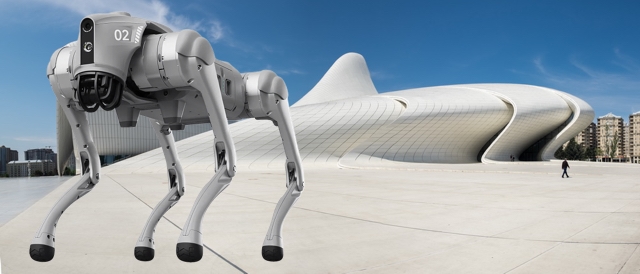
Quadruped robots, commonly known as robot dogs or four-legged robots, are mobile robotic systems designed to move on four articulated legs rather than wheels or tracks. Their form is inspired by the movement of animals such as dogs, goats, and other agile mammals, but their purpose is technological rather than biological. These robots are built to travel across uneven terrain, climb stairs, step over obstacles, and maintain balance in environments where conventional wheeled machines may be limited.
The development of quadruped robots represents an important branch of mobile robotics. Early legged robots were mainly experimental machines used in academic laboratories and defense research programs. Over time, improvements in electric motors, batteries, sensors, artificial intelligence, and real-time control systems made it possible to produce smaller, more practical, and more affordable models. Today, robot dogs are used in research, education, industrial inspection, public safety, entertainment, and automation.
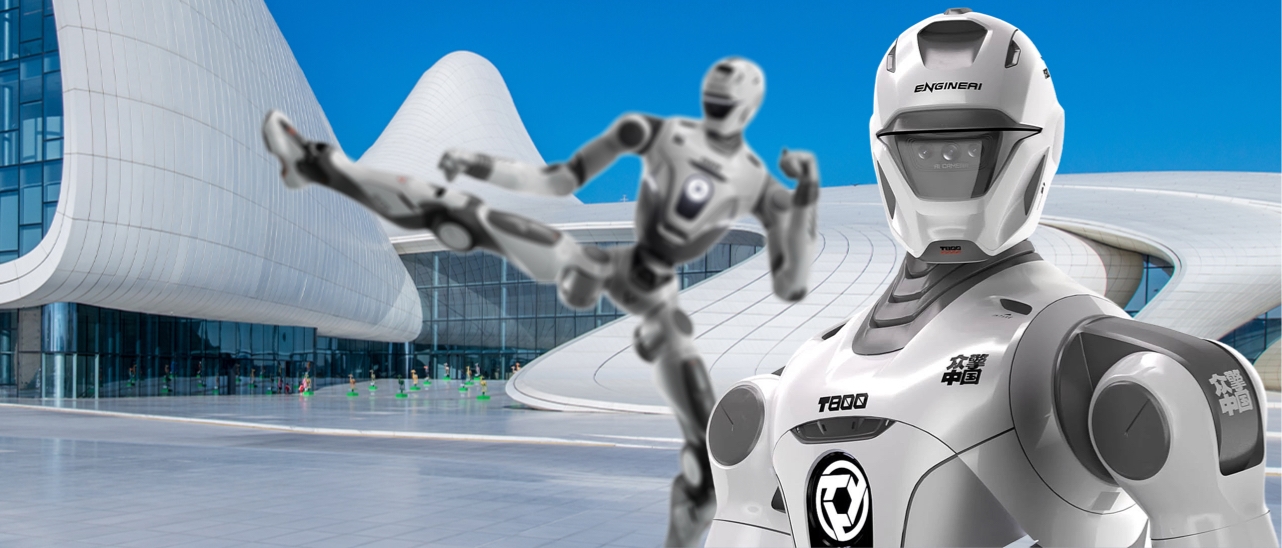
Unlike humanoid robots, which attempt to imitate the full human body, quadruped robots focus primarily on reliable movement, environmental perception, and payload support. Their four-legged configuration provides a stable base while still allowing dynamic motion. This makes them useful for tasks that require mobility in human-built spaces, outdoor sites, industrial facilities, and other semi-structured environments.
Design and Features
Quadruped robots are typically composed of a central body, four multi-jointed legs, onboard computing hardware, batteries, sensors, and communication systems. The body houses the main processors, control electronics, power system, and mounting points for accessories. Each leg usually includes two or three powered joints, allowing the robot to lift, swing, place, and adjust its feet in response to terrain.
Mechanical Structure
Most robot dogs use lightweight but durable materials such as aluminum alloys, carbon fiber composites, engineering plastics, and reinforced polymer components. The goal is to balance strength, weight, and energy efficiency. A lighter robot can operate longer on a battery charge, while a stronger frame can carry sensors, cameras, robotic arms, or other payloads.
The legs are designed to support walking, trotting, turning, crouching, climbing, and recovering from disturbances. Some quadruped robots include compliant elements, such as spring-like structures or force-sensitive joints, to absorb shocks and improve stability. Others rely mainly on software-controlled motors and feedback sensors to manage balance.
Common Features
Typical features of quadruped robots include:
- Autonomous or semi-autonomous navigation
- Remote control through a handheld controller, computer, or mobile device
- Obstacle avoidance and terrain adaptation
- Cameras for vision, mapping, or inspection
- Inertial measurement units for balance and orientation
- Programmable movement patterns and behaviors
- Payload mounting points for sensors or accessories
- Wireless communication using Wi-Fi, Bluetooth, or industrial networks
- Software development kits for research and customization
Some models are designed for education and programming, while others are engineered for professional field use. Smaller units may prioritize affordability and experimentation, whereas larger industrial robots focus on durability, payload capacity, and reliable outdoor operation.
Technology and Specifications
The performance of a quadruped robot depends on the interaction of hardware, software, sensors, and control algorithms. Unlike simple remote-controlled machines, modern robot dogs often use advanced feedback systems to continuously adjust their posture, gait, and direction.
Actuators and Motion Control
The joints of a quadruped robot are powered by actuators, usually electric motors paired with gearboxes, encoders, and motor controllers. These actuators must provide enough torque to lift the robot’s body, move the legs quickly, and respond to changes in ground contact. High-quality actuators are one of the main factors affecting cost, mobility, and reliability.
Motion is governed by control algorithms that determine how each leg moves. Basic gaits may include walking, trotting, pacing, and turning in place. More advanced robots can transition between gaits automatically, climb slopes, step over irregular objects, or recover after slipping. Balance is maintained using data from joint sensors, force sensors, cameras, depth sensors, and inertial measurement units.
Sensors and Perception
Quadruped robots can be equipped with a variety of sensors depending on their intended use. Common sensors include RGB cameras, depth cameras, LiDAR, ultrasonic sensors, thermal cameras, microphones, gas detectors, and environmental monitoring devices. These sensors allow the robot to perceive surroundings, identify obstacles, map spaces, and collect useful data.
In inspection applications, a robot dog may carry thermal imaging equipment to detect overheating machinery, acoustic sensors to identify leaks, or high-resolution cameras to document site conditions. In research settings, sensors may be used to test navigation, machine learning, human-robot interaction, or swarm robotics.
Computing and Software
Onboard computers process sensor data, control movement, and run application software. Some robots use embedded processors for low-level control and more powerful computers for artificial intelligence, mapping, and autonomy. Operating systems and middleware may include Linux-based platforms, Robot Operating System software, proprietary control systems, or manufacturer-specific development environments.
Many quadruped robots support programming in languages such as Python or C++. Educational models may offer visual programming tools, while advanced platforms provide software development kits, application programming interfaces, and simulation environments.
Battery Life and Payload
Battery life varies widely depending on robot size, payload, terrain, and activity level. Smaller educational robot dogs may operate for less than an hour, while professional inspection models may run for one to several hours per charge. Payload capacity also varies, ranging from lightweight cameras to several kilograms of equipment. Buyers often evaluate battery life, charging time, payload capacity, walking speed, operating temperature, and environmental resistance before selecting a model.
Applications and Use Cases
Quadruped robots are useful wherever mobility, stability, and remote presence are valuable. Their ability to move through complex spaces makes them suitable for tasks that are difficult, dull, dangerous, or repetitive.
Industrial Inspection
One of the most important uses of robot dogs is industrial inspection. They can patrol factories, power plants, refineries, warehouses, mines, construction sites, and utility facilities. Equipped with cameras and sensors, they can collect images, monitor gauges, check equipment, detect heat anomalies, and document conditions over time.
Public Safety and Emergency Response
Quadruped robots may assist emergency responders by entering hazardous areas before humans. They can inspect damaged buildings, explore confined spaces, survey disaster zones, or carry sensors into environments with smoke, chemical exposure, or structural instability. Their remote operation can reduce risk to personnel.
Education and Research
Universities, schools, robotics clubs, and laboratories use quadruped robots to teach programming, mechanical design, artificial intelligence, control theory, and autonomous navigation. Robot dogs provide a physical platform for students and researchers to test algorithms in real-world conditions.
Security and Patrol
Some organizations use quadruped robots for perimeter monitoring, facility patrol, and situational awareness. A robot dog can follow preplanned routes, stream video, detect unusual activity, and provide a mobile sensor platform. In many cases, these systems are used to support human security teams rather than replace them.
Entertainment and Demonstration
Robot dogs are also used for demonstrations, exhibitions, media production, trade shows, and entertainment. Their animal-like movement makes them visually engaging, while their programmable behaviors allow them to perform scripted motions, follow users, or interact with audiences.
Advantages / Benefits
Quadruped robots offer several advantages over other mobile platforms. Their legs allow them to move through spaces with stairs, curbs, rocks, cables, debris, and uneven ground. This makes them more adaptable than many wheeled robots in complex environments.
Another benefit is stability. Four legs provide multiple points of contact with the ground, allowing the robot to maintain balance even when one foot is repositioning. Advanced control systems allow the robot to adjust posture and recover from moderate disturbances.
Robot dogs also provide remote presence. Operators can inspect an area through the robot’s cameras without physically entering the location. This can improve safety, reduce travel time, and make inspections more consistent. In industrial settings, repeated autonomous patrols can help detect problems earlier and create better records of equipment condition.
Additional benefits include programmability, modularity, and scalability. Many platforms can be fitted with different sensors or accessories, making the same robot useful for multiple tasks. Educational and research models also provide an accessible way to study artificial intelligence and robotics.
Comparisons
Quadruped robots are often compared with wheeled robots, tracked robots, drones, and humanoid robots. Each design has advantages and limitations.
Compared with wheeled robots, quadruped robots are usually better at navigating stairs, irregular ground, and cluttered spaces. However, wheeled robots are often faster, simpler, less expensive, and more energy-efficient on smooth floors.
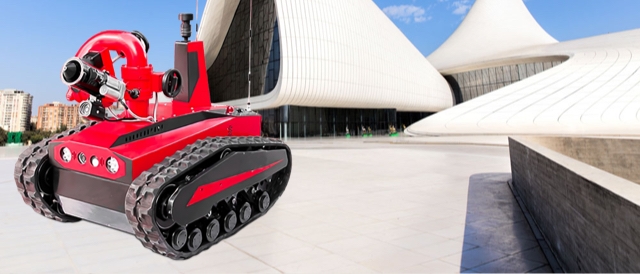
Compared with tracked robots, robot dogs can be more agile and better suited to stepping over obstacles. Tracked robots may still be preferable in mud, rubble, or heavy-duty rescue scenarios where traction and ruggedness are more important than precise foot placement.
Compared with drones, quadruped robots can operate for longer periods, carry heavier sensors, and inspect objects at close range without rotor noise or flight restrictions. Drones, however, are better for aerial views, roof inspections, and rapid coverage of large outdoor areas.
Compared with humanoid robots, quadruped robots are generally simpler and more stable. Humanoid robots may eventually be better suited for tasks designed around human hands and upright posture, but four-legged robots are often more practical for mobility-focused applications.
Pricing and Availability
The price of quadruped robots varies significantly based on size, capability, durability, software support, and intended market. Entry-level educational robot dogs may cost from a few hundred to a few thousand dollars. These models are usually suitable for coding practice, classroom demonstrations, and hobby robotics.
Mid-range research and development platforms may cost several thousand to tens of thousands of dollars. They often include better actuators, stronger frames, development tools, and support for custom sensors. Professional-grade quadruped robots designed for industrial inspection, security, or field operations may cost substantially more, especially when equipped with LiDAR, thermal cameras, gas sensors, robotic arms, ruggedized enclosures, or enterprise software.
Availability depends on manufacturer, region, configuration, and support requirements. Some models are sold as ready-to-use systems, while others are offered as development kits. Buyers should consider not only the purchase price but also spare parts, battery replacements, software licensing, training, support, and maintenance.
FAQ Section
What is a quadruped robot?
A quadruped robot is a mobile robot that moves using four legs. It is designed to walk, balance, turn, and travel across uneven or complex terrain. Many quadruped robots are informally called robot dogs because their movement and body shape resemble a dog.
How are robot dogs controlled?
Robot dogs can be controlled manually, semi-autonomously, or fully autonomously depending on the model. Manual control may use a remote controller or computer interface. Autonomous control uses onboard sensors and software to follow routes, avoid obstacles, and perform tasks with limited human input.
What are quadruped robots used for?
Quadruped robots are used for industrial inspection, research, education, public safety, security patrols, mapping, entertainment, and technology demonstrations. Their ability to move over stairs and rough ground makes them useful in environments where wheeled robots are less effective.
Can a robot dog climb stairs?
Many modern quadruped robots can climb stairs, although performance depends on the robot’s size, leg design, sensors, software, and the shape of the stairs. Professional models are usually better at stair climbing than small educational models.
How long does a quadruped robot battery last?
Battery life varies by model and use. Small robot dogs may run for less than an hour, while larger professional systems may operate for one to several hours. Heavy payloads, high speeds, rough terrain, and continuous sensor use can reduce operating time.
Are quadruped robots autonomous?
Some quadruped robots are highly autonomous, while others are mainly remote-controlled. Autonomy may include obstacle avoidance, route following, mapping, docking, inspection routines, or mission planning. The level of autonomy depends on the hardware, sensors, and software installed.
What should buyers consider before choosing a robot dog?
Important factors include payload capacity, battery life, walking speed, terrain capability, software access, sensor options, durability, warranty, replacement parts, and support. Educational buyers may prioritize programming tools, while industrial buyers may focus on reliability and inspection capabilities.
References / External Links
- IEEE Robotics and Automation Society: robotics research and technical publications
- Robot Operating System documentation: open-source tools for robotics development
- National Institute of Standards and Technology robotics resources: standards, testing, and measurement information
- Academic research in legged locomotion, control systems, and autonomous navigation
Summary
Quadruped robots are four-legged mobile machines designed to move through environments that are difficult for conventional wheeled robots. By combining articulated legs, sensors, onboard computers, and advanced control software, they can walk, climb, balance, inspect, and collect data across a wide range of settings. Their applications include industrial inspection, public safety, education, research, security, and entertainment.
Although robot dogs vary widely in price and capability, they share a common purpose: providing mobile robotic access to spaces where stability, adaptability, and remote operation are valuable. As motors, batteries, artificial intelligence, and sensor technology continue to improve, quadruped robots are likely to become more common in commercial, educational, and industrial environments.