Sports Robots
Sports Robots: Types, Use Cases, Costs & Benefits (Complete Guide)
Sports robots occupy a distinct niche: they participate in, support, analyze, or entertain within athletic contexts. Some compete against humans and each other; others work behind the scenes measuring performance, training athletes, and automating the logistics of live events. The category ranges from the robotic pitching machines that have trained baseball hitters for decades to the AI-powered performance analytics platforms analyzing every movement of a Premier League squad, to humanoid robots competing in the RoboCup World Cup.
Sports robotics is not a trivial market. Professional sports franchises spend millions on performance technology. Equipment testing, stadium operations, broadcast production, and athlete development all have robotic components that are growing in sophistication and budget. And the competition robotics side - RoboCup, FIRST, Battlebots - involves hundreds of thousands of participants and drives robotics education and R&D.
Types of Sports Robots
Athletic Training Robots
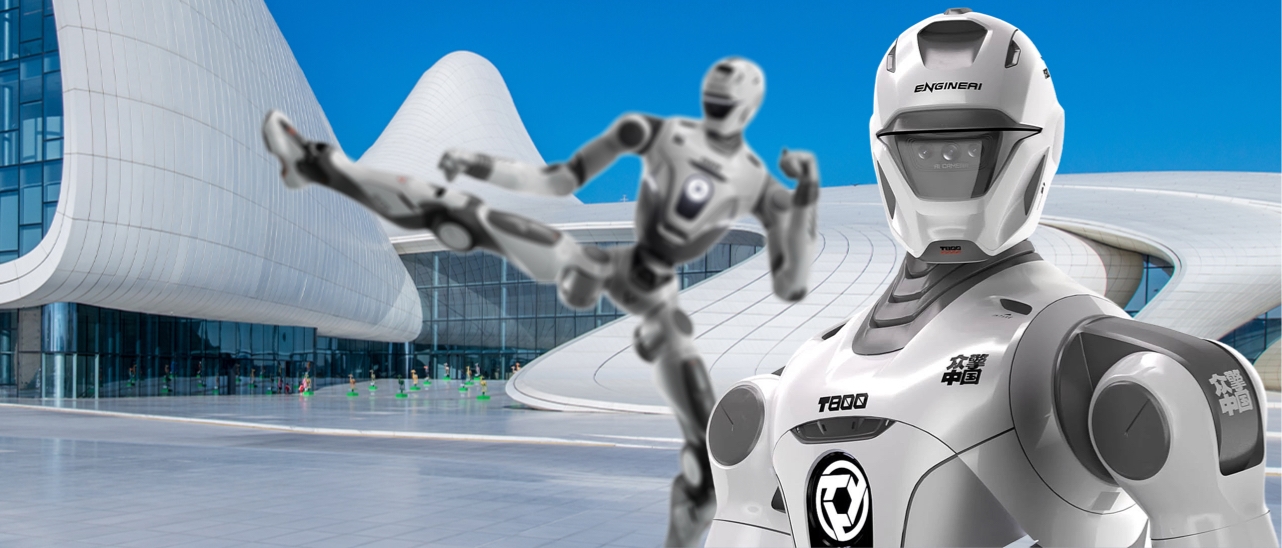
Robotic systems that simulate opponents, deliver training stimuli, or provide coaching feedback during athlete practice. Ball machines for tennis, cricket, baseball, and squash are the oldest category; humanoid sparring robots are the newest.
Performance Analysis Robots
Automated camera systems, sensor platforms, and AI analysis tools that capture and analyze athlete movement, biomechanics, and performance. Systems from Hawk-Eye, Catapult, and sports AI startups process thousands of data points per session.
Referee Assistance Systems
Automated line calling systems (Hawk-Eye in tennis, goal-line technology in football/soccer), ball-tracking systems, and replay analysis platforms that support or replace human referee judgments.
Equipment Testing Robots
Robotic testing machines that evaluate sports equipment performance: golf club testing robots, tennis racket testing machines, bicycle component testing rigs, and running shoe testing systems used by equipment manufacturers.
Stadium Operations Robots
Cleaning robots, turf maintenance robots, and logistics platforms used in stadium and sports facility management.
Competition Robots (RoboCup, Battlebots)
Robots built to compete in structured competitions: RoboCup soccer, Battlebots combat robots, drone racing, and various robotics competitions. These are purpose-built competitive platforms, not tools for human sports.
Broadcasting and Camera Robots
Cable-mounted camera systems, robotic camera arms, and aerial drones that capture sports broadcast footage from positions and with precision impossible for human camera operators.
Use Cases of Sports Robots
Athlete Training and Skill Development
Ball delivery machines are used in tennis, cricket, baseball, and squash to deliver repeatable, adjustable training stimuli at frequencies impossible for human coaching. More advanced systems vary delivery patterns and speeds to simulate match conditions. Humanoid robotic sparring and training robots are an emerging category.
Performance and Biomechanics Analysis
Camera systems and wearable sensors capture athlete movement data that is processed to provide biomechanical analysis: golf swing analysis, running gait analysis, throwing mechanics assessment, and fatigue detection. Professional teams use this data for injury prevention, technique optimization, and training load management.
Officiating Support
Hawk-Eye ball-tracking technology is used in tennis (electronic line calling, Hawk-Eye Live), cricket (DRS decision review system), football (goal-line technology, offside VAR), and other sports for automated officiating decisions. These systems have replaced or supplemented human line judges in major competitions.
Equipment Design and Testing
Equipment manufacturers use robotic test rigs to evaluate durability, performance characteristics, and compliance with equipment regulations. Golf clubs, tennis rackets, running shoes, and cycling components are tested with robotic systems that apply precisely controlled loads and movements.
Turf and Field Maintenance
Robotic mowers and field preparation systems maintain playing surfaces at stadiums and sports facilities. Autonomous mowers operate on natural grass pitches and athletic fields, maintaining cut height and line marking.
Stadium and Venue Operations
Cleaning robots maintain stadium concourses and seating areas before, during, and after events. Autonomous cleaning robots from Tennant and Brain Corp operate in large sports venues.
Broadcasting Innovation
Cable cam systems (Spidercam, StadiumTrak) and robotic camera arms capture broadcast perspectives from center-field positions, wire-mounted positions over the playing surface, and ultra-close tracking shots that would be impossible with human-operated cameras.
Competition Robotics (RoboCup)
RoboCup is an international robotics competition in which teams of robots play soccer against each other, with the stated long-term goal of fielding a team capable of beating the FIFA World Cup champion by 2050. It involves thousands of participants in multiple leagues, from small wheeled robots to humanoid platforms.
Industries That Use Sports Robots
Professional Sports Franchises
Major league baseball, football, soccer, tennis, and other professional sports use performance analysis, training, and officiating technology.
Sports Equipment Manufacturers
Nike, Adidas, Callaway, Wilson, and other equipment brands use robotic testing systems.
Sports Broadcasters
Major sports networks and streaming services use robotic camera and production systems.
Sports Facilities and Stadiums
Stadium operators and sports facility managers use cleaning and maintenance robots.
Sports Science and Athletics Programs
University athletics programs, national Olympic training centers, and sports medicine facilities use performance analysis and rehabilitation robots.
Amateur and Recreational Sports
Ball delivery machines and training robots serve amateur players and recreational facilities.
Benefits of Sports Robots
Consistent, Repeatable Training Stimuli
A ball machine delivers the same serve to the same spot 200 times in an hour. A human feeder cannot. For technique development that requires high repetition of specific stimuli, robotic training tools are genuinely superior.
Objective Performance Measurement
Robotic camera systems and sensor platforms measure performance with precision and objectivity that human observation cannot match. This data drives training decisions, contract negotiations, and injury prevention programs.
Officiating Accuracy
Electronic officiating systems eliminate human error on reviewable decisions. In tennis, Hawk-Eye Live has replaced all line judges at major tournaments with a system that is both more accurate and operationally simpler.
Equipment Innovation
Robotic test rigs allow equipment designers to evaluate hundreds of design iterations quickly, accelerating the development cycle for sports equipment that must balance performance, durability, and regulatory compliance.
Broadcast Quality Enhancement
Cable cam systems and robotic camera arms provide viewers with perspectives and quality of footage that fundamentally enhance the broadcast experience. The immersive, close-tracking shots from automated systems have changed the visual language of sports broadcasting.
Safety Improvement
Robots can be used to test safety equipment, model injury mechanics, and conduct training simulations that would be too dangerous for human participation. They also remove human camera operators from field-level positions where they risk collision with athletes.
Challenges & Limitations of Sports Robots
Cost of Advanced Systems
High-performance sports analytics platforms, Hawk-Eye officiating systems, and cable cam installations cost hundreds of thousands to millions of dollars. Access is concentrated in elite professional sport.
Integration with Human Athletes
Training robots designed to simulate opponents or provide interactive feedback must be calibrated carefully to each athlete's skill level and development needs. Poorly designed training robots can reinforce bad technique or create unrealistic stimulus patterns.
Athletic Acceptance
Professional athletes and coaches can be skeptical of technology-driven recommendations. Integrating robotic analysis systems into training culture requires careful relationship management and evidence of practical benefit.
Regulatory Acceptance in Competition
Technology officiating systems must be validated and accepted by sport governing bodies before use in competition. The adoption process is slow and conservative in many sports.
Durability in Outdoor Environments
Outdoor sports equipment - turf robots, broadcast drones, camera systems - must function reliably in weather conditions including wind, rain, and temperature extremes.
Limited Interactivity
Current sports training robots deliver stimuli but have limited ability to respond dynamically to athlete performance in the way a human training partner or coach would. AI-driven adaptive training robots that respond in real time are still in development.
Cost & ROI of Sports Robots
For up-to-date prices, browse and buy sports robots for sale here.
Ball machines (tennis, baseball, cricket): $500-$15,000 for recreational to professional-grade units.
Performance analysis platforms (Catapult, Hawk-Eye): $50,000-$500,000+ per year for professional team deployments.
Officiating technology (Hawk-Eye Live): Tournament installation costs in the hundreds of thousands; per-event licensing adds ongoing cost.
Cable cam systems: $500,000-$2,000,000+ for installation.
Robotic equipment testing: $100,000-$1,000,000+ for purpose-built testing systems.
ROI in professional sports is calculated on competitive advantage (performance improvement), fan engagement (broadcast quality), and operational cost (officiating efficiency, facility maintenance savings).
Key Technologies Behind Sports Robots
Computer Vision and Tracking: Multi-camera tracking systems capture ball and player position at 300+ frames per second. Hawk-Eye uses six to ten camera angles to compute ball trajectory to within 2.6mm average accuracy.
Wearable Sensor Platforms: GPS, accelerometer, heart rate, and gyroscope sensors in wearable form factors capture athlete movement and physiological data during training and competition.
AI Performance Analysis: Machine learning models trained on large player databases identify patterns, predict injury risk, and recommend training modifications based on individual athlete data.
Robotic Motion Systems: Cable cam systems use precise servo-controlled cable tension and computer-controlled camera positioning to achieve smooth, fast tracking shots with no camera shake.
Autonomous Navigation for Field Robots: Turf maintenance robots use GPS and vision systems to navigate playing surfaces without damaging the field or violating boundary markers.
How to Implement Sports Robots
-
Identify the specific performance or operational need. Training efficiency? Officiating accuracy? Broadcast quality? Facility operations?
-
Budget definition. Sports robot costs range from $500 ball machines to million-dollar analytics systems. Define the budget envelope clearly.
-
Athlete and coach stakeholder engagement. For performance technology, involve athletes and coaches in evaluation and adoption. Technology imposed without buy-in underperforms technology that coaches and athletes believe in.
-
Vendor selection and demonstration. Evaluate vendors on evidence of performance improvement in comparable sports contexts. Ask for reference contacts at other professional teams or facilities.
-
Pilot. Deploy in a limited training context before full integration.
-
Training and adoption. Ensure coaches know how to use and interpret the data or functionality the system provides.
-
Outcome measurement. Define measurable outcomes (injury rate reduction, win rate, officiating accuracy improvement) and track them rigorously.
Sports Robot Safety & Regulations
Sports robots face context-specific safety requirements:
-
Athlete safety: Training robots and officiating systems must be validated to ensure they do not create injury risk for athletes. Ball machine velocity limits, robot size and weight constraints near athletes, and collision avoidance in cable cam systems are relevant safety parameters.
-
Sport governing body approval: Technology used in official competition requires approval from the relevant governing body (ITF, FIFA, ICC, etc.). Approval processes can take years.
-
Drone regulations: Broadcast drones operating at sports venues are subject to national aviation authority regulations and typically require special airspace authorization.
-
Equipment testing standards: Sport governing bodies specify testing equipment standards for equipment certification compliance verification.
Top Sports Robot Brands / Companies
|
Company |
Key Platform |
Application |
|
Hawk-Eye (Sony) |
Hawk-Eye Live, DRS |
Ball tracking, officiating |
|
Catapult |
Vector, Edge |
Athlete tracking, analytics |
|
Stats Perform |
AI/Tracking |
Performance analytics |
|
Spidercam |
Spidercam |
Cable cam broadcast |
|
Lobster Sports |
Phenom |
Tennis ball machine |
|
Sports Attack |
Baseball machine |
Baseball training |
|
Skillshot |
Cricket ball machine |
Cricket training |
|
Husqvarna |
Automower |
Turf maintenance |
|
Brain Corp |
BrainOS |
Stadium cleaning (platform) |
|
Tennant |
Various |
Stadium cleaning |
Overview of the Sports Robotics Market
The sports technology market, which includes performance analysis, officiating technology, and broadcast systems, was valued at approximately $4-5 billion in 2024 and is growing at approximately 15% CAGR. Sports robotics as a subset - the robot-specific components of this market - represents a smaller but growing portion.
Professional sports leagues and governing bodies are actively expanding their use of data analytics, automated officiating, and broadcast technology. The combination of sports media rights revenue (which creates budget for technology investment) and competitive performance pressure (which creates motivation to invest) drives sustained technology adoption in professional sport.
Competition robotics (RoboCup, FIRST, Battlebots) occupies a parallel market that is more about education and entertainment than professional performance. RoboCup alone involves teams in 45+ countries, with participation numbers in the hundreds of thousands.
Frequently Asked Questions
What are sports robots?
Sports robots are robotic systems that participate in, support, or analyze athletic activity. The category includes training robots, performance analysis systems, officiating technology, equipment testing rigs, stadium operations robots, and competition robots.
What is Hawk-Eye in sports?
Hawk-Eye is a computer vision-based ball-tracking and officiating system used in tennis, cricket, football, and other sports. It uses multiple high-speed cameras to reconstruct ball trajectory with millimeter accuracy. In tennis, Hawk-Eye Live has replaced human line judges at major tournaments with fully automated electronic line calling.
What is RoboCup?
RoboCup is an international robotics competition in which teams of autonomous robots play soccer against each other. Founded in 1997, it has the stated goal of fielding a robot team capable of defeating the FIFA World Cup champion team by 2050. It involves multiple leagues from small wheeled robots to humanoid platforms.
Can robots replace human referees?
For specific, reviewable decisions based on ball position (line calls, goal-line decisions), automated officiating systems are now more accurate and operationally efficient than human line judges. They have replaced human line judges in tennis and supplemented them in football. Full replacement of human referees for all officiating decisions is not imminent.
How do professional teams use sports robots?
Through performance analysis platforms (tracking player movement, speed, and physiological status), training technology (ball delivery systems, movement analysis), and injury prevention tools (biomechanical analysis, training load monitoring). Most elite professional teams in major sports leagues use multiple robotic/automated performance technology systems.
What is a cable cam in sports broadcasting?
A cable cam (Spidercam, StadiumTrak) is a camera system suspended from cables stretched between support structures above a stadium, controlled by computer to move in three dimensions above the playing surface. They capture tracking shots, overhead views, and player-level perspectives that are now standard in major sports broadcasts.
Do robot-assisted training tools actually improve athletic performance?
Evidence supports improved skill development for high-repetition technical training (ball delivery machines for stroke technique, for example) and injury prevention for training load monitoring platforms. The evidence base for newer AI coaching tools is growing but less established.
Are training robots affordable for amateur athletes?
Basic training robots (ball machines for tennis, baseball, and cricket) are available at consumer price points from $500-$2,000. Advanced AI coaching and analysis platforms remain priced for professional and semi-professional deployment.
What is the future of officiating robots?
Expansion of automated officiating to additional sports and decision types, driven by accuracy advantages and reduced operational cost. Baseball's automated ball-strike (ABS) system is in active testing; other ball sports are evaluating automation for additional decisions.
How are sports robots tested before competition use?
Sport governing bodies require validation data demonstrating accuracy, reliability, and edge-case performance before approving technology for competition use. Testing typically involves thousands of test scenarios comparing robotic system outputs to ground truth measurements.