Dobot Hexplorer Six-Legged Bionic Robot

The Dobot Hexplorer Six-Legged Bionic Robot is a hexapod mobile robotics platform positioned around terrain adaptability, stability, and modular expansion. Publicly available retailer and distributor materials consistently describe Hexplorer as a six-legged modular or bionic robot designed for complex environments, with use cases spanning research, inspection, education, and field operations. At the same time, an important factual limitation should be stated clearly: in the official Dobot global website pages reviewed here, Hexplorer does not appear as a fully documented first-party product page in the same way Dobot documents products such as Atom, X-Trainer, or its cobot families.

In stock

BRAND:
DOBOT
MODEL:
HEXPLORER SIX-LEGGED BIONIC ROBOT
ORIGIN:
China
AVAILABILITY:
SUBJECT TO AVAILABILITY
SKU:
Dobot-Hexplorer

Dobot Hexplorer Six-Legged Bionic Robot
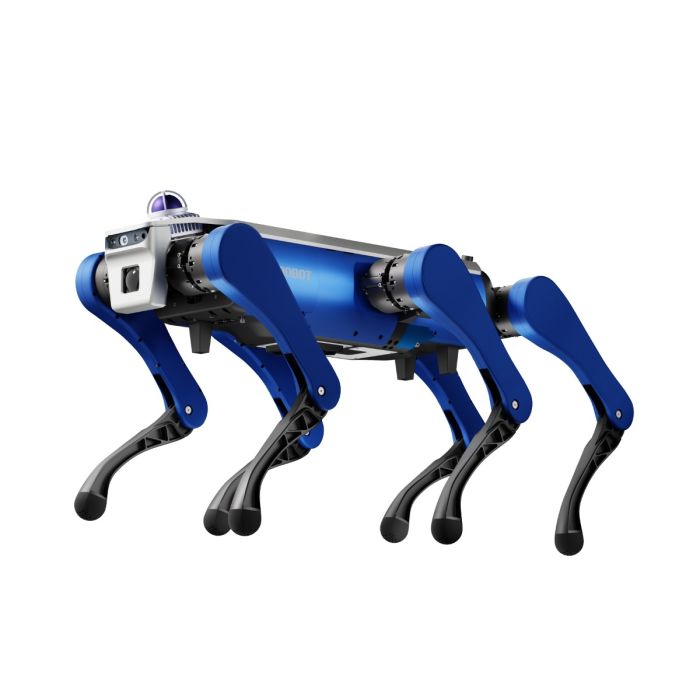
That means the Hexplorer can be described factually, but the strongest technical details currently visible in search results come from distributor listings and a product PDF rather than from a detailed official Dobot product page. Those sources are relatively consistent with each other on dimensions, mobility, payload, compute, and development interfaces, which allows a useful overview, but it is still wise to treat the robot as a lightly documented public product rather than one with a fully exposed manufacturer specification portal.

Design and Features

Six-legged bionic architecture

The defining feature of Hexplorer is its hexapod architecture. Public product descriptions describe it as a biologically inspired six-legged robot with a stable gait strategy that keeps multiple legs grounded for balance on irregular terrain. In legged robotics, six-legged layouts are valued because they can maintain static or quasi-static stability more easily than many bipedal or quadrupedal systems, especially in constrained or slippery conditions. The public materials for Hexplorer repeatedly emphasize this stability as one of the robot’s core selling points.

Quiet operation and field-oriented design

Another recurring design theme is low-noise, stable operation. Distributor descriptions and the product PDF say Hexplorer is built for quiet operation, high payload, and adaptability to complex terrain. Those traits matter in practice because field robots often need to work in labs, inspection corridors, outdoor facilities, and research environments where operator comfort, repeatability, and low mechanical disturbance are important.

Modular expansion philosophy

Hexplorer is also presented as a modular platform rather than a fixed-function robot. Public sources say it supports integration with sensors, manipulators, AI modules, LiDAR, depth cameras, voice modules, edge compute devices, and even collaborative arms. This modularity is one of the strongest indicators that the robot is intended for development and task customization, not just for a single predefined mission.

Portable but substantial physical form

The public technical summaries describe Hexplorer as roughly 86.3 cm × 47 cm × 48 cm when standing, and about 73.4 cm × 47 cm × 24.4–24.6 cm when folded, with a net weight around 20 kg. That puts it in a category that is portable enough for research and deployment teams to move, but large enough to carry meaningful sensing or tool payloads.

Technology and Specifications

Mobility and terrain performance

The published figures are consistent across multiple public listings: Hexplorer has 18 degrees of freedom, a maximum walking speed of 1.8 m/s, maximum obstacle height of 20 cm, and maximum slope adaptability of 40°. These are strong indicators of a platform intended for uneven surfaces and varied indoor or outdoor terrain rather than only flat educational floors.

Payload and endurance

Public specifications list a rated payload of 10 kg and maximum payload of 15 kg, with a 504 Wh battery and around 2.5 hours of battery life. The PDF snippet also says the robot can pull loads up to five times its own weight under test conditions. These figures matter because payload is often one of the main reasons to choose a hexapod over a smaller consumer robot-dog style platform. A higher payload expands what can be mounted, from sensors to tools to experimental hardware.

Sensors and perception

The public listings indicate that Hexplorer integrates a Livox Mid-360 LiDAR and an Intel RealSense D435 RGB-D camera. That combination suggests a perception stack capable of terrain mapping, obstacle awareness, scene depth estimation, and spatial sensing sufficient for research and semi-autonomous mobile tasks. For a legged field robot, this is a practical baseline sensor setup.

Compute platform and software environment

Hexplorer is described as using an x86_64 architecture with an Intel Core i7/i5 CPU and about 40 TOPS GPU performance. Public sources also say it supports ROS 2 low-level and high-level SDKs with Python and C++, along with motion-status feedback, IMU data, motor and joint data, simulation support in MuJoCo, and debugging or integration tools. This is a substantial point in the robot’s favor because it indicates that Hexplorer is designed to be programmable and integrated into established robotics development workflows rather than treated as a closed appliance.

Joint mechanics and body movement

The published specification summaries also mention 33 N·m peak torque at the knee joints, body tilt of ±38°, and detailed joint ranges for the front, middle, and rear hips and lower leg. While these details are more technical, they reinforce the impression of a platform designed for meaningful locomotion control and terrain response rather than only show-floor demonstration.

Applications and Use Cases

Public descriptions consistently position Hexplorer for education, scientific research, industrial inspection, and intelligent service applications. That breadth suggests the robot is meant as a general-purpose legged mobility platform rather than a single-vertical commercial product. In research settings, its appeal is clear: ROS 2 support, modular expansion, and simulation compatibility make it useful for mobility experiments, perception development, and autonomy research.

For industrial inspection, the robot’s slope handling, obstacle traversal, payload, LiDAR, and depth camera make it plausible for facility patrol, instrumentation carrying, remote sensing, and environment scanning in spaces that are awkward for wheeled robots. This use case is directly reflected in the public marketing language that emphasizes complex terrain and multi-scenario task support.

Hexplorer also appears suitable for field robotics and prototyping. Because it can integrate third-party sensors, voice modules, collaborative arms, and edge computing hardware, it offers a platform on which teams can test specialized workflows without needing to build a legged chassis from scratch. This makes it relevant not only to universities but also to applied R&D groups, system integrators, and robotics labs.

A lighter but still valid use case is technology demonstration. A six-legged robot with visible mobility advantages and modular hardware can also serve exhibition, outreach, or educational demo roles, particularly where a more unusual locomotion format than a quadruped may attract attention. That is more of an inferred use than a lead claim, but it fits the product’s public presentation.

Advantages / Benefits

One of Hexplorer’s main advantages is stability. A six-legged robot can maintain contact with the ground in ways that naturally support cautious, controlled movement over irregular terrain. The public descriptions repeatedly foreground this point, and it is one of the clearest reasons to choose a hexapod architecture in the first place.

A second advantage is payload capacity relative to size. With a 10 kg rated payload and 15 kg maximum payload, Hexplorer appears more capable than many lighter mobile research robots when it comes to carrying instruments or custom modules. That makes it more than a motion platform; it becomes a useful base for inspection, sensing, or manipulation experiments.

A third advantage is its open development profile. ROS 2 support, SDKs in Python and C++, access to motion and sensor data, and compatibility with simulation tools such as MuJoCo significantly increase the robot’s value for serious research and integration work. This is arguably one of its strongest differentiators compared with more closed demonstration robots.

Finally, Hexplorer benefits from modularity. Public sources emphasize support for LiDAR, depth cameras, edge compute, voice modules, and other accessories. That flexibility matters because most advanced mobile-robot projects depend on tailoring the hardware stack to the mission.

FAQ Section

What is the Dobot Hexplorer Six-Legged Bionic Robot?

The Dobot Hexplorer is a six-legged hexapod mobile robot designed for stability, payload carrying, and operation on complex terrain. Public sources position it for research, inspection, education, and modular development work.

How does the Dobot Hexplorer work?

It works through an 18-DoF legged locomotion system supported by onboard compute, LiDAR, RGB-D vision, and programmable control interfaces. Public listings also state that it supports ROS 2, Python and C++ SDKs, simulation environments, and external module integration.

Why is the Dobot Hexplorer important?

It is important because it brings together a stable hexapod chassis, relatively strong payload capacity, and an open development environment. That combination makes it useful for robotics research, inspection tasks, and field experiments where terrain handling matters.

What are the benefits of the Dobot Hexplorer?

Its main benefits include six-legged stability, modular expansion, terrain adaptability, useful payload capacity, and support for ROS 2 and custom development workflows.

Is Dobot Hexplorer an official Dobot product?

It is publicly sold and described under the Dobot name by multiple distributors, but the detailed technical information visible in the reviewed search results comes mainly from reseller pages and a product PDF, not from a fully detailed official Dobot global product page.

Summary

The Dobot Hexplorer Six-Legged Bionic Robot is best understood as a specialized hexapod robotics platform built for stability, payload handling, modular expansion, and complex-terrain mobility. Publicly available sources consistently describe a robot with 18 DoF, 1.8 m/s maximum speed, 20 cm obstacle clearance, 40° slope adaptability, 10 kg rated payload, 504 Wh battery, LiDAR and RGB-D sensing, and ROS 2-based development support. The main caveat is that these details are currently surfaced more clearly through distributors and a product PDF than through a detailed official Dobot global product page. Even so, the available evidence presents Hexplorer as a serious platform for research, inspection, and advanced mobile robotics experimentation.


Specifications

MODEL HEXPLORER SIX-LEGGED BIONIC ROBOT
ROBOT TYPE QUADRUPED
TOTAL DOF 18 DEGREES OF FREEDOM
MAXIMUM SPEED 1.8 METERS / SECOND
MAXIMUM PAYLOAD 15 kg
SLOPE ANGLE 40 DEGREES
STAIR CLIMBING HEIGHT 20 cm
DEPTH CAMERA EQUIPPED
3D LiDAR LIVOX MID-360
RUNTIME UP TO 2.5 HOURS
SECONDARY DEVELOPMENT SUPPORTED
BRAND DOBOT

What's included

Dobot Hexplorer
Remote Controller
Charger
Product Questions

Your Question:
Write a Review
You're reviewing: Dobot Hexplorer Six-Legged Bionic Robot
loader
Loading...

You submitted your review for moderation.