Dobot Robotics is a robotics company founded in 2015 in Shenzhen, China, focused on collaborative robots, desktop robotic arms, industrial automation, and STEM education platforms. On its official website, the company describes itself as a provider of integrated robotics solutions for industrial automation and education, and says it created the world’s first desktop-grade robotic arm.
Dobot Robotics
Broad product architecture
One of Dobot’s defining characteristics is the breadth of its product lineup. Its official product pages divide offerings across manufacturing, retail, and education, rather than limiting the company to one narrow automation niche. This is important because many robotics firms specialize either in industrial production or in teaching tools, while Dobot has publicly committed to both.
Collaborative robot focus
Dobot is best known for its collaborative robots, or cobots. The official CR Series page describes these robots as designed for safe human collaboration, easy deployment, and use across industries such as automotive, consumer electronics, semiconductor, healthcare, chemical, and retail. That positioning reflects the mainstream cobot value proposition: automation that can work closer to human operators than many traditional industrial robot cells.
Desktop and education heritage
Another defining feature of Dobot is its desktop robotics heritage. The company’s official history states that it launched the world’s first lightweight desktop-grade robotic arm in June 2015, a milestone that helped shape its early identity. Dobot continues to emphasize education through products like Magician, Magician Lite, and related teaching kits, as well as curriculum support for schools and universities.
Ecosystem-oriented design
Dobot’s product ecosystem extends beyond robot arms themselves. Its public pages list accessories, smart cameras, grippers, lifting columns, vision kits, conveyors, training platforms, and compatible third-party components. This matters because modern automation buyers increasingly evaluate not just the robot, but the surrounding ecosystem needed for deployment, training, and integration.
Technology and Specifications
Collaborative robot specifications
The official CR Series is a useful example of Dobot’s technical profile. Dobot states that the CR Series includes payload options of 3 kg, 5 kg, 7 kg, 10 kg, 12 kg, and 16 kg, with ±0.02 mm repeatability. These numbers place the series firmly in the mainstream collaborative robot category, where repeatability, safe operation, and ease of deployment are central design priorities.
Product segmentation by application
Dobot’s public documentation shows multiple hardware formats for different automation needs. The MG400 is a compact desktop-style industrial robot, the M1 Pro is a high-speed SCARA robot, the Nova line is aimed at lightweight industrial applications, and the Magician family remains tied closely to education and training. The company’s manuals and download center further show that each family has dedicated user guides, indicating mature product segmentation rather than a one-size-fits-all platform.
Core in-house technologies
In official company messaging, Dobot says it develops core technologies in-house, including Integrated Drive and Control, Smart Interaction, High-performance Motion Control, Safety, and Intelligent Sensing. In a 2026 company news release, it broadened that language to include AI, system integration, and intelligent sensing. These claims are central to Dobot’s branding as a full-stack robotics company rather than a pure assembler of commodity arms.
Humanoid and embodied robotics
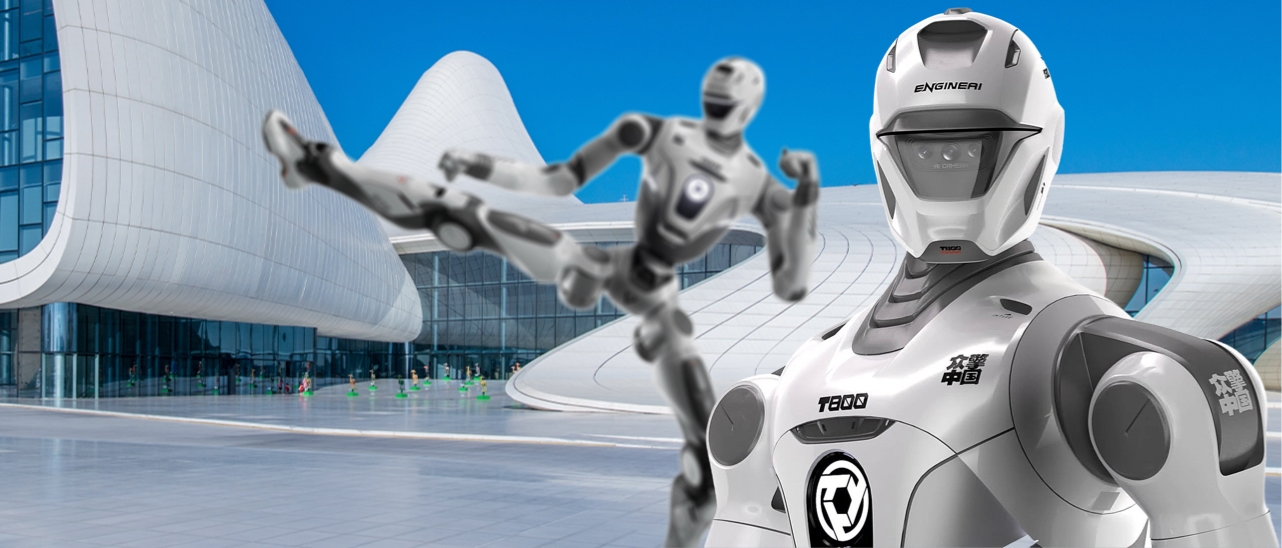
Dobot’s newer technology direction is visible in DOBOT Atom. Official product and case-study pages describe Atom as a humanoid robot platform with 41 degrees of freedom in the Atom Max version, 6-DoF hands, a 60 FPS Full HD vision system, and Intel RealSense D455 depth sensing. Dobot’s 2025 news release also described Atom as part of its global delivery push, showing that the company is now using its manufacturing and motion-control base to expand into humanoid robotics.
Applications and Use Cases
Dobot publicly positions its robots across three major use domains: manufacturing, education, and selected service or retail scenarios. In manufacturing, its cobots are promoted for production support in sectors such as automotive, semiconductor, healthcare, and consumer electronics. These are the environments where collaborative robot deployment can improve consistency, reduce labor intensity, and support flexible automation.
In education, Dobot has built a strong public identity around teaching and training. Its education page says the company works with teachers and professors to create courses and curricula based on automation technologies, and older event coverage around the Magician platform shows how early Dobot invested in education as a strategic market rather than a side segment.
The company also appears to be moving into more advanced robotics use cases. Humanoid robot announcements, embodied AI tooling, and consumer-oriented robotics branding under INFFNI indicate that Dobot sees long-term opportunity beyond traditional arm-based automation. This does not mean the humanoid line has displaced its cobot business. Instead, it suggests a layered strategy: retain core strength in collaborative robots while expanding into next-generation robotics platforms.
Advantages / Benefits
One of Dobot’s biggest strengths is range. Few robotics brands publicly span desktop robot arms, industrial cobots, SCARA systems, education kits, and humanoid robots under one umbrella. That breadth can be attractive to distributors, schools, automation integrators, and manufacturers that want continuity across training and deployment.
Another advantage is global commercialization. Dobot’s official materials point to international branches and a large installed base, and the company says it has delivered over 100,000 cobots worldwide. That scale matters because robotics buyers often evaluate not only product specs, but also support reach, ecosystem maturity, and proof of real-world adoption.
A third advantage is the company’s balance between accessibility and industrial relevance. Dobot is unusual in having a credible education portfolio alongside industrial automation lines. That makes it easier for users to progress from learning robotics concepts on desktop platforms to deploying production-oriented cobots in real work environments.
FAQ Section
What is Dobot Robotics?
Dobot Robotics is a robotics company founded in 2015 in Shenzhen, China. It is known for collaborative robots, desktop robotic arms, education platforms, and, more recently, humanoid robotics.
How does Dobot Robotics work?
Dobot develops and sells robot platforms for manufacturing, education, and related automation scenarios. Its official materials say the company builds core technologies in-house, including drive-and-control systems, motion control, safety systems, and intelligent sensing.
Why is Dobot Robotics important?
Dobot is important because it helped popularize desktop robotic arms and later expanded into collaborative robots and broader automation solutions. Its public claim of more than 100,000 cobots deployed worldwide suggests it has become a significant global player in collaborative robotics.
What are the benefits of Dobot Robotics?
The main benefits are broad product coverage, global deployment, education-to-industry continuity, and a growing ecosystem of accessories, software, and automation tools. These qualities make Dobot relevant to manufacturers, schools, labs, and system integrators.
What products does Dobot Robotics make?
Dobot publicly lists product families including CRA, CRAS, CR, CRS, MG400, M1 Pro, Nova, and Magician, plus newer humanoid products such as DOBOT Atom.
Summary
Dobot Robotics is a Shenzhen-founded robotics company that built its reputation on desktop robotic arms and later expanded into collaborative robots, industrial automation, and education platforms. Its current public portfolio shows a company with broad product coverage, international reach, and growing ambitions in humanoid robotics. For readers searching for a factual overview of Dobot Robotics, the clearest picture is that of a mature automation brand evolving from accessible robot arms into a much wider robotics ecosystem.