Warehouse Humanoid Robots
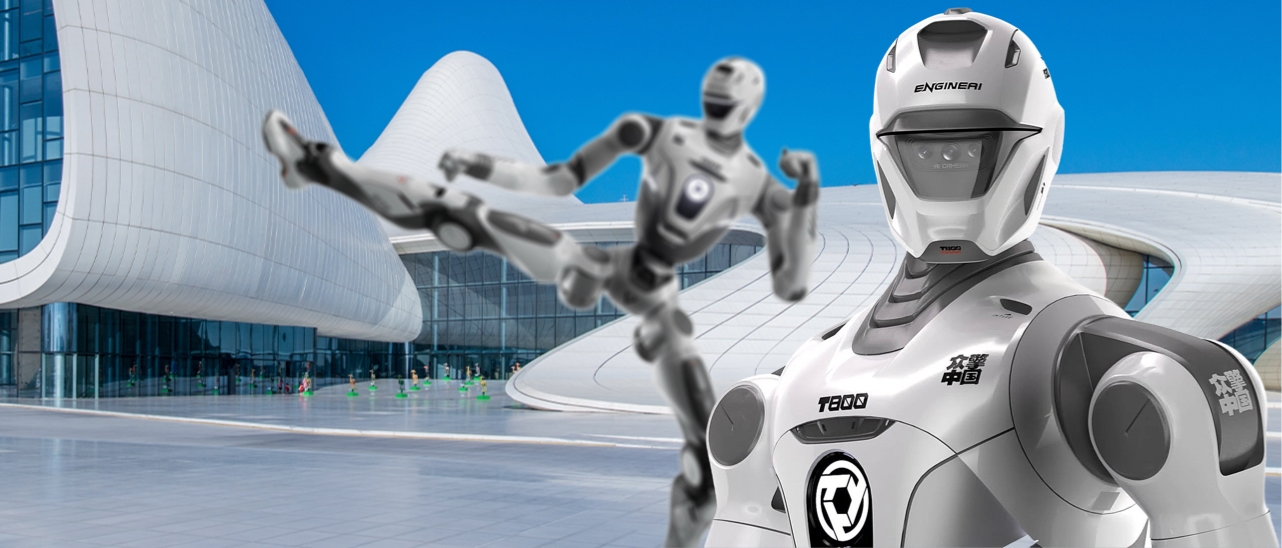
Warehouse humanoid robots are bipedal or wheeled human-form robots designed to perform tote handling, trailer unloading, sorting, and machine tending in facilities built for people. This guide covers how warehouse humanoids work, leading models, and what logistics operators should know before buying one.
Warehouse Humanoid Robots
Introduction / Overview
Warehouse humanoid robots are human-form robots — bipedal or wheeled, with two arms and human-like proportions — designed to perform material handling tasks inside warehouses, distribution centers, and factories. They represent the newest and fastest-evolving category of warehouse automation, distinguished by a single defining idea: rather than redesigning facilities around robots, humanoids are built to work in spaces designed for people.
Traditional warehouse automation — conveyors, autonomous mobile robots (AMRs), goods-to-person systems — excels at structured, repetitive flows. But an estimated majority of warehouse labor remains in semi-structured tasks: lifting totes between racks and conveyors, unloading floor-stacked trailers, sorting irregular items, and tending machines. These tasks occur at human heights, involve human-scale objects, and change from hour to hour. Warehouse humanoid robots target exactly this gap.
Leading platforms entering logistics environments include the UBTECH Walker S series, deployed in automotive and electronics plants; the AgiBot A2 family, including wheeled variants suited to warehouse floors; and developer platforms such as the Unitree G1 and H1, used by integrators and researchers building logistics applications. The category is expanding rapidly, with analysts projecting warehouse and manufacturing to be the first large-scale commercial home for humanoid robotics through the late 2020s.
Design and Features
Human-Form Factor
The humanoid design is not aesthetic — it is functional compatibility with existing infrastructure:
- Human reach envelope — arms that access shelving, conveyors, workstations, and cart handles at the heights they were built for.
- Bipedal or wheeled mobility — legs handle steps, ramps, dock plates, and cluttered floors; wheeled humanoid variants trade terrain capability for longer runtime and stability on flat warehouse floors.
- Two-armed manipulation — coordinated dual-arm handling for totes, boxes, and irregular items that single-arm robots struggle with.
Dexterous End Effectors
Warehouse humanoids use interchangeable hands: parallel grippers for boxes and totes, suction arrays for smooth cartons, and multi-fingered dexterous hands for mixed-SKU picking. This flexibility lets one robot move between tasks that would otherwise require separate dedicated machines.
AI-Driven Task Learning
Unlike traditional automation programmed for one motion, modern warehouse humanoids learn tasks through demonstration, simulation training, and foundation models for manipulation. Reassigning a humanoid from tote transfer to machine tending is increasingly a software change, not an engineering project.
Safety Systems
Deployment alongside human workers requires 360° perception, speed-and-separation monitoring, compliant joints that yield on contact, and emergency-stop behavior consistent with industrial safety standards for collaborative operation.
Technology and Specifications
Typical Specifications
Current warehouse humanoid platforms typically stand 1.3–1.8 m tall, weigh 40–90 kg, carry payloads of 5–20 kg per arm, and operate 2–6 hours per charge, with battery-swap and autonomous docking designs extending fleet uptime across shifts. Perception stacks combine LiDAR, stereo depth cameras, and IMUs; onboard AI computers handle real-time balance, navigation, and manipulation planning.
Fleet and Systems Integration
Warehouse humanoids integrate with the same software layer as other automation: task allocation through warehouse execution systems (WES), status reporting to WMS/ERP platforms, and fleet dashboards for monitoring, charging, and exception handling. Platforms with secondary development support (open SDKs and APIs) allow integrators to build facility-specific behaviors — a key differentiator when comparing models.
Humanoid vs. AMR: Complementary, Not Competing
A frequent misconception is that humanoids replace AMRs. In practice they occupy different layers: AMRs move goods horizontally between zones at high efficiency, while humanoids perform the vertical, dexterous transfer work at each end — picking totes off racks, loading conveyor infeeds, unloading trailers. Mature automation roadmaps increasingly combine both.
Applications and Use Cases
Tote and Case Handling
The leading early application: transferring totes between racking, carts, and conveyor systems — repetitive, ergonomically punishing work with chronic labor turnover.
Trailer and Container Unloading
Floor-stacked trailer unloading is among the hardest warehouse jobs to staff. Humanoids handle the confined space, variable box sizes, and repetitive lifting that make this task a natural automation priority.
Sortation Support
Humanoids induct parcels onto sorters, handle non-conveyables, and manage exception items that automated sortation rejects — the irregular remainder that previously always required people.
Machine Tending and Kitting
In manufacturing-adjacent logistics, humanoids load and unload machines, assemble kits for production lines, and move work-in-progress between stations — tasks proven in early UBTECH Walker S deployments in automotive plants.
Returns Processing
E-commerce returns involve unpredictable items in unpredictable condition — precisely the unstructured handling where human-form flexibility outperforms fixed automation.
Advantages / Benefits
- Zero facility redesign — humanoids deploy into existing racking, conveyors, and workstations, avoiding the capital cost and downtime of infrastructure projects.
- Task flexibility — one platform retasks across tote handling, sorting, and tending as daily demand shifts, unlike single-purpose machines.
- Labor gap coverage — humanoids absorb the high-turnover, injury-prone roles that are hardest to staff in tight labor markets.
- Ergonomic relief — automating repetitive lifting directly reduces the musculoskeletal injuries that dominate warehouse incident statistics.
- Scalable adoption — operators can pilot a single unit and scale gradually, in contrast to all-or-nothing fixed automation.
- Future-proof software — capabilities improve through AI model updates, meaning the same hardware grows more capable over its service life.
For logistics operators researching where to buy a warehouse humanoid robot, or comparing warehouse humanoid robot prices and costs against ongoing labor spend, the evaluation should weigh payload, runtime, SDK openness, safety certification, and supplier integration support — factors that matter as much as the headline hardware.
FAQ
What are warehouse humanoid robots?
Warehouse humanoid robots are human-form robots with two arms and bipedal or wheeled mobility, designed to perform tote handling, trailer unloading, sorting, and machine tending in warehouses built for human workers — without facility modification.
How do warehouse humanoid robots work?
They combine LiDAR and camera-based perception, AI manipulation models, and whole-body motion control to navigate facilities, identify objects, and handle items with two arms. Tasks are assigned through warehouse execution software, and new behaviors are added through training rather than reprogramming.
Why are warehouse humanoid robots important?
They automate the semi-structured handling tasks — lifting, unloading, sorting irregular items — that conveyors and AMRs cannot reach, addressing the largest remaining share of manual warehouse labor amid chronic staffing shortages.
What are the benefits of warehouse humanoid robots?
Key benefits include deployment without facility redesign, flexible retasking across multiple jobs, relief from injury-prone repetitive lifting, gradual pilot-to-fleet scaling, and continuous capability improvement through software updates.
Which humanoid robots are used in warehouses?
Platforms entering warehouse and industrial use include the UBTECH Walker S series, AgiBot A2 family (including wheeled variants), and developer platforms such as the Unitree G1 and H1 used by integrators building logistics applications.
How much does a warehouse humanoid robot cost?
Costs vary by platform, configuration, end effectors, and integration scope. Total cost of ownership should be compared against fully loaded labor cost for the target task; contact a supplier for a current quotation and deployment assessment.
Do humanoid robots replace warehouse AMRs?
No — they complement them. AMRs efficiently move goods between zones, while humanoids perform the dexterous transfer work at each end, such as picking totes from racks or loading conveyors. Combined deployments are increasingly the standard roadmap.
Summary
Warehouse humanoid robots mark the next phase of logistics automation: machines flexible enough to take on the semi-structured, human-scale handling work that conveyors and mobile robots leave behind. With platforms such as the UBTECH Walker S, AgiBot A2, and Unitree G1 moving from pilots into production environments, operators can now automate tote handling, trailer unloading, and sortation support without redesigning their facilities. For businesses looking to buy a warehouse humanoid robot, compare costs against persistent labor shortages, or plan a phased pilot, understanding the capabilities and integration factors in this guide is the essential starting point for what is set to become the defining warehouse technology of the decade.