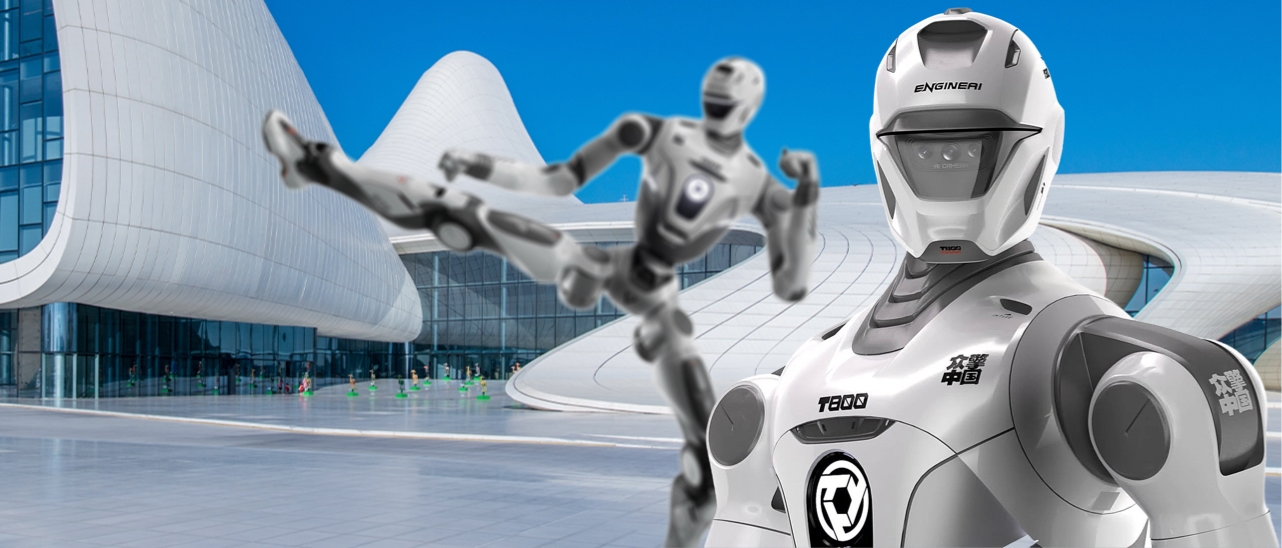
Construction robots are automated or semi-automated machines used to perform tasks in building, civil engineering, demolition, site layout, material placement, and related construction workflows. The term covers several categories of equipment, including robotic layout systems, remote-controlled demolition robots, autonomous or semi-autonomous heavy equipment, and robotic 3D construction printers. Industry sources such as the International Federation of Robotics describe construction and demolition robots as part of the professional service robotics segment, with use cases that include documentation, transport, drilling, welding, 3D printing, and other field tasks.

Construction Robots

Construction Robots: Types, Technology, Applications, and the Future of Automated Building

Construction robots are automated or semi-automated machines designed to perform physical tasks on building sites, civil engineering projects, and infrastructure works. These tasks span the full lifecycle of a construction project, from site preparation and earthmoving through structural assembly, finishing, inspection, and demolition. Unlike the factory floor, where robotic automation has been standard practice for decades, the construction site presents a uniquely challenging environment: unstructured, outdoors, constantly changing, and subject to weather, regulatory requirements, and the complexities of working alongside human crews.

Despite these challenges, construction robotics has advanced significantly since the early 2010s. Labor shortages in the construction industry, rising material and labor costs, a persistent record of project delays and cost overruns, and an urgent need to improve safety outcomes have together created strong commercial pressure to automate wherever possible. The global construction robotics market was valued at around $166 million in 2022 and is forecast to reach over $500 million by 2030, driven by investment from both established equipment manufacturers and technology startups.

Construction robots today include machines that lay bricks, pour and finish concrete, weld structural steel, drill and fasten, demolish existing structures, print full-scale buildings from digital models, and inspect completed work with millimeter precision. The technology is genuinely transforming how buildings and infrastructure are conceived, planned, and delivered.

Types of Construction Robots

Bricklaying and Masonry Robots

Bricklaying robots automate one of the most physically demanding and skill-dependent tasks in residential and commercial construction. These machines combine a robotic arm with a mortar dispensing system and a supply mechanism for bricks or blocks, laying courses of masonry according to a digital building plan loaded into the system.

The SAM100 (Semi-Automated Mason), developed by Construction Robotics in the United States, is among the most commercially deployed bricklaying robots. It can lay between 300 and 500 bricks per hour, compared to roughly 300 to 500 per day for a skilled human mason. The Hadrian X, developed by Australian firm FBR Ltd, takes a different approach, using a truck-mounted robotic arm capable of laying 1,000 blocks per hour on-site from a detailed 3D model.

Concrete Robots

Robotic systems for concrete work address several distinct phases of the process. Automated concrete pump systems control the placement of poured concrete with greater consistency than manual methods. Robotic screeding and finishing machines, such as those produced by Somero Enterprises, use laser-guided leveling to produce flat, accurately graded concrete slabs across large floor areas with minimal human involvement.

In tunnel construction, shotcrete robots apply reinforced concrete spray lining to tunnel walls and ceilings with greater uniformity and safety than manual application, removing workers from the dangerous immediate vicinity of freshly excavated rock.

3D Construction Printing Robots

Additive manufacturing, or 3D printing, applied at the scale of full buildings and structures is one of the most discussed frontiers in construction technology. Large-scale 3D printing systems for construction typically use a gantry-mounted or robotic-arm-mounted extrusion head to deposit layers of concrete, mortar, or polymer composite materials according to a digital design file.

Completed projects using this technology include residential homes, schools, emergency shelters, and small commercial buildings in the United States, Europe, China, and the Middle East. ICON, based in Texas, has used its Vulcan construction system to print multi-unit housing developments. COBOD, headquartered in Denmark, has supplied its BOD2 printer for projects across three continents. The technology is particularly well suited to the production of complex curved geometries that would be expensive or impractical to build using conventional forming methods.

Demolition Robots

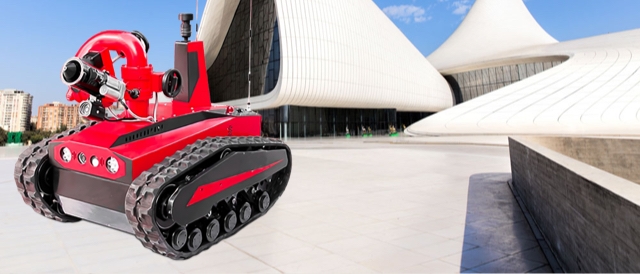
Remote-controlled demolition robots are compact, tracked machines equipped with interchangeable tool attachments including hydraulic breakers, crushers, scaler arms, and bucket attachments. They are designed to work in confined, hazardous, or structurally compromised environments where it would be unsafe or impractical to deploy full-size demolition equipment or human workers.

The Swedish manufacturer Husqvarna, through its Demolition Robots division, and the Norwegian company Brokk are the dominant global suppliers in this category. Their machines are used extensively in tunneling, bridge demolition, industrial plant decommissioning, nuclear facility dismantling, and fire-damaged building clearance. Remote operation, either by an operator standing nearby or via wireless control from a safe distance, is standard across the category.

Welding and Fabrication Robots

Robotic welding systems have long been standard in off-site steel fabrication shops, but mobile welding robots capable of operating on the construction site itself are a more recent development. These systems use vision-guided robotic arms to locate weld joints, select appropriate parameters, and execute welds to a consistent quality standard, reducing the reliance on skilled welders who are in short supply in many construction markets.

Canvas, a San Francisco-based startup, has developed a robotic system for drywall finishing that autonomously applies joint compound and sands interior wall surfaces, addressing a skilled trade that faces significant workforce shortages across North America and Europe.

Inspection and Survey Robots

Autonomous drones and ground-based robots equipped with cameras, LiDAR scanners, and thermal imaging sensors are used extensively for construction site inspection and progress monitoring. These platforms capture detailed spatial data that is processed into point clouds, orthophotos, and building information models, enabling project managers to compare as-built conditions against design intent on a frequent, systematic basis.

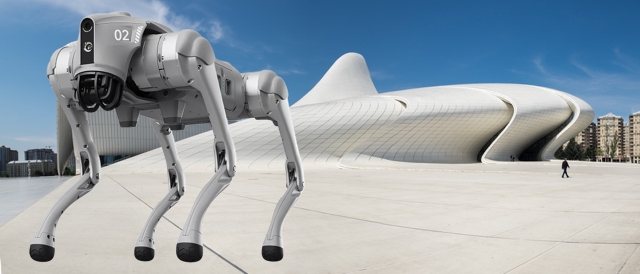
Boston Dynamics' Spot, a quadruped robot, has been widely adopted for construction site inspection, capable of accessing areas that are difficult for wheeled platforms and navigating stairs, debris fields, and uneven terrain. Drones from DJI, Skydio, and specialist providers are used on virtually every large construction project for aerial survey, photogrammetric mapping, and safety monitoring.

Technology and Specifications

Navigation and Positioning

Construction robots must operate in environments that are inherently unstructured and that change significantly from day to day as work progresses. Navigation solutions include GPS and GNSS for outdoor positioning, total station integration for precise surveying-grade location data, and SLAM-based systems for indoor or GPS-denied environments.

Building information modeling (BIM) plays an increasingly important role in construction robotics, providing the digital spatial context within which robots plan and execute tasks. A robot programmed to lay bricks, print concrete, or weld steel needs an accurate, up-to-date digital model of the structure it is building, and BIM platforms such as Autodesk Revit and Trimble Connect are becoming standard integration points for robotic construction systems.

End Effectors and Tool Attachments

The wide variety of tasks performed on a construction site requires correspondingly diverse tooling. Construction robots use interchangeable end effectors adapted for specific tasks: trowels and screeding blades for concrete finishing, extrusion nozzles for 3D printing, hydraulic hammers for demolition, grippers and suction cups for material handling, and welding torches for structural steel work. Quick-change tool systems allow a single robotic arm to be reconfigured for multiple tasks within a single shift.

Autonomy and Human Collaboration

Few construction robots are fully autonomous in the sense of operating without any human supervision. Most current platforms fall into the category of semi-autonomous systems, where the robot executes defined tasks within a structured workflow while a human supervisor monitors progress, manages exceptions, and handles situations that fall outside the robot's programmed capabilities. This model reflects the reality that construction sites involve a level of environmental variability, regulatory accountability, and craftsmanship judgment that current AI systems cannot fully replicate.

Research into higher levels of construction robot autonomy is active at institutions including ETH Zurich, where the Digital Building Technologies group has demonstrated robots capable of assembling complex architectural structures from the ground up based solely on digital fabrication files.

Power and Durability

Construction robots must withstand exposure to dust, water, vibration, and extreme temperatures. Industrial-grade IP ratings for dust and water ingress protection are standard for equipment intended for site use. Power is supplied by onboard diesel generators, lithium-ion battery packs, or in the case of tethered systems, direct electrical supply from site power infrastructure. Battery-powered platforms are increasingly favored as battery energy density improves, offering reduced noise, zero on-site emissions, and lower running costs.

Applications and Use Cases

Residential and Commercial Construction

Bricklaying robots, concrete finishing systems, and 3D printing platforms are actively used in residential housing construction and commercial building projects across Australia, the United States, the Netherlands, and China. Their adoption has been most rapid in markets facing acute skilled labor shortages, where contractors have the strongest incentive to automate repeatable, labor-intensive tasks.

Infrastructure and Civil Engineering

Robotic systems are used in road construction, bridge building, rail installation, and tunneling. Automated asphalt paving machines, robotic rail welding systems, and tunnel construction robots all represent established and growing application areas. The degree of precision achievable with robotically controlled equipment is particularly valued in infrastructure work, where dimensional tolerances are tight and rework is expensive.

Hazardous and Disaster Response

Demolition robots and specialized ground vehicles are used in post-disaster assessment and clearance, nuclear facility work, underwater construction, and environments where radiation, toxic materials, or structural instability make human presence unacceptably dangerous. The ability to perform remotely controlled or autonomous operations in these conditions has made construction robots indispensable tools for emergency response agencies and specialist contractors.

Maintenance and Renovation

Beyond new construction, robots are used for the maintenance and renovation of existing infrastructure. Facade inspection drones, robotic pipe inspection systems, bridge painting robots, and automated scanning platforms for heritage building documentation are all active application areas. As built infrastructure ages in many developed economies, the maintenance workload is growing and robotic solutions are increasingly cost-competitive with manual approaches.

Advantages and Benefits

The adoption of construction robots is justified by a range of benefits that address the industry's most persistent challenges:

  • Productivity gains: Robotic bricklayers, concrete finishers, and 3D printers consistently outpace human labor on repetitive high-volume tasks, compressing project timelines.
  • Improved safety: Removing workers from hazardous tasks such as demolition, working at height, and confined-space finishing reduces the frequency and severity of construction site injuries.
  • Quality consistency: Robots do not tire and do not deviate from their programmed parameters, resulting in more dimensionally consistent work with fewer defects requiring rework.
  • Labor flexibility: Robotic systems reduce dependence on skilled tradespeople who are in short supply, allowing projects to proceed on schedule even in tight labor markets.
  • Reduced material waste: Precise dispensing and placement systems minimize over-application of mortar, concrete, and finishing compounds, reducing material costs and environmental impact.
  • Data and documentation: Inspection robots and survey drones generate continuous, objective records of construction progress, supporting project management, dispute resolution, and handover documentation.

Comparison: Construction Robots vs. Traditional Methods

Dimension Construction Robots Traditional Manual Methods
Task speed (repetitive work) Significantly faster Limited by human pace and fatigue
Quality consistency Very high Variable, dependent on skill level
Safety in hazardous areas Excellent (remote/autonomous) High risk
Flexibility for complex work Moderate Very high
Upfront investment High Low
Dependence on skilled labor Low High
Weather sensitivity Moderate High

Traditional construction methods retain clear advantages for highly bespoke, complex, or judgment-intensive work. A skilled carpenter, stonemason, or ironworker brings a level of adaptive problem-solving that current robotic systems cannot match. The strongest deployments of construction robotics combine robotic efficiency on repetitive, defined tasks with human expertise for coordination, quality oversight, and the unpredictable challenges that every construction project presents.

Pricing and Availability

Construction robot pricing varies considerably by category and capability.

Remote-controlled demolition robots from manufacturers such as Brokk and Husqvarna are available for purchase from approximately $80,000 to $400,000 depending on size and tooling. Rental through specialist contractors is also widely available for project-based use.

Bricklaying and masonry robots such as the SAM100 are typically available on a lease or contract basis rather than outright sale, with project costs dependent on duration and scale. Indicative day rates for operated machine hire are in the range of $2,500 to $5,000.

3D construction printing systems from manufacturers including ICON and COBOD are available for purchase in the range of $400,000 to over $1 million for full gantry-based systems. ICON also offers construction-as-a-service arrangements for developers commissioning printed structures.

Inspection drones and ground robots represent the most accessible entry point, with commercial drone platforms available from $1,500 to $20,000 and Boston Dynamics' Spot available for purchase at approximately $75,000 or on a leasing basis.

Leading manufacturers and suppliers active in the construction robotics market include Brokk, Husqvarna Demolition Robots, FBR Ltd (Hadrian X), Construction Robotics (SAM100), ICON, COBOD, Canvas, Boston Dynamics, Hilti (jaibot), Trimble Robotics, and Dusty Robotics.

FAQ: Construction Robots

What is a construction robot?

A construction robot is an automated or semi-automated machine designed to perform physical tasks on a building site or civil engineering project. Construction robots carry out work including bricklaying, concrete pouring and finishing, structural welding, demolition, site inspection, and 3D printing of building structures. They range from compact remote-controlled demolition machines to large gantry-based systems capable of printing entire buildings from digital design files.

How does a construction robot work?

Construction robots operate using a combination of digital design input, positioning and navigation technology, and purpose-built tooling. A bricklaying robot, for example, reads a digital building plan, uses sensors to locate its position on the site, and uses a robotic arm to apply mortar and place bricks according to the specified pattern. Inspection robots navigate a site autonomously using SLAM and GPS, capturing imagery and spatial data that is processed into digital models for comparison against design intent.

Why are construction robots important?

Construction robots address some of the most significant challenges facing the global construction industry: persistent skilled labor shortages, high rates of workplace injury, chronic project delays and cost overruns, and growing pressure to reduce the environmental impact of building activity. By automating repetitive, hazardous, or precision-intensive tasks, construction robots improve productivity, consistency, and safety while reducing dependence on a workforce that is becoming increasingly difficult to recruit and retain.

Where can I buy a construction robot?

Construction robots are sold directly by manufacturers and through specialist equipment distributors. Demolition robots from Brokk and Husqvarna are available through authorized dealers in most major construction markets. Inspection drones are available from commercial retailers and specialist survey equipment suppliers. Bricklaying and 3D printing systems are typically procured directly from manufacturers, often on a project partnership or leasing basis rather than outright purchase. Contacting manufacturers directly or working with a technology-focused construction consultant is advisable for larger or more complex deployments.

What are the benefits of construction robots?

The primary benefits of construction robots include higher productivity on repetitive tasks, improved dimensional consistency and build quality, significantly better safety outcomes for workers, reduced reliance on scarce skilled tradespeople, lower material waste through precise dispensing and placement, and continuous digital documentation of construction progress. For contractors working in competitive or safety-sensitive environments, these benefits translate directly into lower project costs, faster delivery, and reduced liability exposure.

What types of tasks can construction robots perform?

Construction robots are currently used for bricklaying and block laying, concrete screeding and finishing, shotcrete application in tunnel construction, structural steel welding, drywall finishing, site survey and inspection, demolition and concrete breaking, rebar tying, drilling and fastening, facade inspection, and full-scale 3D printing of building structures. The range of tasks is expanding as sensor technology, AI, and robotic hardware continue to improve.

Are construction robots replacing human workers?

Construction robots are primarily augmenting rather than replacing human workforces. Most platforms are designed to handle specific, well-defined, repetitive tasks while human workers continue to manage coordination, quality oversight, complex problem-solving, and the wide range of tasks that require skilled judgment. In markets with acute labor shortages, robots allow projects to proceed that would otherwise be delayed by unavailable tradespeople. The broader consensus among industry analysts is that construction robotics will reshape the composition of site crews rather than eliminate the need for human workers entirely.

Summary

Construction robots represent a genuinely transformative development for an industry that has historically lagged behind manufacturing and logistics in the adoption of automation. From remote-controlled demolition machines operating in environments too dangerous for human workers to AI-guided 3D printing systems capable of fabricating entire building structures overnight, the technology addresses real and pressing challenges that the construction sector cannot solve through workforce recruitment and traditional methods alone. As hardware costs fall, software capabilities advance, and the industry's experience with robotic systems grows, construction robotics is transitioning from a niche innovation to a mainstream operational tool. For contractors, developers, and infrastructure owners, understanding and engaging with this technology is becoming an essential part of remaining competitive in a rapidly changing industry.

Questions

Your Question: