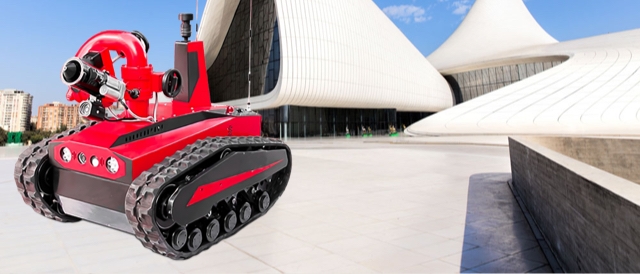
Warehouse robots are automated machines used to move, store, sort, pick, and transport goods inside warehouses, fulfillment centers, and distribution facilities. They are now a central part of modern warehouse automation, especially in e-commerce, retail logistics, third-party logistics, manufacturing supply chains, and high-volume order fulfillment. In practical terms, the phrase warehouse robots covers several categories of equipment, including autonomous mobile robots, automated guided vehicles, robotic picking arms, pallet-handling robots, and automated storage and retrieval systems.

Warehouse Robots

4 Items

Warehouse Robots: Types, Technology, Applications, and the Future of Automated Fulfillment

Warehouse robots are automated machines designed to perform logistical tasks within storage, distribution, and fulfillment facilities. These tasks include transporting goods across warehouse floors, picking individual items from shelving systems, sorting packages by destination, managing inventory, and loading or unloading pallets. The deployment of robots in warehouse environments has grown at a rapid pace over the past two decades, driven by the expansion of e-commerce, persistent labor shortages in the logistics sector, and steady reductions in the cost of robotic hardware and software.

The global warehouse robotics market was valued at approximately $6.4 billion in 2023 and is projected to exceed $20 billion by 2030, according to industry analysts. This growth reflects a broad shift in how distribution networks are designed and operated, with automation no longer viewed as an optional enhancement but as a core operational requirement for facilities handling high volumes of orders.

Modern warehouse robots range in complexity from simple conveyor-based sorting systems to sophisticated, AI-driven autonomous platforms capable of navigating dynamic environments, collaborating with human workers, and making real-time operational decisions. Understanding the different types of warehouse robots, how they work, and where they are best applied is essential for any business evaluating automation for its supply chain operations.

Types of Warehouse Robots

Autonomous Mobile Robots (AMRs)

Autonomous mobile robots, commonly referred to as AMRs, are self-navigating platforms that move freely through warehouse spaces without fixed tracks or guides. They use onboard sensors, cameras, and mapping software to understand their environment, plan routes, and avoid obstacles including human workers and other machines. AMRs are widely used for transporting goods between storage locations and packing or dispatch stations, a workflow commonly known as goods-to-person fulfillment.

Unlike earlier automated systems, AMRs do not require significant infrastructure modification. They can be deployed in existing facilities and reprogrammed relatively quickly as warehouse layouts or workflows change. This flexibility has made them one of the fastest-growing segments of the warehouse robotics market.

Automated Guided Vehicles (AGVs)

Automated guided vehicles are wheeled transport robots that follow fixed paths defined by magnetic strips, embedded wires, painted lines, or laser guidance systems. AGVs have been in use in industrial settings since the 1950s and remain a reliable and cost-effective choice for repetitive, high-volume transport tasks along predictable routes, such as moving pallets from receiving docks to storage areas.

Because AGVs operate on predetermined paths, they are less flexible than AMRs but are well suited to structured environments where workflows are stable and predictable. They are commonly found in automotive manufacturing plants, food and beverage distribution centers, and large-scale retail warehouses.

Robotic Picking Arms

Robotic picking arms are fixed or mobile robotic manipulators designed to grasp and move individual items from shelving, bins, or conveyor systems. These robots address one of the most labor-intensive aspects of warehouse operations: order picking, which accounts for an estimated 55 to 65 percent of total warehouse operating costs in many facilities.

Modern picking robots use a combination of 3D vision systems and machine learning algorithms to identify, locate, and grasp items of varying shapes, sizes, and packaging types. Suction cup end effectors are common for smooth-surfaced goods, while multi-fingered grippers handle irregular items. The speed and versatility of robotic picking systems have improved substantially in recent years, with leading platforms capable of processing 600 to 1,000 picks per hour.

Automated Storage and Retrieval Systems (AS/RS)

Automated storage and retrieval systems are large-scale infrastructure solutions that combine high-density shelving, vertical lift systems, and robotic shuttles or cranes to store and retrieve items with minimal human involvement. AS/RS installations maximize storage density by utilizing vertical space that would otherwise be inaccessible to human workers and conventional forklifts.

These systems are particularly well suited to facilities with high SKU counts, temperature-controlled storage requirements, or limited floor space. Pharmaceutical distribution, cold chain logistics, and spare parts warehousing are sectors where AS/RS technology is especially prevalent.

Collaborative Robots (Cobots)

Collaborative robots, or cobots, are designed to operate safely alongside human workers without requiring physical barriers or safety cages. In warehouse settings, cobots typically assist with tasks such as palletizing, case packing, and label application, handling the repetitive physical elements of these jobs while human workers manage exceptions, quality checks, and tasks that require judgment.

Cobots are distinguished by built-in force-limiting technology that causes them to stop or slow immediately upon contact with a person, reducing injury risk. Their relatively low cost and ease of programming have made them popular among small and mid-size warehouse operators who require flexible automation without the capital investment of a full AS/RS installation.

Drone-Based Inventory Systems

Aerial drones equipped with barcode or RFID scanners are increasingly used for automated cycle counting, the process of periodically verifying that physical inventory levels match records in a warehouse management system. Drones can scan shelving units at heights unreachable by human workers, complete inventory audits in a fraction of the time required by manual methods, and operate during off-hours without disrupting daytime workflows. Gather AI, Corvus Robotics, and Verity are among the companies active in this segment.

Technology and Specifications

Navigation and Mapping

Simultaneous localization and mapping, commonly known as SLAM, is the foundational technology behind the navigational capability of most modern AMRs. SLAM algorithms allow a robot to build a map of its environment in real time while simultaneously tracking its own position within that map. This is achieved through continuous processing of data from LiDAR sensors, depth cameras, and wheel odometry systems.

More recent platforms supplement SLAM with computer vision and deep learning models that allow the robot to recognize and respond to dynamic elements in its environment, such as a worker stepping into an aisle or a pallet placed outside its designated location.

Warehouse Management System Integration

Warehouse robots do not operate in isolation. They function as components within a broader technology ecosystem that typically includes a warehouse management system (WMS), an order management system (OMS), and a robot fleet management platform. Integration between these systems enables coordinated task assignment, real-time traffic management across multi-robot deployments, and performance monitoring.

Application programming interfaces (APIs) and standardized communication protocols such as VDA 5050 are increasingly used to allow robots from different manufacturers to operate within the same facility and be managed through a single interface.

Artificial Intelligence and Machine Learning

AI and machine learning are embedded throughout modern warehouse robotics in several distinct ways. Vision systems use convolutional neural networks to identify and classify items for picking. Route planning algorithms use reinforcement learning to optimize travel paths across a facility as conditions change throughout a shift. Predictive maintenance systems analyze sensor data from robot hardware to identify components approaching failure before a breakdown occurs.

Natural language and voice interfaces are also beginning to appear in some platforms, allowing supervisors to query robot status, reassign tasks, or generate performance reports through conversational commands.

Battery and Power Systems

Most warehouse robots operate on lithium-ion battery packs, with operating times between charges ranging from four to ten hours depending on the platform and task intensity. Automated charging infrastructure allows robots to return to charging stations during slow periods or between tasks, maintaining near-continuous uptime. Opportunity charging, in which robots charge briefly and frequently rather than in dedicated long sessions, is a common strategy for maximizing fleet availability.

Applications and Use Cases

E-Commerce Fulfillment

The explosive growth of e-commerce has been both a primary driver and a primary beneficiary of warehouse robotics. Companies such as Amazon, Alibaba, and Zalando have invested heavily in robotic fulfillment infrastructure capable of processing tens of thousands of individual orders per day. Amazon's Kiva robotic system, now rebranded as Amazon Robotics, is one of the most widely deployed warehouse robot platforms in the world, with over 750,000 units in operation across Amazon's global network as of 2024.

Cold Chain and Pharmaceutical Logistics

Temperature-controlled storage environments present particular challenges for human workers and are well suited to robotic automation. AS/RS systems and AMRs deployed in refrigerated or frozen facilities operate effectively in temperatures that would require human workers to take frequent warming breaks, improving both productivity and working conditions.

Pharmaceutical distribution adds the additional requirement of precise inventory tracking and chain-of-custody documentation, both of which are supported by the sensor and logging systems built into modern warehouse robots.

Retail and Grocery Distribution

Large-scale grocery retailers including Kroger, Ocado, and Carrefour have invested in robotic fulfillment centers to handle online grocery orders. These facilities use a combination of AS/RS, picking robots, and conveyor systems to assemble orders with a speed and accuracy that would be difficult to achieve through manual methods. Ocado's highly automated Customer Fulfillment Centers, built around a grid-based robotic system, are widely cited as a benchmark for grocery automation technology.

Manufacturing and Automotive

In manufacturing environments, warehouse robots manage the storage and just-in-time delivery of components to production lines. AGVs and AMRs are used to transport parts from central stores to assembly stations, reducing the time production workers spend on material handling and improving the reliability of supply to the line.

Advantages and Benefits

The business case for warehouse robotics is supported by a range of well-documented operational benefits:

  • Productivity: Robotic systems can operate continuously across multiple shifts without fatigue, significantly increasing throughput relative to an equivalent human workforce.
  • Accuracy: Automated picking and scanning systems reduce order error rates, with leading platforms achieving accuracy levels above 99.9 percent.
  • Space utilization: AS/RS and high-density storage systems make productive use of vertical space, enabling facilities to store more inventory within the same footprint.
  • Worker safety: Automation removes human workers from the most physically demanding and injury-prone tasks in the warehouse, reducing musculoskeletal injuries and workplace accidents.
  • Scalability: Robotic systems can be scaled up or down by deploying additional units or adjusting fleet management software, allowing facilities to respond to seasonal demand fluctuations without proportional changes in headcount.
  • Data generation: Every robot interaction generates operational data that can be analyzed to identify bottlenecks, optimize workflows, and support evidence-based management decisions.

Comparison: Warehouse Robots vs. Manual Operations

Dimension Robotic Warehouse Manual Warehouse
Operating hours Up to 24/7 Limited by shift patterns
Pick accuracy 99.9%+ typical 97-99% typical
Labor cost (long-term) Lower after payback period Higher and subject to market rates
Flexibility Moderate (reprogrammable) High (human adaptability)
Upfront investment High Low
Injury risk Very low Moderate to high
Scalability High (add units) Limited by hiring pace

Manual operations retain advantages in environments with highly variable workflows, irregular item types, or low order volumes where the return on investment for automation is difficult to justify. Hybrid models, combining robotic systems with human workers for tasks requiring judgment and dexterity, are increasingly the norm in large-scale facilities.

Pricing and Availability

The cost of warehouse robots varies widely depending on type, capability, and scale of deployment.

Entry-level AMRs and cobots for small to mid-size operations are available from approximately $20,000 to $80,000 per unit. Robot-as-a-service (RaaS) models, in which operators pay a monthly subscription fee rather than purchasing outright, have made these platforms accessible to businesses with limited capital budgets, with monthly fees typically ranging from $1,500 to $4,000 per robot.

Mid-range picking and sorting systems tailored for established e-commerce or distribution operations typically involve total project costs in the range of $500,000 to $5 million, depending on facility size and system complexity.

Large-scale AS/RS installations and fully automated fulfillment centers involve capital expenditure in the range of $10 million to over $100 million. These projects are primarily undertaken by large retailers, third-party logistics providers, and manufacturers with high-volume, long-term distribution requirements.

FAQ: Warehouse Robots

What is a warehouse robot?

A warehouse robot is an automated machine designed to perform logistical tasks within a storage or distribution facility. Common warehouse robots include autonomous mobile robots (AMRs) that transport goods across warehouse floors, robotic picking arms that select and move individual items, automated guided vehicles (AGVs) that follow fixed routes, and drone-based systems used for inventory counting.

How does a warehouse robot work?

Warehouse robots use a combination of sensors, cameras, and software to navigate their environment and perform assigned tasks. Navigation is typically handled by SLAM algorithms that allow the robot to map its surroundings in real time. Task assignments are delivered by a warehouse management system or fleet management platform, which coordinates the activities of multiple robots to optimize throughput and minimize congestion. AI models assist with object recognition, route optimization, and predictive maintenance.

Why are warehouse robots important?

Warehouse robots address fundamental challenges in modern logistics: rising labor costs, difficulty in recruiting and retaining warehouse workers, growing order volumes driven by e-commerce, and increasing customer expectations for fast, accurate delivery. By automating high-volume, repetitive tasks, warehouse robots allow facilities to operate more efficiently, reduce error rates, improve worker safety, and scale their operations in response to demand.

Where can I buy a warehouse robot?

Warehouse robots are available directly from manufacturers and through authorized system integrators. Major vendors including Locus Robotics, Geek+, and Fetch Robotics sell through direct sales teams and regional distribution partners. For smaller operations, platforms such as Waypoint Robotics and several cobot manufacturers offer lower entry-point solutions through their own sales channels and reseller networks. Robot-as-a-service models are also available through several vendors, eliminating the need for outright purchase.

What are the benefits of warehouse robots?

The primary benefits of warehouse robots include higher throughput and productivity across all shifts, improved order picking accuracy, better use of available storage space, reduced physical strain and injury risk for human workers, easier scalability during peak demand periods, and continuous generation of operational data that supports ongoing process improvement.

How long does it take to implement warehouse robots?

Implementation timelines vary significantly by system type and facility complexity. A small AMR deployment in an existing facility can be operational within four to eight weeks. A full AS/RS installation or large-scale automated fulfillment center project typically requires twelve to thirty-six months from initial design through commissioning. Phased deployment approaches, in which automation is introduced gradually, are common and allow facilities to realize early returns while managing integration complexity.

What industries use warehouse robots?

Warehouse robots are used across a broad range of industries. E-commerce and retail distribution are the largest adopters by volume. Other significant sectors include pharmaceutical and healthcare logistics, food and beverage distribution, automotive parts management, consumer electronics fulfillment, and third-party logistics providers. Cold chain and temperature-controlled warehousing is a growing application area, as robotic systems are well suited to environments that are difficult or uncomfortable for human workers.

Summary

Warehouse robots have become a defining technology of the modern logistics industry, reshaping how goods are stored, retrieved, and dispatched across global supply chains. From entry-level AMRs that navigate existing warehouse floors to billion-dollar automated fulfillment centers processing millions of orders per week, the range of available solutions now covers virtually every scale and type of warehousing operation. As artificial intelligence, battery technology, and robotic hardware continue to improve, the cost and complexity of deployment will continue to fall, bringing meaningful automation within reach of an ever-wider range of businesses. For logistics operators, supply chain planners, and technology buyers, understanding warehouse robotics is no longer a specialized interest but an operational necessity.

Questions

Your Question: