Explore the world of martial arts robots — how they work, their design, real-world applications, top models, pricing, and what makes them a breakthrough in robotics.

Martial Arts Robots

3 Items

Martial Arts Robots: Technology, Design, Applications, and the Future of Robotic Combat

Martial arts robots are a category of autonomous or semi-autonomous machines engineered to replicate, simulate, or engage in the physical disciplines of human combat sports and traditional martial arts. Drawing from fields as diverse as biomechanics, artificial intelligence, mechanical engineering, and sports science, these robots are designed to perform striking, blocking, grappling, and evasive movements with a degree of precision that mirrors trained human practitioners.

The development of martial arts robots sits at a compelling intersection of robotics research and cultural fascination with combat sports. From academic laboratories exploring the limits of machine movement to commercial products serving military training facilities and entertainment venues, the field has grown substantially since the early 2000s. Today, martial arts robots appear in professional competition arenas, university research programs, theme parks, rehabilitation centers, and the living rooms of hobbyists worldwide.

Interest in this technology has accelerated in recent years as advances in machine learning, sensor miniaturization, and actuator design have made it possible to build robots capable of reading an opponent's posture, predicting incoming strikes, and generating counterattacks in real time. What was once the domain of science fiction is now a well-funded engineering discipline with measurable commercial applications.

Design and Features

Physical Structure and Form Factor

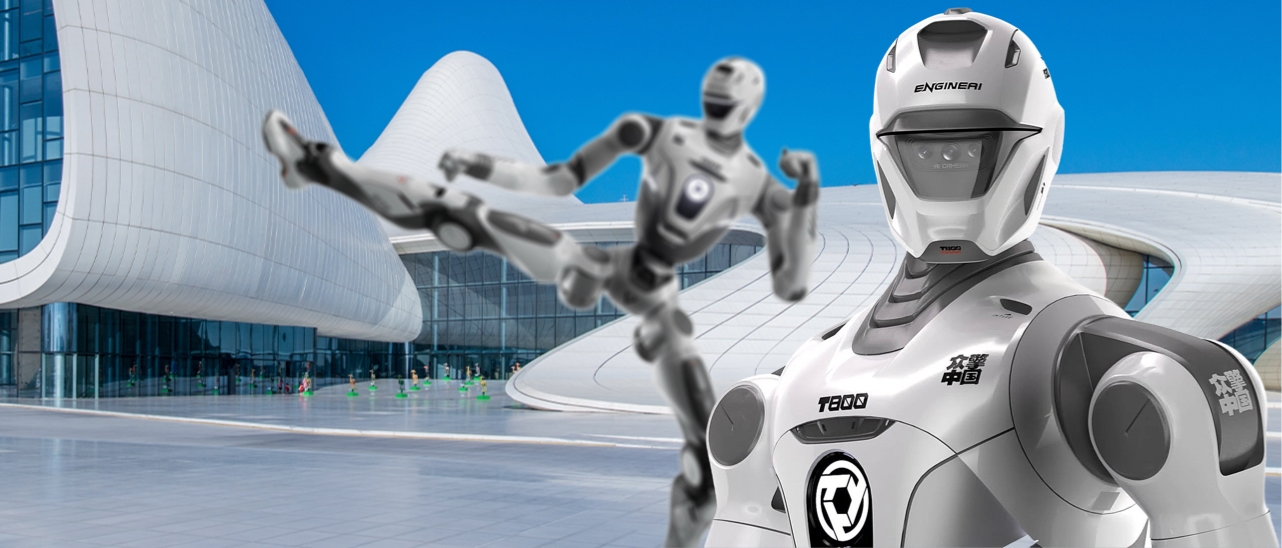
Most martial arts robots fall into one of two broad physical categories: humanoid platforms and purpose-built combat chassis. Humanoid robots are designed to approximate the proportions and range of motion of the human body, with articulated limbs, a torso, and a head unit. This form factor is preferred for training applications where the robot must simulate a realistic sparring opponent. Purpose-built combat robots, by contrast, prioritize durability, low center of gravity, and structural resilience over human likeness, making them better suited for competitive combat events.

Key design features common across both categories include:

  • Multi-axis joints: High-degree-of-freedom joints at the shoulder, elbow, hip, knee, and ankle allow for the wide range of motions required in disciplines such as karate, taekwondo, Brazilian jiu-jitsu, and boxing.
  • Impact-resistant materials: Carbon fiber, reinforced polymers, and aerospace-grade aluminum alloys are standard in premium models, providing the structural rigidity needed to absorb and deliver repeated strikes.
  • Sensor arrays: Cameras, LiDAR units, inertial measurement units (IMUs), and pressure sensors allow the robot to perceive its environment, detect an opponent's movements, and maintain balance during dynamic exchanges.
  • Padded striking surfaces: Robots intended for human sparring typically feature force-dampening padding on limbs and contact points to reduce injury risk during training sessions.

Movement and Agility Systems

Replicating the fluid, unpredictable movement patterns of a skilled martial artist is one of the central engineering challenges in this field. Designers use a combination of pre-programmed motion libraries and real-time adaptive algorithms. Motion capture data recorded from professional athletes is frequently used to populate these libraries, giving the robot access to biomechanically accurate strike patterns, stances, and footwork sequences.

Balance and stability systems are critical. Most advanced martial arts robots employ dynamic balancing technology derived from bipedal locomotion research, allowing them to recover from destabilizing forces, shift weight between stances, and execute spinning or jumping techniques without falling.

Technology and Specifications

Artificial Intelligence and Machine Learning

The most sophisticated martial arts robots incorporate machine learning models trained on thousands of hours of combat footage and sensor data. These models allow the robot to recognize patterns in an opponent's behavior, anticipate attacks before they are fully committed, and select appropriate defensive or offensive responses from its repertoire.

Reinforcement learning, a branch of machine learning in which an agent learns optimal behavior through repeated trial and interaction, has proven particularly valuable in this context. Research teams at institutions including MIT, Carnegie Mellon University, and ETH Zurich have demonstrated robots trained entirely through reinforcement learning that can outperform scripted opponents in simulated combat scenarios.

Natural language processing (NLP) integration has also appeared in newer commercial models, enabling trainers to issue verbal commands or scenario parameters to the robot during sessions.

Actuators and Power Systems

Servo actuators and hydraulic actuators represent the two dominant drive technologies in martial arts robots. Servo-based systems offer precise positional control and relatively low weight, making them suitable for lighter, faster robots designed for striking arts. Hydraulic actuators, while heavier, can generate substantially greater force output, which is an advantage in grappling or wrestling applications.

Battery technology has a significant impact on performance. Most competition-grade robots operate on lithium-polymer or lithium-iron-phosphate battery packs, offering operating durations of between 30 minutes and two hours depending on the intensity of activity. Wireless charging and hot-swap battery systems are emerging features in premium platforms.

Processing and Connectivity

Onboard processing is handled by embedded computing units, with higher-end models featuring GPU-accelerated inference chips capable of running complex neural network models in real time. Cloud connectivity allows for software updates, remote diagnostics, and in some systems, multi-robot coordination during group training scenarios.

Latency between sensor input and motor response, commonly referred to as reaction time, is a key performance metric. Leading research platforms have achieved sensor-to-actuator latencies of under 10 milliseconds, approaching the lower boundary of human reaction time.

Applications and Use Cases

Military and Law Enforcement Training

Defense agencies in several countries have explored martial arts robots as tools for training soldiers and law enforcement personnel in close-quarters combat. A robot opponent offers several advantages over human training partners: it does not fatigue, it can be programmed to reproduce specific threat scenarios on demand, and it eliminates the risk of injury to training staff. The United States Department of Defense, through DARPA-affiliated research grants, has funded multiple projects investigating robotic combat training systems since the mid-2010s.

Sports and Martial Arts Training

Professional athletes and martial arts academies represent a growing commercial market for training robots. Products such as the Unitree H1 and various custom-built sparring robots have been trialed in boxing gyms and mixed martial arts facilities, where they serve as tireless drilling partners for technique refinement. Unlike static training equipment such as heavy bags, these robots can react to a practitioner's movements, providing a more dynamic training stimulus.

Competitive Robot Combat

Competitive combat robotics is a well-established sport with events staged globally, including the long-running BattleBots series in the United States and similar competitions in the United Kingdom, China, and Japan. While many competition robots are custom-built for a single event, a growing segment of the competition circuit features humanoid or semi-humanoid platforms executing programmed martial arts techniques against one another. China's League of Robot Fights and Japan's ROBO-ONE competition series are notable examples of organized martial arts robot competitions with standardized rules and weight classes.

Entertainment and Theme Parks

Humanoid martial arts robots have found a receptive audience in entertainment contexts. Theme parks and interactive exhibits have deployed these machines as performance pieces, with robots executing choreographed demonstrations of kung fu, capoeira, and other visually dynamic martial arts styles. The combination of technical precision and theatrical spectacle makes these performances a compelling attraction.

Research and Biomechanics

Academic researchers use martial arts robots as experimental platforms for studying human movement, developing prosthetic limb technology, and testing theoretical models of motor control. The demanding physical requirements of martial arts, which include rapid acceleration, rotation, and impact absorption, make these robots valuable stress-test environments for new mechanical and software systems.


Advantages and Benefits

The case for martial arts robots rests on several well-documented advantages over conventional training methods and human sparring partners:

  • Availability: A robot sparring partner is available at any time, regardless of scheduling constraints, fatigue, or injury.
  • Consistency: Robots can repeat the same technique or sequence with identical form across thousands of repetitions, enabling highly controlled training protocols.
  • Adaptability: AI-driven platforms can adjust their difficulty level, style, or tactics in response to the practitioner's performance, providing a continuously appropriate challenge.
  • Safety: In both training and research contexts, robots can be precisely calibrated to deliver controlled force levels, reducing the risk of accidental injury.
  • Data collection: Integrated sensors and logging systems can capture detailed performance data during every session, supporting evidence-based coaching and athlete development.

Comparison: Martial Arts Robots vs. Traditional Training Methods

Feature Martial Arts Robot Human Sparring Partner Heavy Bag / Static Equipment
Availability 24/7 Limited by schedule 24/7
Reactivity High (AI models) Very high None
Injury risk to partner None Moderate None
Cost (long-term) High upfront, low ongoing Ongoing coaching fees Low
Data feedback Detailed Subjective None
Realism Moderate to high Very high Low

Traditional sparring with a skilled human partner remains the gold standard for developing genuine combat intuition and adaptability. However, martial arts robots offer compelling supplementary value, particularly for high-volume drilling, late-night training sessions, and scenarios where a human partner is unavailable or the practitioner is recovering from injury.

Pricing and Availability

The price of martial arts robots varies enormously based on capability, build quality, and intended application.

Entry-level hobbyist combat robots designed for competitive events in the sub-150g to 15kg weight classes are available for as little as $50 to $500, with component kits widely available through online retailers and specialist hobby stores.

Mid-range training robots featuring basic reactive capabilities and pre-programmed strike sequences typically retail between $3,000 and $15,000. These are appropriate for schools, gyms, and enthusiasts seeking a functional training tool.

Professional and research-grade platforms, including fully humanoid AI-driven sparring robots, are priced from $30,000 to well over $150,000, reflecting the complexity of their actuator systems, sensor suites, and onboard computing hardware. These platforms are primarily sold direct to institutions, defense contractors, and professional sports organizations.

Availability has improved substantially in recent years, with dedicated robotics retailers, direct manufacturer sales channels, and specialist distributors active across North America, Europe, East Asia, and Australia. Lead times for custom or high-specification builds typically range from eight to twenty weeks.

FAQ: Martial Arts Robots

What is a martial arts robot?

A martial arts robot is a machine, either autonomous or remotely operated, designed to perform or simulate the movements and techniques of martial arts disciplines such as karate, taekwondo, boxing, or jiu-jitsu. These robots range from simple hobbyist combat platforms to sophisticated AI-driven humanoids used in professional training and research.

How does a martial arts robot work?

Martial arts robots use a combination of sensors, actuators, and software to perceive their environment and generate physical responses. Cameras and IMUs detect an opponent's position and movement, onboard processors analyze this data using trained machine learning models, and servo or hydraulic actuators execute the appropriate physical technique in response. More advanced systems use reinforcement learning to continuously improve their performance through experience.

Why are martial arts robots important?

Martial arts robots represent a significant advance in both robotics technology and athletic training methodology. They provide athletes with a tireless, adaptable, data-generating training partner; give defense agencies a safe and repeatable tool for close-quarters combat training; and serve as research platforms advancing our understanding of human movement and machine intelligence. Their development also drives broader progress in AI, actuator design, and sensor technology.

Where can I buy a martial arts robot?

Entry-level combat robots are available through online marketplaces such as Amazon and specialist hobby retailers. Mid-range and professional training robots are sold through robotics manufacturers and authorized distributors. Notable manufacturers in this space include Unitree Robotics, Boston Dynamics (for research-adjacent applications), and several China-based manufacturers active in the competition robotics market. Direct consultation with a manufacturer is recommended for institutional or high-specification purchases.

What are the benefits of using a martial arts robot for training?

The primary benefits include round-the-clock availability, consistent and repeatable technique delivery, adjustable difficulty levels, objective performance data collection, and the elimination of injury risk to a training partner. For high-volume drilling and technique refinement, a well-configured training robot can meaningfully supplement or extend a practitioner's training regimen beyond what is practical with human partners alone.

Can martial arts robots compete against human fighters?

In controlled, non-combat demonstrations, advanced martial arts robots have been shown to execute techniques with accuracy and timing that challenges untrained individuals. However, competing meaningfully against experienced human martial artists remains beyond the current state of the technology. Human fighters benefit from genuine situational awareness, intuitive adaptability, and physical unpredictability that current AI systems cannot fully replicate. Research in this area is active, and the gap is narrowing.

What martial arts styles can robots perform?

Modern martial arts robots have been programmed or trained to perform techniques from a wide range of disciplines, including boxing, karate, taekwondo, kung fu, capoeira, judo, and wrestling. The suitability of a given robot for a specific style depends largely on its joint range of motion, speed, and balance capabilities. Striking arts are generally more accessible to current platforms than grappling arts, which require sophisticated force control and close-contact coordination.

Summary

Martial arts robots represent one of the most technically demanding and culturally resonant frontiers in modern robotics. Combining advances in artificial intelligence, mechanical engineering, and sports science, these machines are finding genuine utility in military and law enforcement training, competitive sports, entertainment, and academic research. While the technology has not yet reached the point of matching a world-class human martial artist in open competition, the trajectory of development is clear and the pace of progress is rapid. For athletes seeking smarter training tools, researchers pushing the boundaries of machine movement, and enthusiasts drawn to the drama of robotic combat, the field of martial arts robots offers a uniquely compelling subject at the intersection of ancient human tradition and cutting-edge technology.

Questions

Your Question: