Commercial Robots
A guide to commercial robots for retail, hospitality, cleaning, delivery, and customer service, with selection criteria and deployment advice for businesses of any size.
Commercial Robots: A Buyer's Guide
Commercial robots automate customer-facing and back-of-house work in businesses such as hotels, restaurants, retail stores, offices, hospitals, and entertainment venues. Unlike industrial robots that operate in caged production cells, commercial robots share space with the public, which shapes their design: rounded forms, intuitive interfaces, safety sensors, and software oriented toward non-technical operators. This guide summarizes the main categories and the practical questions to answer before buying.
Main Categories of Commercial Robots
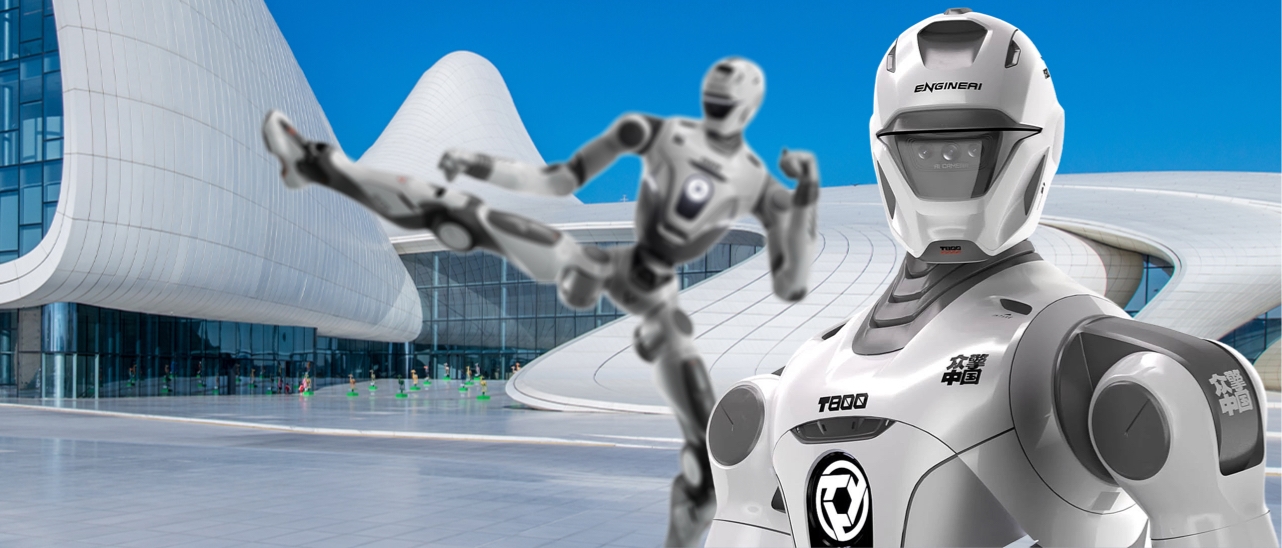
- Service and reception robots: humanoid-style and kiosk-style robots that greet visitors, answer questions, guide people to destinations, and promote offers.
- Delivery robots: indoor platforms that carry food, amenities, documents, or supplies between kitchens, storerooms, rooms, and tables.
- Commercial cleaning robots: autonomous scrubbers, vacuums, and sweepers that maintain floors in retail, airports, offices, and healthcare facilities on scheduled routes.
- Disinfection robots: platforms that perform scheduled sanitization runs in high-traffic or sensitive environments.
- Telepresence robots: mobile video platforms enabling remote staff, inspections, and consultations.
- Promotional and entertainment robots: attention-drawing platforms for events, showrooms, and brand activations.
What Commercial Robots Actually Deliver
Well-deployed commercial robots take over repetitive tasks — carrying trays, running the same cleaning route nightly, answering the same twenty questions — so staff can focus on higher-value interaction. They also produce consistency: a cleaning robot covers the same area to the same standard every run, and a delivery robot does not skip trips at the end of a long shift. Many businesses additionally find marketing value in robots, as they signal innovation and draw customer engagement.
How to Choose a Commercial Robot
Define the Job Precisely
List the exact tasks, hours, and areas the robot must cover. A robot chosen for a vague goal such as improving service tends to become an expensive novelty; one chosen for a measurable job earns its keep.
Check the Environment
Verify floor surfaces, thresholds, ramps, elevator access, lighting conditions, and Wi-Fi coverage. For delivery robots, confirm corridor widths and door automation; for cleaning robots, measure the actual cleanable area against the robot's coverage rate.
Evaluate the Software
The operator experience matters daily: how routes and tasks are scheduled, how multilingual content is managed on customer-facing screens, and what reporting is available to prove the robot is doing its job.
Plan Operations and Maintenance
Assign an internal owner, schedule routine cleaning of sensors, and understand consumables such as brushes, filters, and batteries. Ask how software updates and remote support are delivered.
Pricing and Availability
Commercial robot pricing varies by category, configuration, accessories, and software subscriptions. Submit a request for quotation describing your business type, tasks, and site, and our team will respond with suitable models, current pricing, and estimated delivery for your location.
Frequently Asked Questions
Are commercial robots safe around customers?
Commercial robots are designed with obstacle detection and speed limits appropriate to public spaces. Safe operation also depends on correct setup, sensible routes, and basic staff awareness.
How difficult is day-to-day operation?
Most platforms are managed through touchscreen or app interfaces designed for non-technical staff. Initial mapping and configuration are typically done once during commissioning.
Which businesses benefit most from commercial robots?
Businesses with repetitive movement or cleaning tasks across predictable spaces — hotels, restaurants, retail floors, airports, hospitals, and large offices — usually see the clearest returns.
Can one robot serve multiple roles?
Some platforms support multiple modes, such as delivery plus promotion, but a robot specified for one primary job generally performs better than a compromise choice across many.