
Unitree G1 Competition Humanoid Robot
In stock
- BRAND:
- UNITREE ROBOTICS
- PART #:
- G1-Comp
- ORIGIN:
- China
- AVAILABILITY:
- SUBJECT TO AVAILABILITY
- SKU:
- Unitree-G1-Comp
Buy now, pay later
Unitree G1 Competition Humanoid Robot
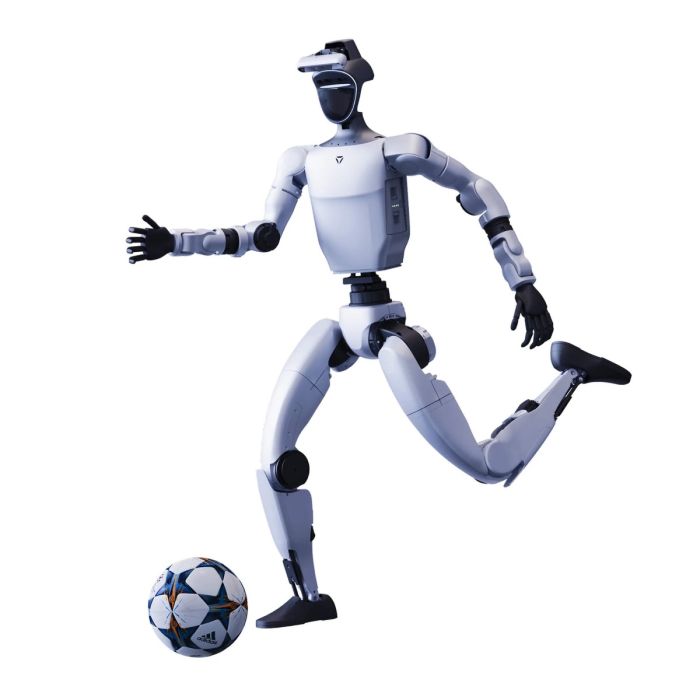
Competition robots get hit, fall over and get back up, repeatedly, in front of an audience. That is a different engineering problem from research, and the G1 Competition configuration is specified around it rather than around laboratory work.
What it is
The G1 Competition is the configuration Unitree supplies for competitive humanoid events — robot fighting, sports and performance formats. It is built on the G1 body, with the package specified for competitive use rather than for development.
What competition use actually demands
Three things, and none of them is peak specification. Reliability first: a robot that needs a repair between rounds is a robot that loses. Repeatable recovery second — getting up off the floor cleanly, every time. Spares third, because competitive use consumes consumables faster than any other application. Budget for a spare battery and spare footwear from the start rather than after the first event.
Where this configuration sits
Unitree's G1 codes work on two axes, and almost every buying mistake comes from reading only one of them.
| Tier | Arms and waist | Total DOF | Codes |
|---|---|---|---|
| Standard / Plus | Base arms and waist | 23–29 | U1, U2 |
| Pro | Base arms and waist, upgraded compute | 35–37 | U9–U12, U14 |
| Ultimate | 7 DOF arms, 3 DOF waist | Up to 41 | U3–U8, U13 |
The tier decides how the body moves. The letter decides which hands it wears. A Pro robot with excellent hands still has base arms and waist; an Ultimate with plain hands has the better reach and torso. Decide the tier from the motion your work needs, then the hands from the manipulation it needs.
Competition and combat packages sit outside the research ladder above. The related configurations are the G1 Boxing and, on the development body, the G1 EDU Combat Boxing — the latter being the one to choose if you intend to program your own routines rather than run supplied ones.
G1 Competition specifications
| Specification | Value |
|---|---|
| Height | About 1.32 m standing (1,320 × 450 × 200 mm) |
| Weight | About 35 kg |
| Degrees of freedom | 23 to 43 depending on configuration |
| Configuration | Specified for competitive and performance use |
| Package contents | Varies — confirm on your quotation |
| Perception | 3D LiDAR and depth camera |
| Connectivity | Wi-Fi 6, Bluetooth 5.2 |
| Battery life | About 2 hours |
Figures follow published specifications for this configuration and vary by production batch. Confirm the exact build on your quotation before ordering.
Who buys it
- Teams entering humanoid competition and robot fighting leagues
- Event organisers and promoters running humanoid formats
- Entertainment venues and touring shows
- Universities fielding teams in student competitions
How to choose
Buy the Competition configuration if the robot is going to compete or perform. Buy the EDU Combat Boxing configuration if you want to develop the behaviour yourself. Buy an EDU research configuration if competition is a side interest rather than the purpose. Compare the whole field in our humanoid robots category.
Safety and standards
The G1 is research, education and demonstration equipment. The industrial robot safety standards — ISO 10218 and the ANSI/RIA R15.06 family — and the mobile robot standard R15.08 do not cover it, so the duty of care sits with the operator. Define and mark a working area, keep untrained people outside it, keep a trained operator with the emergency stop within reach, use a support gantry while developing locomotion, and complete a written risk assessment before any public demonstration.
Lithium batteries are regulated dangerous goods in transit, which affects how spares ship and how quickly.
Deployment and running costs
Budget beyond the robot: a spare battery (runtime is about two hours), a support gantry for development, and a controller. The starter kit shows the usual bundle, and further parts are listed under robot accessories. International buyers should add duty and import charges. Current pricing is shown on the listing above; for quantities, grant purchases or bundles, request a written quotation.
Import and delivery
Units ship from the manufacturer and lead times follow production batches rather than a fixed schedule. Lithium batteries restrict some routes and add documentation. Tell us the destination country when you enquire and we will confirm delivered cost, a realistic lead time and the paperwork required before you commit.
Support before and after the sale
Before you buy, our team will confirm exactly what the competition package includes, because package contents matter more here than headline specification — and we will tell you which spares to order at the same time. After delivery, we help with training, set up and ongoing support. The specifics for your order are confirmed on your quotation.
Where to buy
This configuration is listed above with current price and availability, alongside the rest of the G1 range so you can compare before committing. Order directly, or contact our team for a formal quotation including delivery to your country. Universities and institutions buying against a purchase order should request a written quotation first.
Frequently asked questions
How much does a Unitree G1 Competition robot cost?
Current pricing is shown on the listing above. Request a quotation for delivered pricing or quantities.
What is included in the competition package?
Contents vary by batch and specification. Ask for it in writing on your quotation before ordering.
Can it be used for research too?
It is specified for competition. For research needing SDK-level control, choose an EDU configuration.
What spares should I order with it?
At minimum a spare battery and spare footwear. Competitive use consumes both faster than any other application.
How is it different from the EDU Combat Boxing configuration?
The EDU version is built on the development body, so you can program your own routines.
How long does the battery last?
About two hours per charge. Plan at least one spare for a full working day.
Is it safe to demonstrate in public?
Only with a defined working area, a trained operator holding the emergency stop and a written risk assessment.
Do you ship internationally?
Yes. Lithium batteries affect routing and lead time, so confirm the destination country when you enquire.
Specifications
General
What's included
Related Products
Out of stock