
Official Agibot Distributor
AgiBot (Zhiyuan Robotics) is one of the world's leading humanoid robot manufacturers, producing the A2 and A3 full-size humanoids, X2 compact humanoid, G2 industrial wheeled humanoid, and D1 quadruped. This guide covers AgiBot's history, complete robot lineup, technology, and what buyers should know before purchasing an AgiBot robot.
AgiBot
Introduction / Overview
AgiBot (AGIBOT Innovation (Shanghai) Technology Co., Ltd., also known as Zhiyuan Robotics) is a Chinese robotics company specializing in embodied artificial intelligence and humanoid robots. Founded in February 2023 in Shanghai by Peng Zhihui — a former Huawei "Genius Youth" engineer widely known in China's tech community as "Zhihui Jun" — AgiBot has become one of the fastest-scaling humanoid robot manufacturers in the world, moving from founding to mass production in under two years.
The company is frequently described as the world's largest humanoid maker by shipment volume, having shipped over 5,000 robots in 2025 and its 15,000th unit by June 2026. AgiBot marked its official entry into the U.S. market at CES 2026, debuting what it called the industry's most complete humanoid and quadruped robotics lineup and taking home several Best of CES 2026 awards.
AgiBot's product family spans full-size bipedal humanoids for customer interaction, compact humanoids for education and entertainment, wheeled industrial humanoids for factory work, and quadruped robots — all unified on a single embodied-AI software stack and supported by open secondary development for research and integration.
Design and Features
Product Lineup
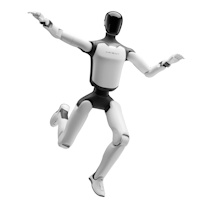
AgiBot A3 Series (Expedition A3) — The newest generation of AgiBot's full-size Expedition line, standing approximately 1.73 m and engineered for dynamic whole-body mobility. Publicly nicknamed the "kung fu robot" after demonstrations of martial-arts-style balance, rapid recovery, and complex whole-body coordination, the A3 pairs this athleticism with roughly 10 hours of operating endurance — among the longest runtimes in its class. Where the A2 emphasizes customer-facing interaction, the A3 pushes the locomotion frontier: navigating uneven surfaces, absorbing disturbances, and maintaining stability under contact, making it suited to demonstrations, research into dynamic control, and emerging service roles that demand full-size humanoid mobility beyond flat showroom floors. Like the rest of the Expedition family, it supports secondary development for research and integration teams.
AgiBot A2 Series (Expedition) — The flagship full-size bipedal humanoid, designed for reception, guided tours, brand showcases, and customer-facing service. Variants include the A2, A2 Lite, A2 Ultra, and the wheeled A2-W for industrial flexibility. In November 2025, an A2 walked 100 km from Suzhou to Shanghai over three days, entering the Guinness World Records — a public demonstration of its locomotion endurance.
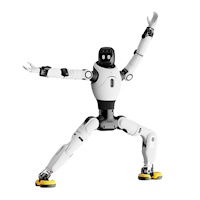
AgiBot X2 Series (Lingxi) — A compact, approximately half-size humanoid (roughly 1.3 m, ~35 kg) built for education, research, entertainment, and marketing events. Known for expressive, agile motion — walking, running, dancing, and even riding a bicycle in demonstrations — the X2 ships with the AimDK development framework for full secondary development access.
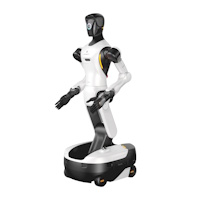
AgiBot G2 Series — A wheeled industrial humanoid engineered for precision assembly, machine tending, and warehouse parcel sorting. The G2 emphasizes fine force control for sub-millimeter assembly tasks, dual hot-swappable batteries for continuous operation, and rapid task deployment through reinforcement learning. The lighter G2 Air variant extends the platform to interactive and lighter-duty roles.
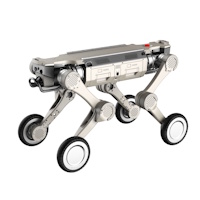
AgiBot D1 Series — Quadruped robots built for outdoor mobility, patrol, inspection, and load-carrying support, complementing the humanoid lines.
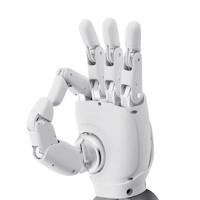
OmniHand — AgiBot's high-dexterity robotic hand, enabling human-like manipulation across the humanoid range and available for research use.
Embodied AI Foundation
AgiBot pairs its hardware with a substantial AI research operation. The company created AgiBot World, one of the largest open datasets for robot manipulation learning, and develops generalist robot foundation models that allow skills learned in one context to transfer across its platforms. AgiBot is also an NVIDIA Isaac GR00T ecosystem partner, with its industrial platforms running NVIDIA Jetson Thor compute for high-performance on-board AI inference.
Secondary Development Support
Across the lineup, AgiBot provides SDKs, APIs, and developer documentation — the secondary development access that universities, integrators, and enterprise R&D teams require to build custom applications, behaviors, and integrations on the robots.
Technology and Specifications
Representative Specifications
The A2 platform stands approximately 1.7 m tall with whole-body degrees of freedom suited to natural interaction, multi-modal perception (RGBD cameras, LiDAR, microphone arrays), and multilingual voice interaction. The X2 measures approximately 1.3 m and ~35 kg with 25+ degrees of freedom and touch sensing for human engagement. The G2 industrial platform features dual high-capacity hot-swappable batteries (over 1,600 Wh combined), pass-through and return-to-base charging for continuous shift operation, and force-controlled arms for precision tasks. Exact configurations vary by model and generation; current datasheets are available on request.
Manufacturing Scale
AgiBot operates mass-production facilities in Shanghai and has scaled faster than any Western humanoid competitor, with volume manufacturing across multiple product lines simultaneously — a key reason its platforms are commercially available today rather than limited to pilot programs.
Applications and Use Cases
Retail, Hospitality, and Reception
The A2 series serves as a greeter, guide, and brand ambassador in showrooms, hotels, malls, and corporate lobbies — customer-facing roles where full-size humanoid presence and multilingual interaction create genuine engagement.
Industrial and Logistics
The G2 targets electronics assembly, machine tending, quality inspection, and parcel sorting — precision tasks on production lines and in fulfillment operations, deployable without facility redesign.
Education and Research
The X2's affordability relative to full-size humanoids, combined with open SDK access, has made it a popular platform for university robotics programs, AI research labs, and STEM education, while the A2 and G2 serve advanced embodied-AI research.
Events and Entertainment
X2 units perform at product launches, exhibitions, and cultural venues, where their expressive motion and interactivity draw audiences.
Patrol and Inspection
The D1 quadruped handles outdoor patrol, site inspection, and load support across terrain that wheeled platforms cannot manage.
Advantages / Benefits
- Broadest single-brand lineup — no competitor ships a comparable range: full-size bipedal (A2), compact humanoid (X2), industrial wheeled (G2), and quadruped (D1) on one unified AI stack.
- Proven mass production — with thousands of units shipped, AgiBot robots are commercially available products, not pre-order concepts.
- Open secondary development — SDKs and APIs across the range protect research investment and enable custom integration.
- Strong AI foundation — the AgiBot World dataset, foundation-model research, and NVIDIA partnership mean capabilities improve continuously through software.
- Deployment flexibility — bipedal, wheeled, and quadruped form factors let buyers match the platform to the task rather than forcing one form factor onto every job.
For buyers researching where to buy an AgiBot robot, or comparing AgiBot prices and costs across the A2, X2, G2, and D1 lines, the decisive factors are intended application, configuration level (standard vs. Ultra variants), SDK requirements, and after-sales support — areas where an experienced distributor adds as much value as the hardware itself.
FAQ
What is AgiBot?
AgiBot (Zhiyuan Robotics) is a Shanghai-based robotics company founded in 2023 that designs and mass-produces humanoid and quadruped robots, including the A2 full-size humanoid, X2 compact humanoid, G2 industrial wheeled humanoid, and D1 quadruped. It is among the world's largest humanoid robot manufacturers by shipment volume.
How do AgiBot robots work?
AgiBot robots combine multi-modal perception (cameras, LiDAR, microphones), high-degree-of-freedom actuation, and embodied-AI models trained on large-scale manipulation datasets. Open SDKs allow developers to build custom applications, and industrial models use reinforcement learning for rapid deployment of new tasks.
Which AgiBot robot should I buy?
Choose the A2 for customer-facing reception and showcase roles, the X2 for education, research, and entertainment, the G2 for industrial assembly and logistics, and the D1 for outdoor patrol and inspection. A distributor can match the exact configuration to your use case.
Why is AgiBot important?
AgiBot demonstrated that humanoid robots can move from research prototypes to mass production, shipping thousands of units across a full product ecosystem — making it a benchmark for the commercial viability of humanoid robotics worldwide.
What are the benefits of AgiBot robots?
Key benefits include the industry's broadest humanoid lineup, proven mass-production quality, open secondary development across all platforms, continuous AI improvement through software updates, and multiple form factors sharing one software ecosystem.
How much does an AgiBot robot cost?
AgiBot pricing varies significantly by model and configuration, from compact X2 units to full-size A2 Ultra and industrial G2 platforms. Contact a distributor for current pricing, configuration guidance, and delivery timelines for your region.
Does AgiBot support secondary development?
Yes. AgiBot provides SDKs, APIs, and developer frameworks across its lineup, giving universities, integrators, and enterprises full access for custom application development — a core reason its platforms are widely used in research.
Summary
AgiBot has established itself as one of the defining companies of the humanoid robotics era — moving from founding in 2023 to the world's highest humanoid shipment volumes, an award-winning CES debut, and the industry's most complete product ecosystem spanning the A2, X2, G2, and D1 lines. With open secondary development, a serious embodied-AI research foundation, and proven mass production, AgiBot offers organizations in retail, industry, education, and research platforms they can deploy today. For anyone looking to buy an AgiBot robot, compare AgiBot prices across the lineup, or plan a deployment, understanding the strengths of each series in this guide is the essential starting point.
Frequently Asked Questions (FAQ)
What is AgiBot? AgiBot, also known as Zhiyuan Robotics (智元机器人), is a Chinese humanoid robotics company founded in February 2023 and headquartered in Shanghai, China. The company designs and manufactures general-purpose humanoid robots and develops embodied artificial intelligence software, including the GO-1 foundation model and the AgiBot World dataset. As of early 2026, it is the world's highest-volume humanoid robot manufacturer by units shipped.
How does AgiBot's humanoid robot work? AgiBot's humanoid robots combine onboard AI processing, multimodal sensors (cameras, LiDAR, microphones, and tactile sensors), and dexterous robotic hands with high degrees of freedom to perceive and interact with physical environments. The robots run on AgiBot's proprietary software stack, including the WorkGPT multimodal AI engine, the GO-1 generalist foundation model, and the AimRT communication middleware. The GO-1 model uses a Vision-Language-Latent-Action (ViLLA) framework that allows robots to understand scenes, plan actions, and execute fine-grained manipulation tasks — and can generalize to new environments from minimal training examples.
Who founded AgiBot and why is it significant? AgiBot was founded by Deng Taihua and Peng Zhihui, both former senior engineers at Huawei. The company is significant because it achieved mass production of humanoid robots faster than any comparable company globally, shipping over 5,000 units in 2025 and crossing the 10,000-unit cumulative production milestone in March 2026. Its GO-1 AI model and AgiBot World dataset represent meaningful contributions to open embodied AI research, and the company's trajectory has placed it at the center of China's national strategy for robotics and advanced manufacturing.
What are the benefits of AgiBot humanoid robots? AgiBot robots offer several practical advantages for industrial and commercial customers. They combine general-purpose adaptability with production-scale availability, meaning buyers can procure multiple units at competitive price points. The onboard edge computing architecture allows the A2 to operate without cloud connectivity, reducing latency and improving reliability in manufacturing environments. The open GO-1 foundation model and AgiBot World dataset enable rapid customization and fine-tuning by enterprise customers and research teams. The robots have received triple-market certification from China, the United States, and the European Union, facilitating cross-border deployment.
How does AgiBot compare to Tesla Optimus? AgiBot has explicitly positioned its A2 as a commercial competitor to Tesla's Optimus robot. The key distinction as of early 2026 is production volume: AgiBot had shipped over 10,000 cumulative units and achieved revenues exceeding one billion yuan in 2025, while Tesla Optimus remained in limited production. AgiBot's robots are currently priced in the $100,000 to $190,000 range, while Tesla has indicated Optimus could eventually cost around $20,000 — suggesting pricing will be an important competitive dimension once Tesla reaches volume production. Industry analysts generally characterize Chinese humanoid companies as leading in mass production and motion control, while US firms maintain advantages in semiconductor supply chains and certain AI capabilities.
What is the AgiBot World dataset? AgiBot World is a large-scale open robotics learning dataset released by AgiBot at the end of 2024. The full version (AgiBot World Beta) contains over one million robot action trajectories collected from 100 robots across more than 100 real-world scenarios in five application domains. It is the largest publicly available humanoid manipulation dataset in the world, developed in collaboration with OpenDriveLab at the University of Hong Kong and the Shanghai AI Lab. The dataset is freely available for non-commercial research use on GitHub and Hugging Face, and it forms the training foundation for AgiBot's GO-1 foundation model.