
Humanoid Robots
Humanoid robots have moved from labs into factories, showrooms, stages and police patrols, with mass produced bipedal and wheeled platforms from Unitree, AgiBot, UBTECH, EngineAI and Pudu now shipping by the thousand. Explore every humanoid robot type and brand, price and cost information, and find humanoid robots for sale with purchasing details available on this page.
Humanoid Robots
For seventy years the humanoid robot was a promise, and then, in the span of about three, it became a product line. Humanoid robots are machines built in human form, with legs or wheeled bases, articulated arms, dexterous hands and human scale proportions, designed to work in the world exactly as people built it: the shelf heights, door handles, staircases, tools and workstations that encode the human body as their operating assumption. And the numbers now describe an industry, not an experiment: the leading maker shipped more than 5,500 humanoids in a single year, a bipedal industrial model has passed 1,000 units produced with the world's first self swapping battery, wheeled humanoids run live inspection lines at thousands of units per shift, and humanoids hold real jobs from car dealerships in 30 plus countries to police patrol routes in Shenzhen.
The category's breadth is its story. Humanoids now span compact education platforms a school can own, acrobatic performers headlining the world's biggest stages, full size research flagships carrying over 2,000 TOPS of onboard computing, and industrial workers with nine figure order books, from manufacturers racing each other through weekly breakthroughs. This page maps the complete landscape: bipedal humanoids, wheeled humanoids, upper body platforms and bionic humanoids, across the brands defining the field, Unitree, AgiBot, UBTECH, EngineAI and more, with the full range of humanoid robots for sale browsable through the humanoid robot catalog.
Types of Humanoid Robots
Bipedal Humanoid Robots
Two legs remain the category's defining ambition, and bipedal humanoids now deliver it at every scale. Unitree's line runs from the world's most popular humanoid, the G1, through the ultra accessible R1 and pioneering H1 to the flagship H2 with up to 2,070 TOPS of NVIDIA Thor computing. AgiBot's bipeds span the acrobatic X2 series, first robot to land a Webster flip, the athletic A3 series with the all day A3 Ultra, and the interactive A2 series. UBTECH's humanoids are led by the mass produced Walker S2 and UWORLD U1, while EngineAI contributes the most natural gait in robotics across the PM01, SE01 and flagship T800, alongside athletic specialists from Booster Robotics and Noetix, including the N2 Athlete, BUMI and E1, and platforms from Kepler, Fourier, Dobot, RobotEra and Deep Robotics.
Wheeled Humanoid Robots
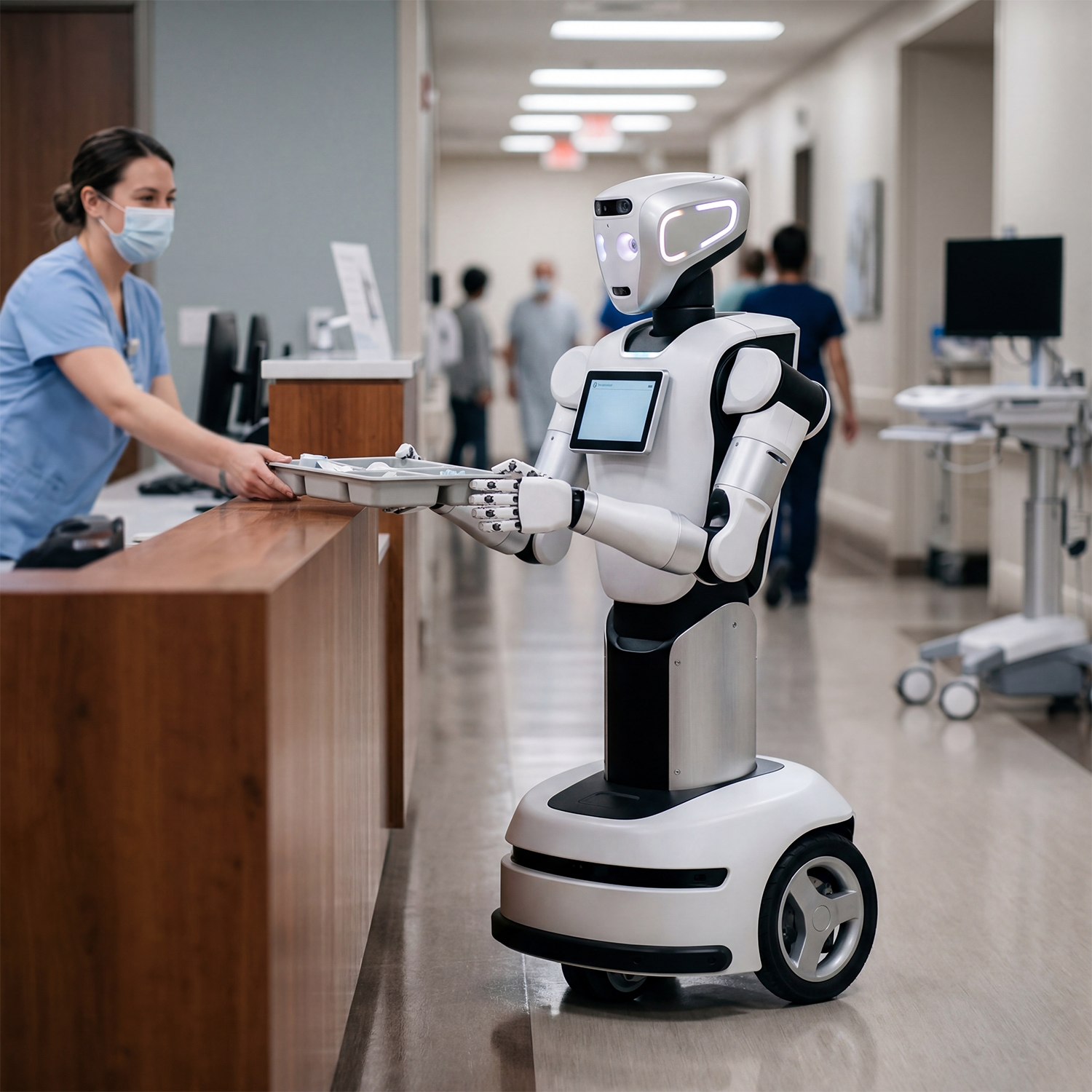
Where floors are flat, wheels buy endurance, stability and payload, and wheeled humanoids have become the deployment pragmatists' choice. The industrial AgiBot G2 series runs documented production shifts with force controlled sub millimeter arms, Unitree's wheeled line including the G1-D bridges research and service, the semi humanoid PUDU D7 sorts and carries through eight hour shifts, and AiMOGA's Mornine, the first humanoid with full EU certification, works dealership floors in more than 30 countries.
Upper Body and Bionic Humanoids
Upper body humanoids concentrate dexterity where the work is, dual arm torsos for stations, teleoperation and data collection, from platforms like Astribot and Galaxea, while bionic humanoids pursue lifelike form and expression for reception, entertainment and research into human robot connection.
Hands, Accessories and the Supporting Ecosystem
A humanoid is only as capable as its grip and uptime. The robot hands ecosystem, AgiBot's OmniHand series with visuotactile fingertips, BrainCo's Revo family with prosthetics field heritage, plus Inspire Robots and Linkerbot, supplies the grasping layer, while humanoid accessories from batteries and chargers to gantries and controllers keep fleets running.
Technology Behind Humanoid Robots
Whole Body Motion Control
Reinforcement learning ended the era of scripted wobble. Modern humanoids walk with natural gait, recover shoves, climb stairs and, at the athletic frontier, land backflips, Webster flips and flying kicks, dynamic balance proven publicly from Olympic ceremony stages to CES demonstrations, and the same recovery competence that makes a flip possible makes a patrol stumble survivable.
Dexterous, Force Controlled Manipulation
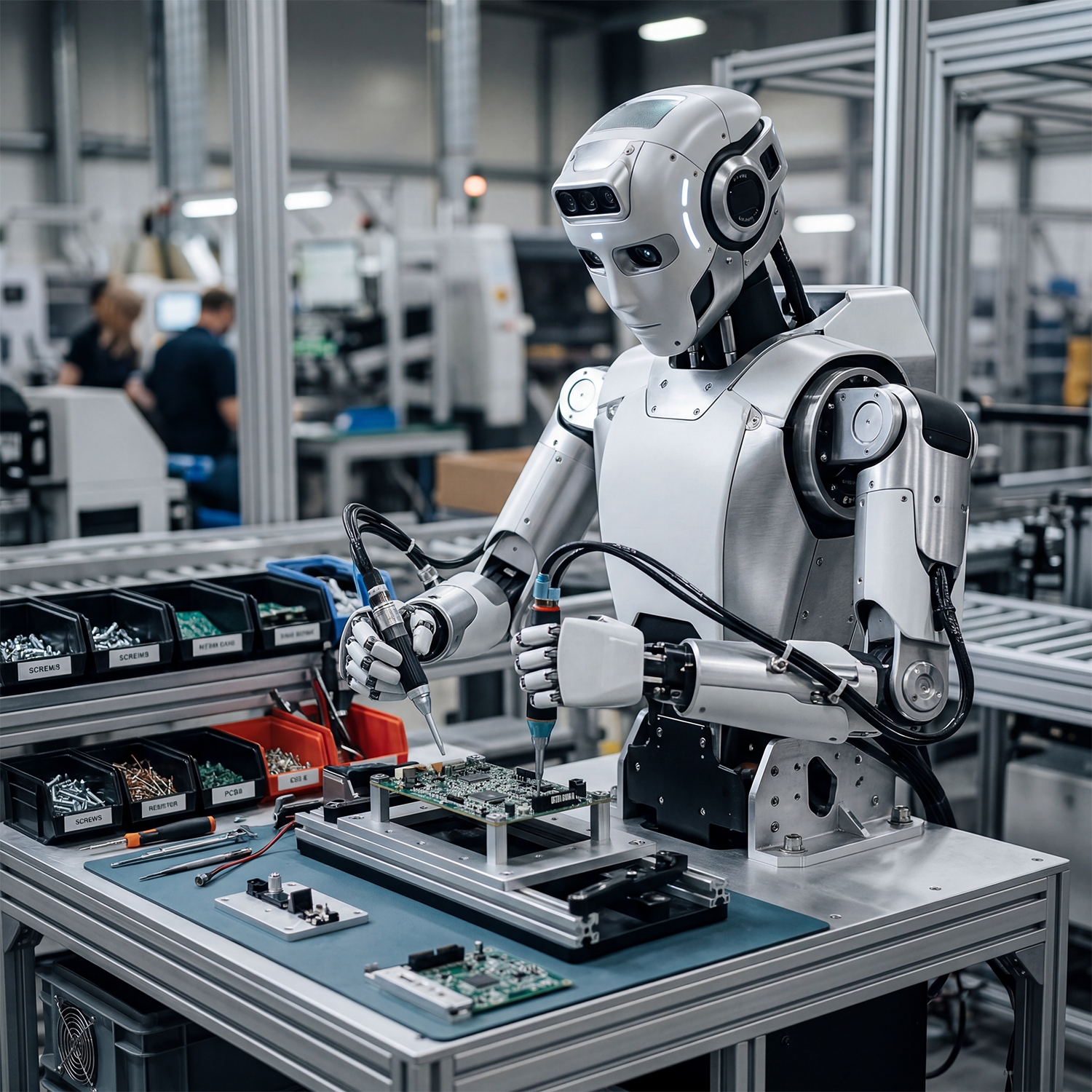
Torque sensing through the arms gives humanoids touch: the ability to regulate contact forces for fragile goods, connector seating and sub millimeter assembly, and to yield safely on human contact. Paired with tactile hands sensing down to hundredths of a newton, manipulation has crossed from gripper work to genuine handling.
Embodied AI Foundation Models
The intelligence layer industrialized alongside the hardware. Vision language action models translate perception and instruction into movement, foundation models trained on million trajectory datasets like AgiBot World generalize skills across tasks, agent systems plan and self correct in closed loop, and video teaching converts human demonstration into robot behavior, so deployment reads in days, with fleet learning upgrading every unit from each one's experience.
Built for Shifts, Not Demos
The deployment generation engineered out downtime: hot swappable packs, the Walker S2's three minute autonomous battery exchange, eight hour class endurance and autonomous charging, wrapped in fleet platforms that coordinate tasking, traffic and energy across mixed robot workforces, and priced along a spectrum that now reaches from education budgets to industrial fleets.
Applications and Use Cases
Industry and Logistics
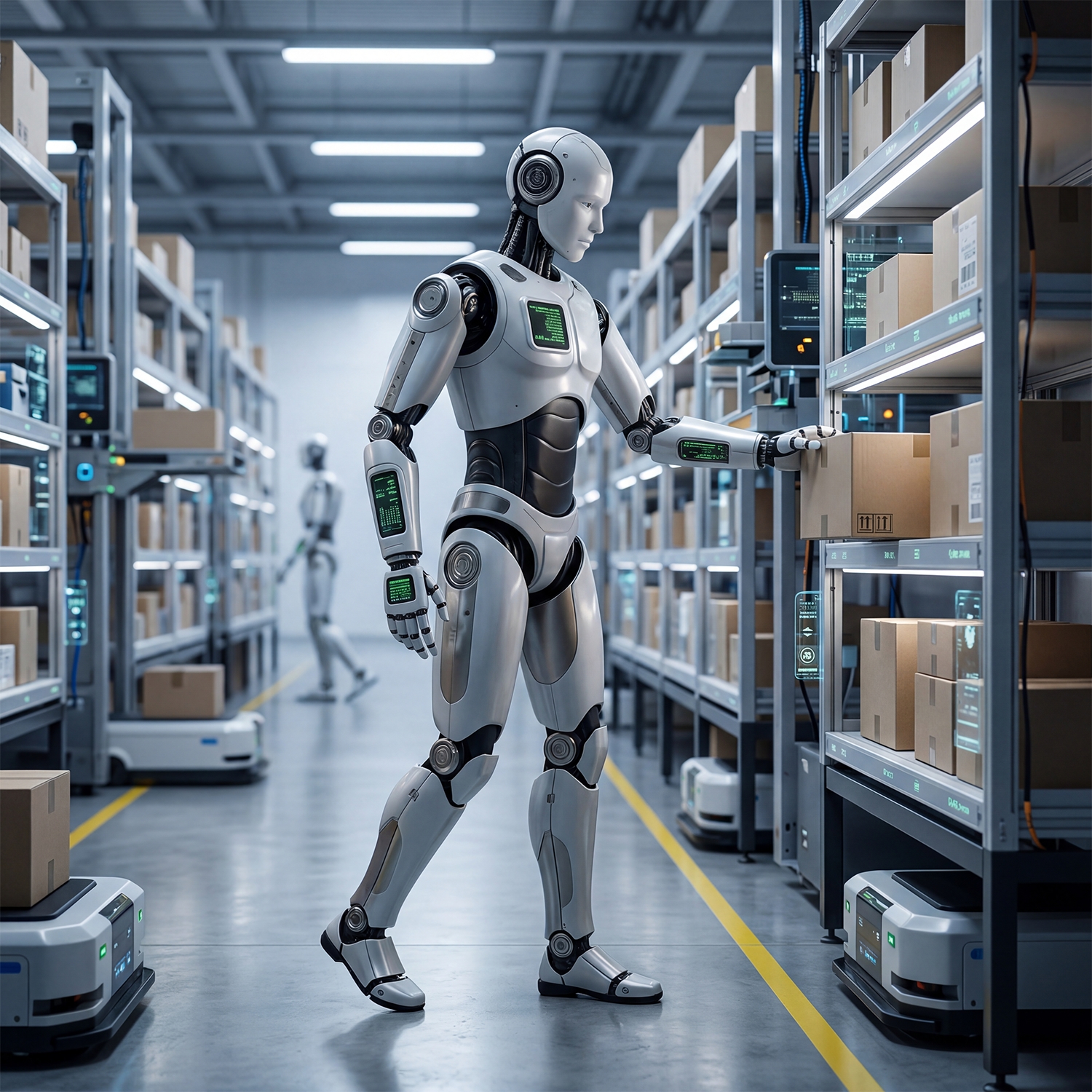
Industrial and warehouse humanoids run inspection lines, tend machines, sort and handle across factories and warehouses, with deployments at automakers from BYD to Volkswagen joint ventures anchoring the category's commercial proof.
Commercial Service and Retail
Humanoid ambassadors greet, present and sell across retail, hotels and commercial venues, led by Mornine's dealership service, multilingual conversation, vehicle presentation and its world first autonomous car door opening, across 30 plus countries.
Entertainment and Events
Acrobatic humanoids headline exhibitions, galas and sports entertainment, from synchronized swarm choreography to robot boxing and martial arts, the category's most viral and fastest booking application.
Education and Research
From modular classroom platforms like the X2 Edu to open ecosystems across educational and research robotics, humanoids anchor the embodied AI curriculum and publication pipeline worldwide.
Public Service and Safety
Humanoids now guide visitors at border crossings, support police patrol in Shenzhen and serve venues from expos to government facilities, the frontier where public trust is being earned in public.
Advantages and Benefits
- Works the human built world. One form factor fits every station, tool and doorway already in existence.
- Redeployable by software. The same platform retasks across inspection, handling, greeting and performance.
- Mass production is here. Thousand unit production runs and five figure annual shipments de-risk adoption.
- Every budget has an entry. From education bipeds to industrial fleets, the price spectrum finally spans the market.
- Athletic robustness. Flip capable balance translates into stumble surviving reliability.
- Touch grade manipulation. Force and tactile sensing handle fragile, precise and contact rich work.
- Learning economics. Day scale task deployment and fleet wide improvement compound the investment.
- Proven in public. Dealerships, patrols, factories and stages, the references are live, not promised.
Pricing and Availability
Humanoid robots are available for purchase worldwide, from single education units to industrial fleet programs, with every brand and platform browsable through the humanoid robot catalog on Robots International. Humanoid robot price and cost vary enormously by platform class, configuration, hands and end effectors, fleet size and destination, so buyers seeking humanoid robots for sale should request a current quotation for their application. Purchasing inquiries, specification sheets and availability details for those looking to buy humanoid robots can be found on this page.
Frequently Asked Questions
What are humanoid robots?
Humanoid robots are machines built in human form to work in environments designed for people, spanning bipedal platforms from Unitree, AgiBot, UBTECH and EngineAI, wheeled humanoids like the AgiBot G2 and PUDU D7, plus upper body and bionic formats.
How do humanoid robots work?
Humanoids combine reinforcement learning trained whole body control for walking and balance, force and torque sensed arms with dexterous tactile hands for manipulation, LiDAR and camera perception for navigation, and embodied AI foundation models that learn tasks from demonstration, with battery swap and fleet software sustaining multi shift operation.
Why are humanoid robots important?
Because the entire built world assumes a human body, and humanoids are the first automation that inherits all of it unmodified. Arriving exactly as labour shortages deepen across industry and services, they convert the hardest vacancies into redeployable capacity, and mass production has moved the question from whether to where first.
What are the benefits of humanoid robots?
Key benefits include operation in unmodified human environments, software retasking across job types, force controlled and tactile manipulation, athletic balance and recovery, day scale learning based deployment, continuous multi shift uptime, an entry price spectrum from classroom to fleet and live commercial references across industries.
Which humanoid robot should a buyer choose?
Research and education start with Unitree's G1 and R1 or the AgiBot X2 series, industrial stations suit the AgiBot G2 or Walker S2, customer facing roles favor the A2 series or Mornine, events take the A3 series or EngineAI performers, and frontier research runs on the H2.
How much do humanoid robots cost?
Humanoid robot cost spans the widest range in robotics, from accessible education bipeds to full industrial platforms and fleet programs, shaped by size, degrees of freedom, computing, hands and support scope. Buyers should request a tailored quotation for accurate pricing on their configuration.
Where can I buy humanoid robots?
Humanoid robots are for sale through Robots International, serving markets worldwide with delivery, customs clearance and support across every brand and platform class. Full purchasing details and the complete catalog are available on this page.
Summary
The humanoid robot spent seventy years as science fiction's favorite promise and has spent the last three becoming a shipping product, walking dealership floors on five continents, running factory inspection lines by the thousand unit shift, patrolling city streets, headlining the world's stages and filling university labs. With bipedal, wheeled, upper body and bionic formats from a dozen serious manufacturers, tactile hands, fleet infrastructure and learning systems that deploy in days, the category now offers a credible platform for every ambition and budget. For anyone evaluating humanoid robots today, for industry, service, research, education or entertainment, this page stands as the definitive starting point.
v3, August 2, 2026, Fable